1. Introduction
This manual provides essential information for the proper installation, operation, and maintenance of your Ronybuy 150 Psi Pressure Transducer Sensor. Please read this manual thoroughly before using the product to ensure safe and efficient performance. This sensor is designed to accurately measure pressure in various media, including fuel, oil, air, and water, converting it into a standard electrical signal.
2. Product Overview
The Ronybuy 150 Psi Pressure Transducer Sensor is a robust and reliable device engineered for precise pressure measurement. It features a durable stainless steel construction and is designed for a wide range of industrial and automotive applications.
2.1 Key Features
- Measuring Range: 0-150 Psi
- Output Signal: 0.5-4.5V linear voltage
- Supply Voltage: 5-16VDC
- Pressure Connection: 1/8" -27 NPT thread
- Electrical Connection: Packard connector with included wire pigtail
- Material: 316 Stainless Steel housing
- Protection: IP65 Waterproof rating
- Durability: Cycle life of 500,000 times
- Media Compatibility: Non-corrosive liquid or gas
2.2 Technical Specifications
| Parameter | Specification |
|---|---|
| Measuring Range | 0-150 Psi |
| Accuracy | ±1.0%FS |
| Output Signal | 0.5-4.5V (linear) |
| Supply Voltage | 5-16VDC |
| Operating Temperature | -40°C to 105°C (-40°F to 221°F) |
| Compensation Temperature | -20°C to 80°C (-4°F to 176°F) |
| Operating Current | ≤3mA |
| Response Time | ≤3ms |
| Overload Pressure | 150%FS |
| Burst Pressure | 300%FS |
| Cycle Life | 500,000 times |
| Sensor Core | Al2O3-96% ceramic sensor |
| Pressure Medium | Non-corrosive liquid or gas |
| Pressure Connection | 1/8" NPT |
| Electrical Connection | Packard connection |
| Housing Material | 316 Stainless Steel |
| Protection Class | IP65 |
| Weight | Approx. 0.080kg (2.82 oz) |
| Electromagnetism Compatibility | EN50081-1; EN50082-2; IEC61000-4-3 |
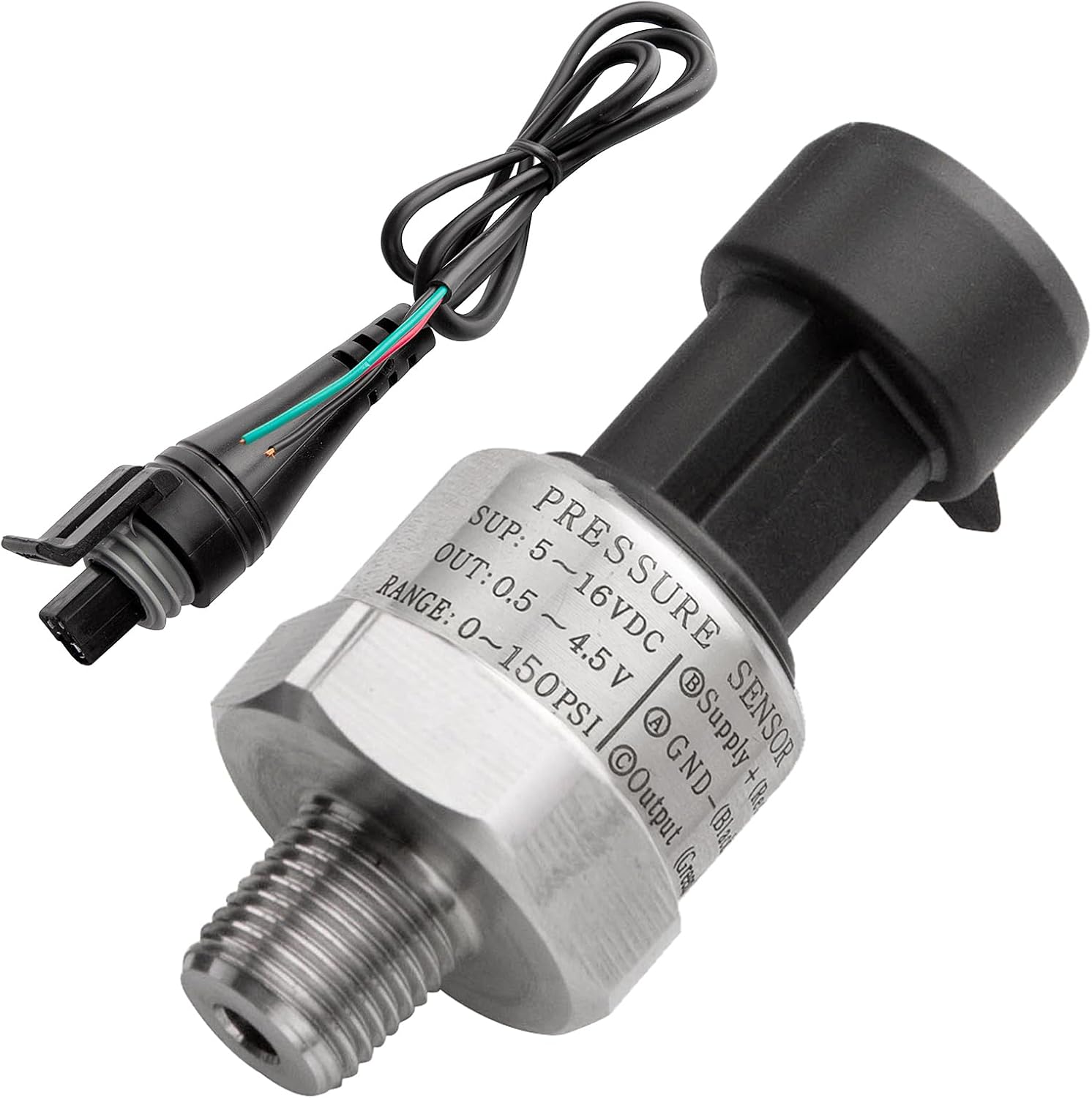
Figure 1: Ronybuy 150 Psi Pressure Transducer Sensor with harness.
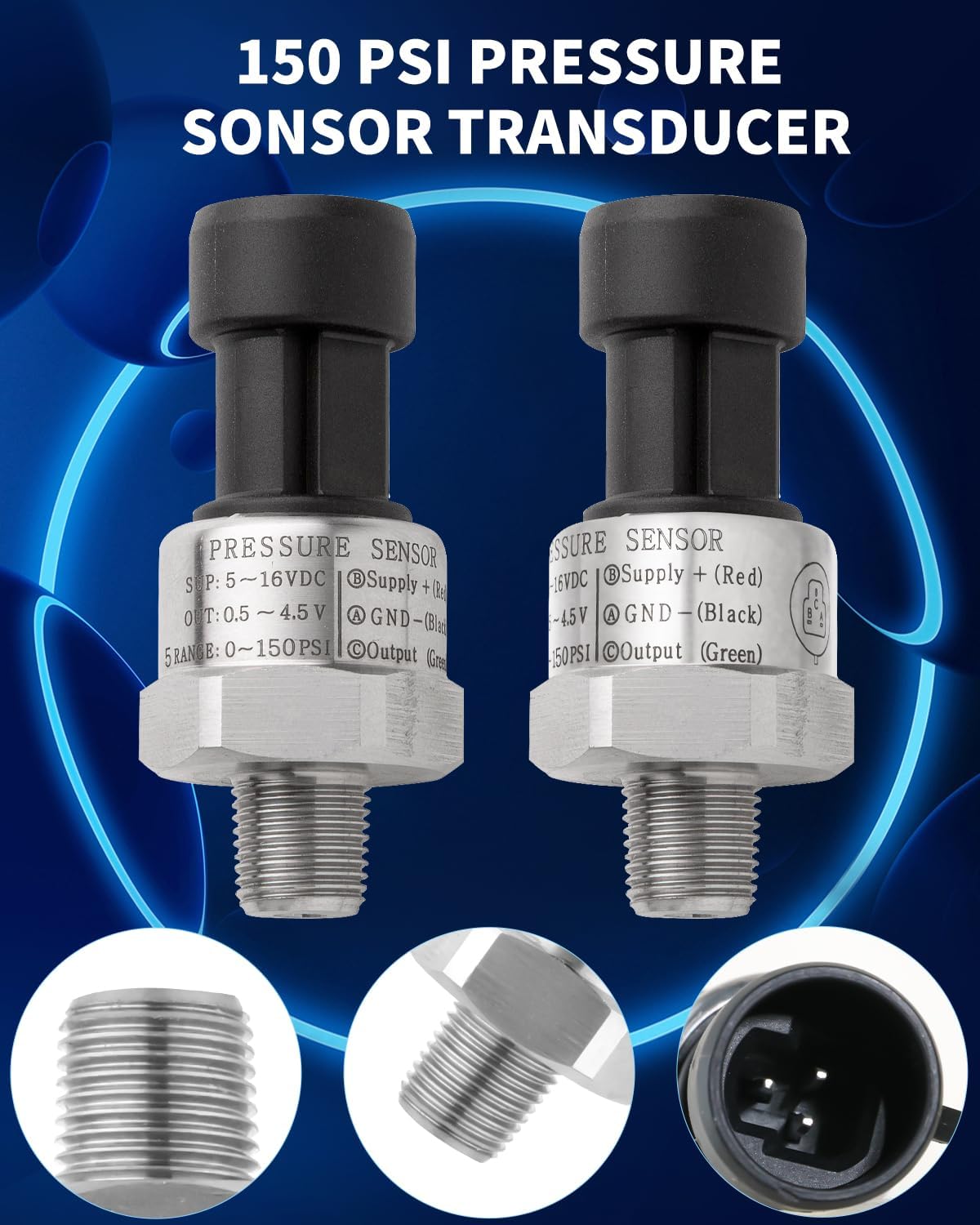
Figure 2: Overview of two Ronybuy 150 Psi Pressure Transducer Sensors highlighting key specifications.
3. Safety Information
Please observe the following safety precautions to prevent injury and damage to the sensor or connected equipment:
- Qualified Personnel: Installation and maintenance should only be performed by qualified personnel familiar with electrical and pressure systems.
- Power Disconnection: Always disconnect power to the system before installing, removing, or servicing the sensor.
- Pressure Release: Ensure all pressure is released from the system before attempting to install or remove the sensor.
- Voltage Limits: Do not exceed the specified supply voltage (5-16VDC). Exceeding 24V can damage the sensor.
- Medium Compatibility: Use only with non-corrosive liquids or gases. Corrosive media can damage the sensor and lead to inaccurate readings or failure.
- Thread Sealing: Use appropriate thread sealant (e.g., PTFE tape or liquid sealant) on the 1/8" NPT threads to prevent leaks.
- Environmental Conditions: Ensure the operating environment is within the specified temperature range (-40°C to 105°C).
4. Installation
Follow these steps for proper installation of the pressure transducer sensor:
4.1 Mechanical Installation
- Ensure the system is depressurized and power is off.
- Identify a suitable 1/8" NPT port for installation.
- Apply an appropriate thread sealant to the sensor's 1/8" NPT threads.
- Carefully thread the sensor into the port. Do not overtighten, as this can damage the sensor or the port. Tighten sufficiently to create a leak-free seal.
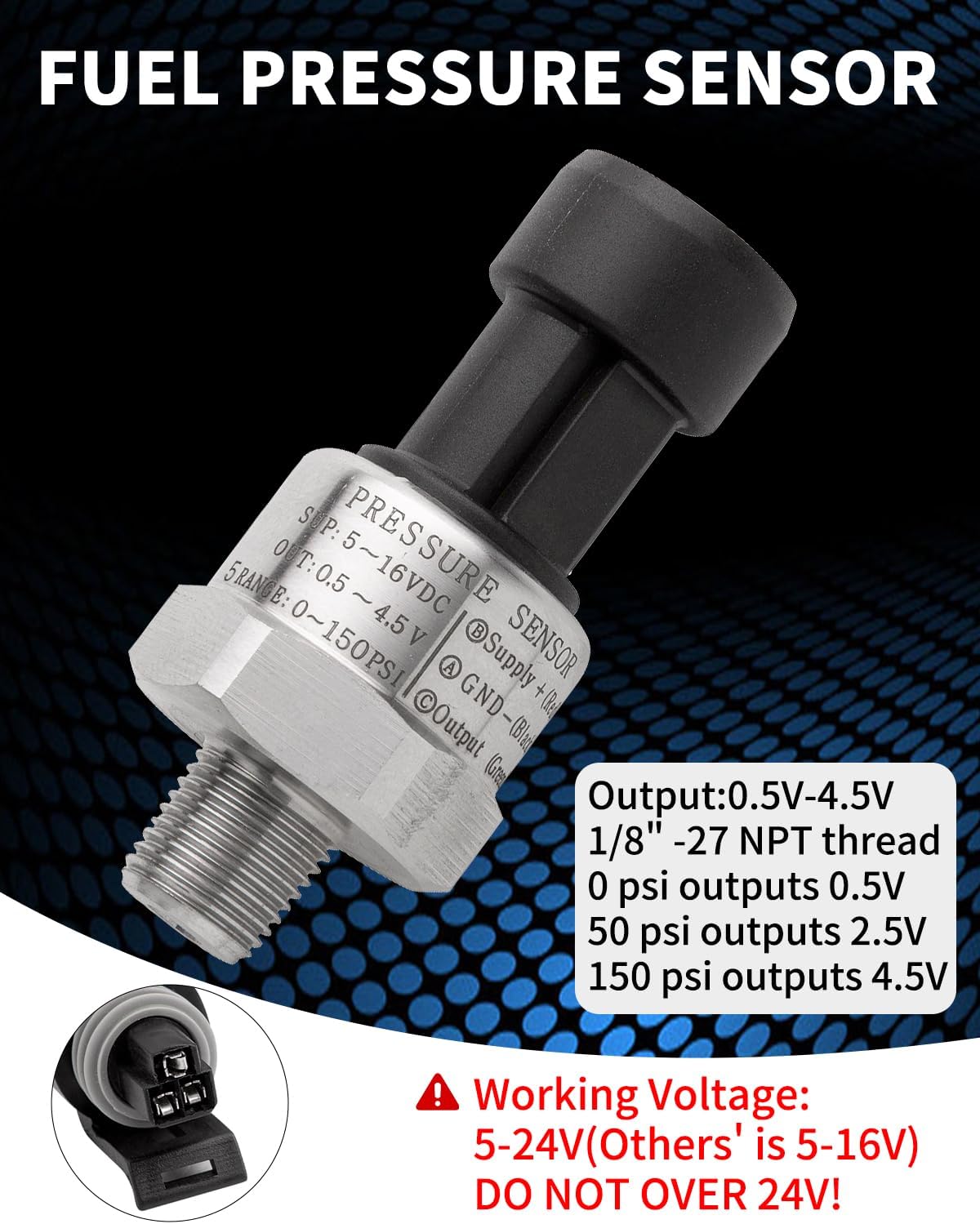
Figure 3: Sensor highlighting output specifications and 1/8" -27 NPT thread.
4.2 Electrical Connection
The sensor comes with a Packard connector and a wire pigtail for easy connection. Refer to the diagram below for correct wiring:
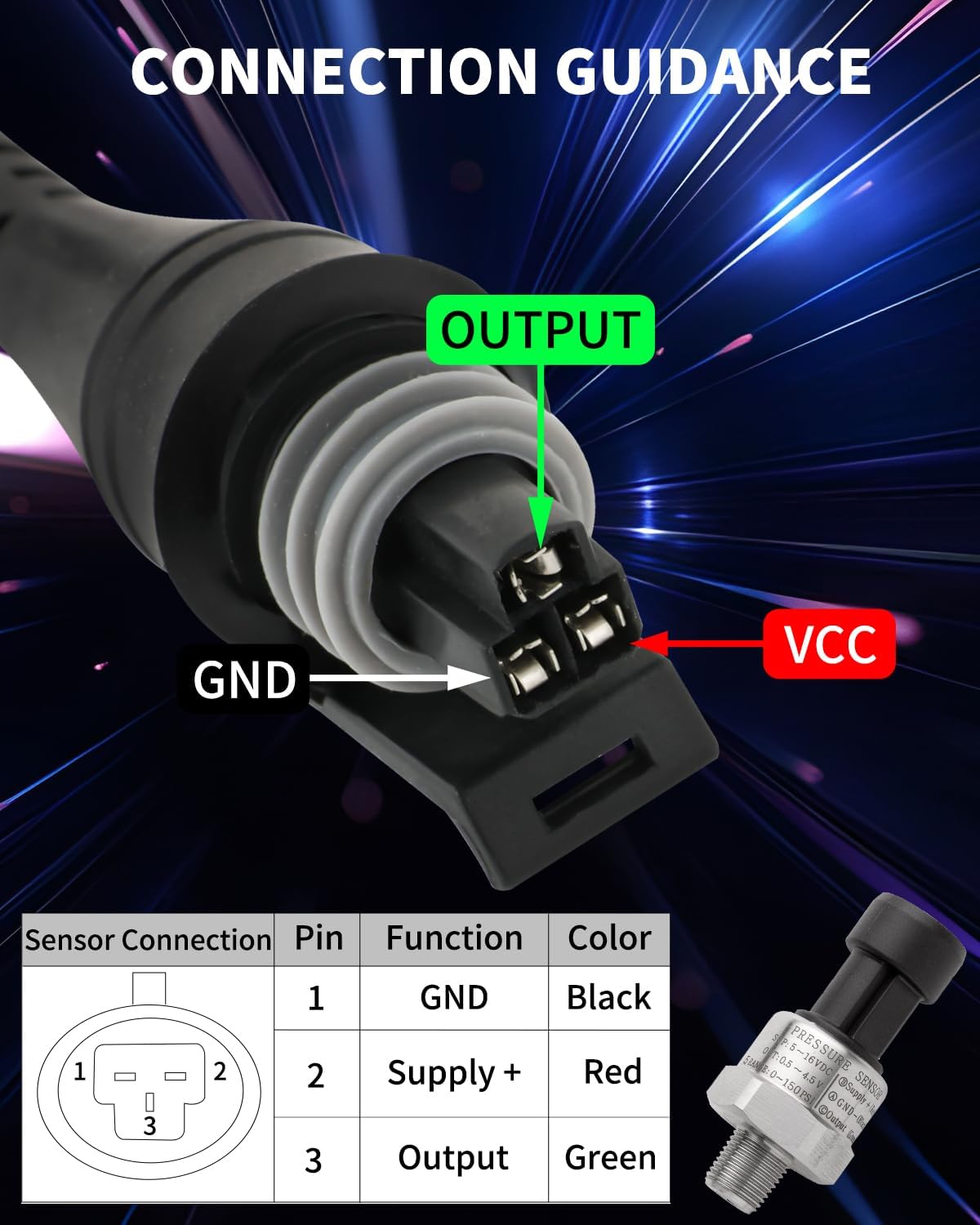
Figure 4: Connection guidance for the pressure sensor, showing pin assignments and wire colors.
| Pin | Function | Wire Color |
|---|---|---|
| 1 | GND (Ground) | Black |
| 2 | Supply + (VCC) | Red |
| 3 | Output | Green |
Connect the wire pigtail to your system's wiring according to the pin assignments and wire colors provided. Ensure all connections are secure and properly insulated to prevent short circuits or electrical interference.

Figure 5: The included pigtail harness is designed for sturdy and stable connections.
5. Operation
Once installed and wired correctly, the sensor will provide a linear voltage output corresponding to the measured pressure.
5.1 Output Signal Interpretation
The sensor provides a 0.5V to 4.5V linear output for a 0-150 Psi pressure range. This means:
- 0 Psi: Outputs 0.5V
- 50 Psi: Outputs 2.5V
- 150 Psi: Outputs 4.5V
This linear relationship allows for straightforward calibration with compatible monitoring systems or gauges.
5.2 Application Examples
The sensor is suitable for a wide range of applications, including:
- Industrial Automation
- Fluid Control Systems
- Medical & Laboratory Equipment
- Automotive & Transportation Systems (e.g., fuel pressure monitoring)

Figure 6: Examples of wide applications for the Ronybuy pressure sensor.
6. Maintenance
The Ronybuy pressure transducer sensor is designed for long-term reliability with minimal maintenance. However, periodic checks can help ensure optimal performance:
- Visual Inspection: Periodically inspect the sensor and its connections for any signs of physical damage, corrosion, or leaks.
- Connection Integrity: Ensure electrical connections remain secure and free from moisture or debris. The IP65 rating provides protection against dust and water jets, but extreme conditions should be avoided.
- Cleaning: If necessary, gently clean the exterior of the sensor with a soft, damp cloth. Do not use harsh chemicals or abrasive materials.
- Recalibration: While the sensor offers long-term stability, recalibration may be considered after extended periods of use or if accuracy concerns arise. Consult with a qualified technician for recalibration procedures.

Figure 7: Sensor construction details, emphasizing 316 Stainless Steel and IP65 protection.
7. Troubleshooting
If you encounter issues with your pressure sensor, consider the following common troubleshooting steps:
- No Output/Incorrect Reading:
- Verify supply voltage is within 5-16VDC.
- Check all electrical connections for proper wiring (GND, Supply+, Output) and secure contact.
- Ensure the pressure medium is non-corrosive and within the sensor's operating range.
- Inspect for any physical damage to the sensor or wiring.
- Leaks at Connection:
- Ensure adequate thread sealant was applied during installation.
- Check if the sensor is tightened sufficiently (without overtightening).
- Verify the mating port's threads are not damaged.
- Intermittent Readings:
- Check for loose electrical connections.
- Ensure stable power supply.
- Verify the sensor is not exposed to excessive vibration or electromagnetic interference.
If problems persist after following these steps, please contact Ronybuy customer support for further assistance.
8. Warranty and Support
The Ronybuy 150 Psi Pressure Transducer Sensor is backed by a 2-year warranty. Additionally, we offer a 45-day money-back guarantee.
If you encounter any issues or have questions regarding your product, please contact Ronybuy customer support. Provide your purchase details and a description of the problem for prompt assistance.
For support, please refer to the contact information provided with your purchase or visit the official Ronybuy website.
9. Disposal Information
When the product reaches the end of its service life, it should not be disposed of with general household waste. Please dispose of this product in accordance with local regulations for electronic waste. Proper disposal helps prevent potential negative consequences for the environment and human health.