
1. Introduction
This manual provides essential information for the safe and efficient use of your DATOU BOSS LiFePO4 Battery 12V 100Ah. Please read this manual thoroughly before installation and operation. Retain this manual for future reference.
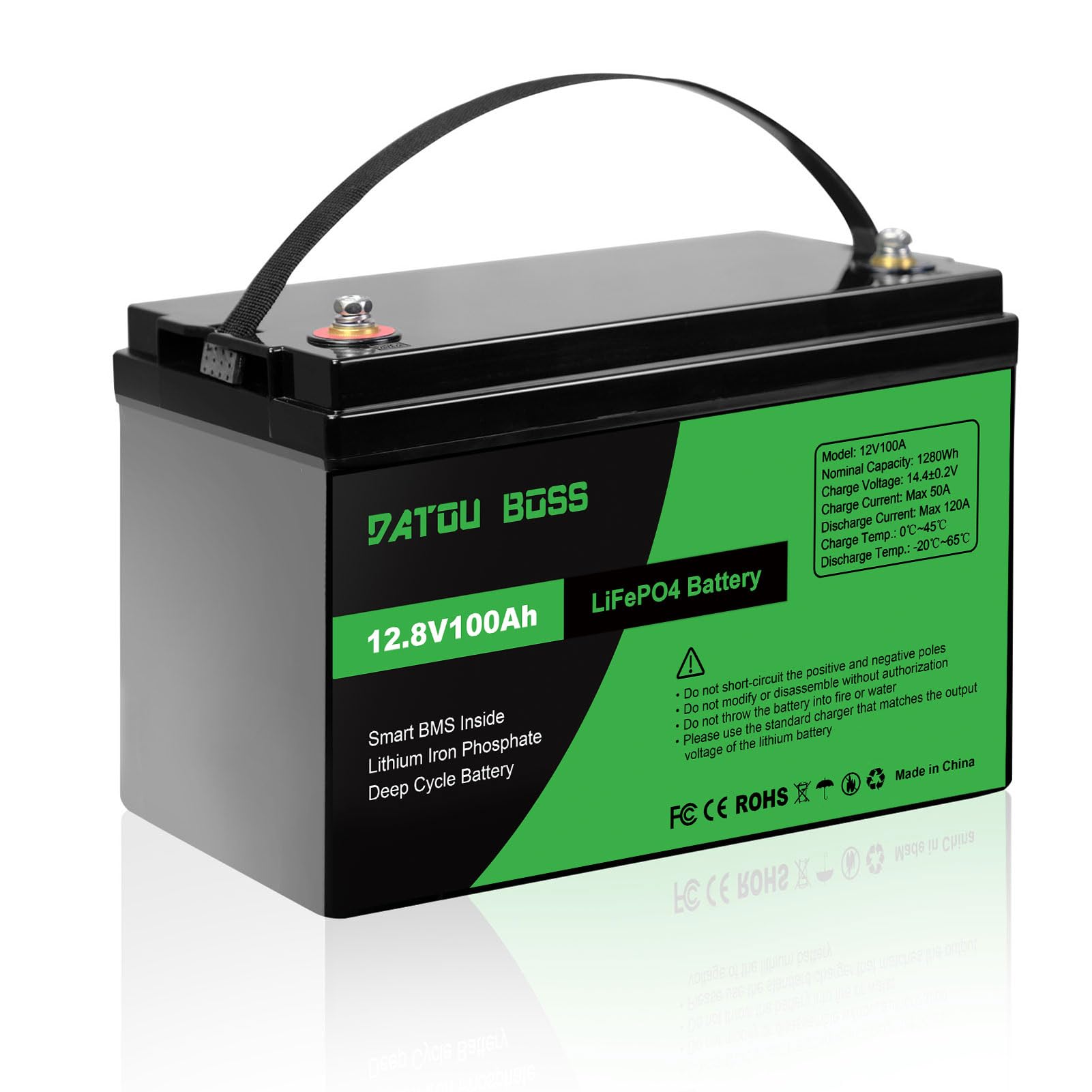
Image 1.1: DATOU BOSS 12V 100Ah LiFePO4 Battery. This image shows the overall appearance of the battery unit.
2. Safety Information
Always observe the following safety precautions to prevent injury or damage to the battery and connected equipment.
- Do not short-circuit the positive and negative terminals.
- Do not modify or disassemble the battery.
- Avoid exposing the battery to fire or water.
- Ensure proper ventilation during charging and discharging.
- Use only chargers compatible with LiFePO4 batteries.
- Do not connect batteries with different chemistries or voltages.
- Keep out of reach of children.

Image 2.1: Battery Management System (BMS) Protection. This diagram illustrates the built-in protections against over-charge, over-discharge, short circuit, overload, and overheating.
The integrated Battery Management System (BMS) provides protection against over-charge, over-discharge, over-current, short circuit, and over-temperature conditions, enhancing safety during use.
3. Product Overview and Features
The DATOU BOSS 12V 100Ah LiFePO4 battery is designed for various applications, offering high performance and durability.
3.1 Key Features
- High Cycle Life: Offers 8000+ deep cycles, providing a long operational lifespan.
- Lightweight Design: Approximately 1/3 the weight of comparable lead-acid batteries, featuring a non-metallic belt handle for easy portability.
- Integrated BMS: Built-in 120A Battery Management System protects against common electrical faults.
- Wide Operating Temperature: Designed for charging temperatures from -20°C to 55°C and discharging temperatures from 0°C to 60°C.
- IP65 Waterproof: Provides protection against dust and water ingress.

Image 3.1: Battery Specifications and Dimensions. This image details the battery's capacity (12.8V 100Ah, 1280Wh), maximum charging current (50A), maximum discharge current (120A), and physical dimensions (33cm x 17cm x 21cm).
3.2 Capacity Expansion
The battery supports both series and parallel connections, allowing for system expansion up to a maximum of 4S4P (51.2V 400Ah) to achieve higher voltage and capacity configurations.
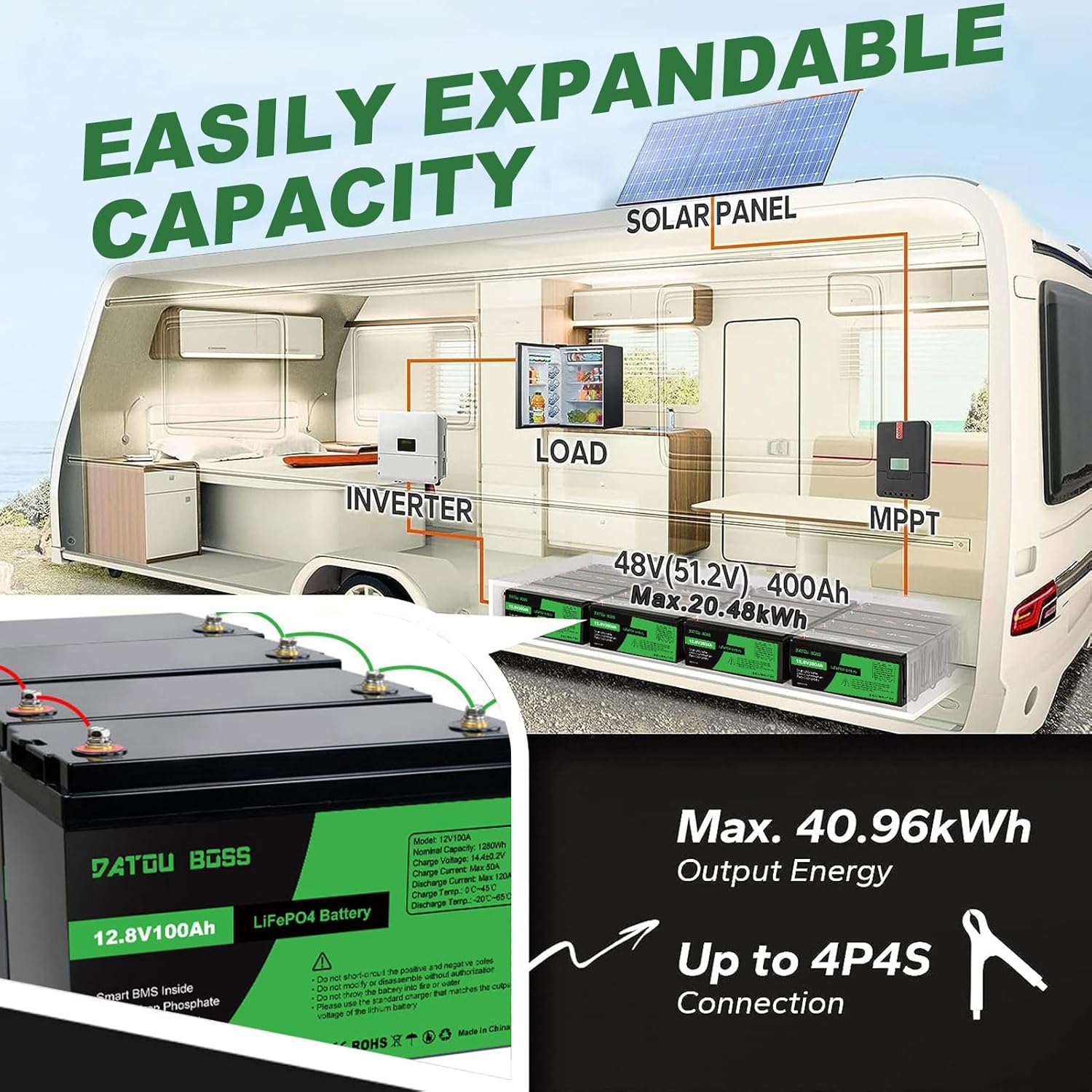
Image 3.2: Expandable Capacity. This illustration demonstrates how multiple batteries can be connected in series and parallel to create a larger battery system, such as a 4S4P 51.2V 400Ah system with 20.48kW output power.
3.3 Advantages Over Lead-Acid Batteries
LiFePO4 batteries offer significant advantages compared to traditional lead-acid batteries, including longer lifespan, lighter weight, and higher depth of discharge.

Image 3.3: Comparison with Lead-Acid Batteries. This image highlights the differences in weight, size, lifespan, and cycle times between LiFePO4 and lead-acid batteries.
3.4 Typical Applications
This LiFePO4 battery is suitable for a wide range of applications, including:
- Electric Vehicles and Recreational Vehicles (RVs)
- Home Energy Storage Systems
- Golf Carts and Boathouses
- Trolling Motors and E-Scooters
- Lighting and Fish Finders
- UPS Backup Power Supply
- Home Solar Equipment

Image 3.4: Diverse Applications. This image displays various scenarios where the battery can be used, such as solar-powered homes, RVs, boats, and general energy storage.
3.5 Power Output Examples
The battery can power various appliances for extended periods, making it suitable for off-grid and portable power needs.

Image 3.5: Appliance Run Times. This image provides examples of how long the battery can power common household appliances, such as a blender (500W for 7.6 hours) or a microwave (1000W for 3.8 hours).
4. Setup and Installation
4.1 Initial Inspection
Upon receiving the battery, inspect it for any visible damage. If damage is found, contact your supplier immediately.
4.2 Connection Guidelines
- Ensure all connections are secure and properly insulated.
- Connect positive terminals to positive and negative to negative.
- For series or parallel connections, ensure all batteries are of the same type, capacity, and state of charge before connecting.
- Use appropriate gauge cables for your application to prevent overheating.

Image 4.1: Solar Panel Connection. This diagram illustrates a typical setup involving a solar panel, MPPT controller, and the LiFePO4 battery for charging.
4.3 Mounting
Mount the battery in a stable, well-ventilated area, away from direct sunlight, heat sources, and flammable materials. Ensure the battery is secured to prevent movement.
5. Operating Instructions
5.1 Charging
- Use a dedicated LiFePO4 battery charger with appropriate voltage and current settings.
- Recommended charging voltage: 14.4V - 14.6V.
- Maximum charging current: 50A.
- Charging temperature range: -20°C to 55°C.
- Avoid charging below 0°C without a low-temperature charging function, as this can damage the battery.
5.2 Discharging
- Maximum continuous discharge current: 120A.
- Discharging temperature range: 0°C to 60°C.
- The BMS will automatically cut off power if the discharge current or temperature exceeds safe limits.
6. Maintenance
- Regular Charging: If the battery is not in regular use, it is recommended to charge it every three months to prolong its lifespan.
- Terminal Inspection: Periodically check battery terminals for corrosion or loose connections. Clean as necessary.
- Storage: Store the battery in a cool, dry place, ideally at a state of charge between 50% and 80%. Avoid extreme temperatures.
- Cleaning: Clean the battery casing with a dry cloth. Do not use solvents or abrasive cleaners.
7. Troubleshooting
If you encounter issues with your battery, refer to the following common problems and solutions. For complex issues, contact customer support.
| Problem | Possible Cause | Solution |
|---|---|---|
| Battery not charging | Charger not connected, faulty charger, BMS protection activated (over-discharge) | Check charger connection and functionality. Ensure charger is compatible. If BMS is active, try a low-current charge to reactivate. |
| No power output | Loose connections, BMS protection activated (over-discharge, over-current, short circuit), battery fully discharged | Check all cable connections. Charge the battery. If BMS is active, remove load and allow it to reset. |
| Battery overheating | Excessive load, poor ventilation, high ambient temperature | Reduce load. Ensure adequate ventilation around the battery. Operate within specified temperature ranges. BMS will shut down if temperature is too high. |
8. Specifications
| Feature | Value |
|---|---|
| Model Number | DT-12V-100Ah |
| Nominal Voltage | 12.8V |
| Nominal Capacity | 100Ah |
| Energy | 1280Wh |
| Max. Continuous Charge Current | 50A |
| Max. Continuous Discharge Current | 120A |
| Recommended Charge Voltage | 14.4V - 14.6V |
| Charge Temperature Range | -20°C to 55°C |
| Discharge Temperature Range | 0°C to 60°C |
| Cycle Life | 8000+ cycles (at 80% DoD) |
| Dimensions (L x W x H) | 32.99 x 16.99 x 21.49 cm |
| Weight | Approximately 1/3 the weight of a comparable lead-acid battery |
| BMS | Built-in 120A BMS |
| Waterproof Rating | IP65 |
Note: The specific gram weight provided in some product data appears to be a typographical error for a 100Ah battery. LiFePO4 batteries are significantly lighter than lead-acid equivalents, typically around 1/3 the weight.
9. Warranty and Support
For warranty information, technical support, or service inquiries, please contact your point of purchase or the manufacturer directly. Keep your purchase receipt as proof of purchase.
