
AMIO 02625
AMiO 02625 Pneumatic Tool Kit Instruction Manual
Model: 02625
Introduction
This manual provides essential instructions for the safe and effective use of your AMiO 02625 Pneumatic Tool Kit. Please read this manual thoroughly before operating the tools and retain it for future reference. This kit is designed for various tasks requiring compressed air, including cleaning, painting, and tire inflation.
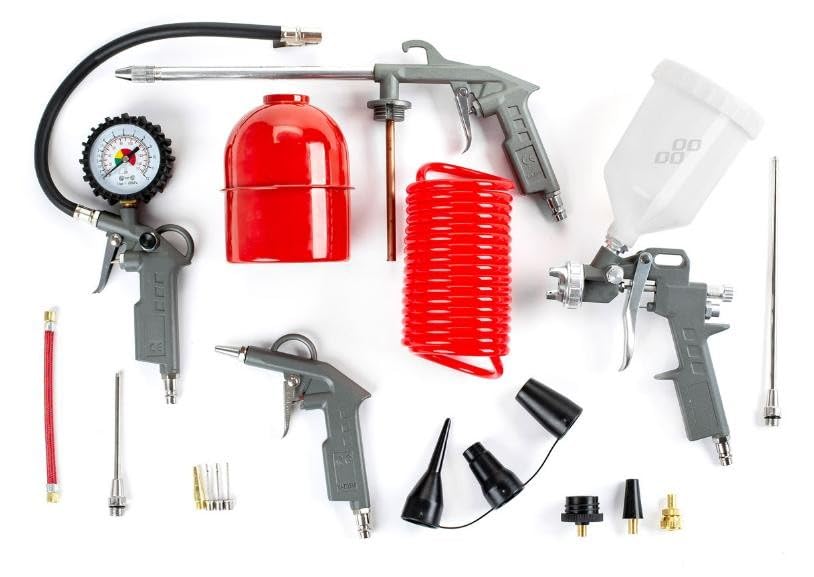
Image: The AMiO 02625 Pneumatic Tool Kit box, showing the included components and branding.
Safety Information
Always observe general safety precautions when working with pneumatic tools. Ensure you wear appropriate personal protective equipment (PPE) such as safety glasses, hearing protection, and gloves. Disconnect the air supply before performing any maintenance or changing accessories. Do not exceed the maximum operating pressure specified for each tool.
Kit Components
The AMiO 02625 Pneumatic Tool Kit includes the following items:
- Air Hose
- Blow Gun
- Spray Gun
- Washing Gun
- Tire Inflating Gun with Pressure Gauge
- Various nozzles and adapters

Image: A close-up view of several components from the kit, including the air hose, blow gun, and connectors.
Setup
Before using any tool from the kit, ensure your air compressor is set to the appropriate pressure and is equipped with a quick-connect coupler compatible with the kit's fittings.
Connecting the Air Hose
- Connect one end of the air hose to the air compressor's quick-connect outlet.
- Ensure the connection is secure and free of leaks.
- Attach the desired pneumatic tool to the other end of the air hose using its quick-connect fitting.
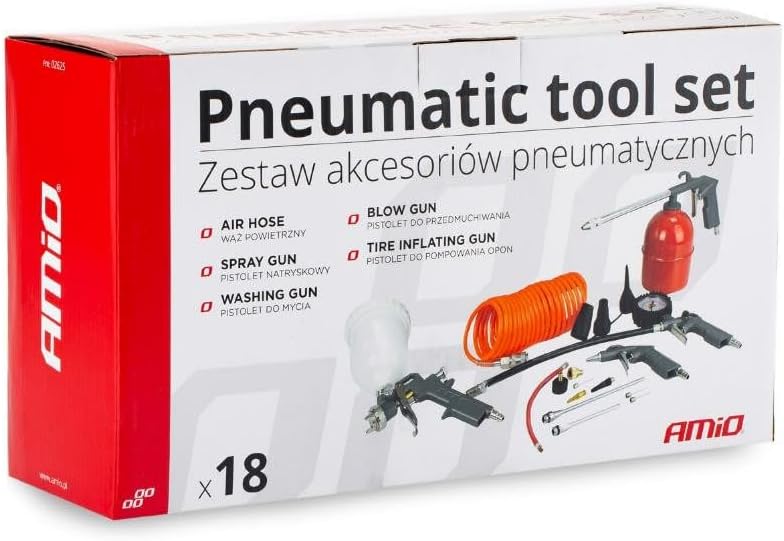
Image: A detailed view of the red coiled air hose and its quick-connect fitting, ready for attachment to a tool or compressor.
Operating Instructions
1. Blow Gun
The blow gun is used for cleaning surfaces, removing dust, debris, and drying. Connect it to the air hose. Press the trigger to release a stream of compressed air. Always direct the air away from yourself and others.

Image: The grey pneumatic blow gun, showing its ergonomic design and quick-connect fitting.
2. Spray Gun
Ideal for applying paint, varnish, or other liquid coatings. Ensure the material is properly thinned according to its specifications. Fill the reservoir with the desired liquid. Adjust the nozzle for the desired spray pattern and flow rate. Maintain a consistent distance from the surface for even application.

Image: The pneumatic spray gun, featuring a clear top-mounted reservoir for paint or other liquids.
3. Tire Inflating Gun with Pressure Gauge
Used for inflating vehicle tires and checking their pressure. Connect the tire inflator to the air hose. Attach the chuck to the tire valve stem. The integrated gauge will display the current tire pressure. Press the trigger to inflate. Release the trigger to stop inflation. Use the bleed valve (if present) to release excess air.
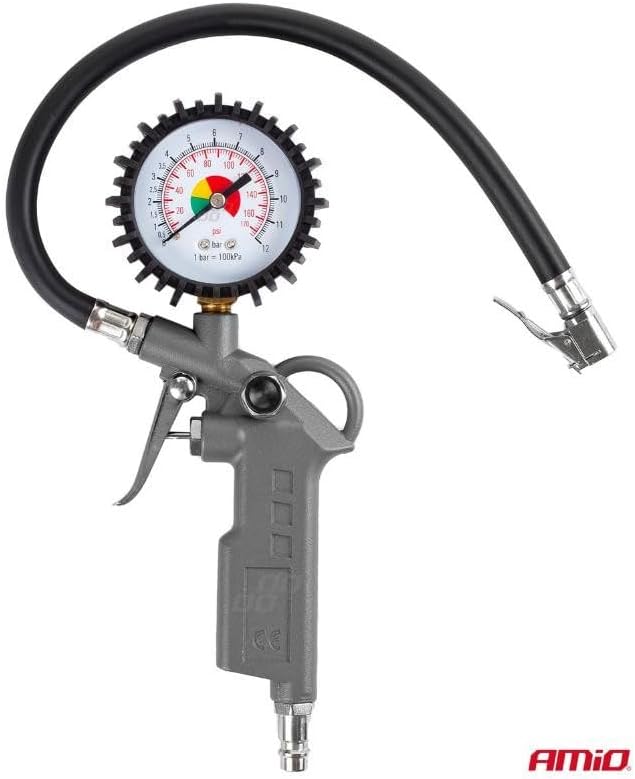
Image: The tire inflating gun, complete with a clear pressure gauge and a flexible hose for connecting to tire valves.

Image: Various nozzles and adapters included in the kit, useful for different inflation and blowing tasks.
4. Washing Gun
Designed for cleaning with liquids, such as engine degreasers or cleaning solutions. Fill the red reservoir with the appropriate cleaning liquid. Connect the gun to the air hose. Press the trigger to spray the cleaning solution mixed with air. Ensure proper ventilation when using cleaning chemicals.

Image: The pneumatic washing gun, featuring a red reservoir for cleaning solutions and a long spray nozzle.
Maintenance
Regular maintenance ensures the longevity and optimal performance of your pneumatic tools.
- Cleaning: After each use, especially for the spray gun and washing gun, thoroughly clean all parts that came into contact with liquids. Use appropriate cleaning agents for the specific material used.
- Lubrication: Apply a few drops of pneumatic tool oil into the air inlet of each tool before and after extended use to lubricate internal components.
- Air Hose: Inspect the air hose regularly for cracks, cuts, or wear. Replace if damaged.
- Storage: Store all tools in a clean, dry place, away from direct sunlight and extreme temperatures. Disconnect tools from the air supply before storage.
Troubleshooting
| Problem | Possible Cause | Solution |
|---|---|---|
| No air flow or low pressure | Air compressor off or low pressure; clogged air inlet; leaky connection. | Check compressor settings; clean air inlet; tighten connections. |
| Spray gun uneven pattern or sputtering | Clogged nozzle; incorrect material viscosity; low air pressure. | Clean nozzle thoroughly; adjust material thinning; increase air pressure. |
| Tire inflator not reading pressure | Improper connection to valve stem; faulty gauge. | Ensure secure connection; check gauge for damage. |
Specifications
- Brand: AMIO
- Model Number: 02625
- Manufacturer Model: PT-07
- Item Weight: 1.73 Kilograms
- Product Dimensions (L x W x H): 38.9 x 22.3 x 12.5 cm
- Number of Tools: 18 (as part of the kit)
Warranty and Support
For warranty information and customer support, please refer to the documentation provided at the point of purchase or contact your retailer. AMiO does not provide direct warranty information in this manual.
Ask a question about this manual
Ask about setup, troubleshooting, compatibility, parts, safety, or missing instructions. Manuals+ will review the question and use this page’s manual context to help answer it.