
1. Introduction
This manual provides essential information for the installation, operation, and maintenance of the NONROT CT100 Carburetor. This carburetor is designed for use with Honda 100cc and Bajaj trail bikes, ensuring optimal fuel delivery and engine performance.
Key features of the NONROT CT100 Carburetor include reliable construction, precise fuel mixture control, and ease of installation, contributing to stable engine characteristics and high reliability.
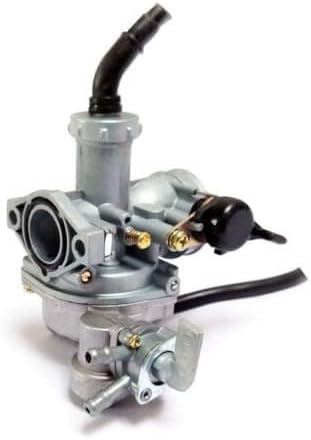
An image showing the NONROT CT100 Carburetor, a replacement part for motorcycle fuel systems. The carburetor is silver-colored metal with black plastic components, including a hand choke lever and fuel inlet/outlet ports. It features a curved black rubber hose extending upwards from the top.
2. Specifications
| Package Dimensions | 5.91 x 3.94 x 1.97 inches |
| Item Weight | 9.1 ounces |
| Manufacturer | NONROT |
| ASIN | B0CB3KYBPS |
3. Setup and Installation
Safety First: Ensure the engine is cool and the fuel supply is turned off before beginning installation. Disconnect the battery's negative terminal to prevent accidental starts or electrical issues.
Tools Required:
- Basic hand tools (wrenches, screwdrivers, pliers)
- Fuel-resistant sealant (optional, for gaskets)
- Clean rags
Installation Steps:
- Remove Old Carburetor: Carefully disconnect all associated components, including fuel lines, vacuum lines, the throttle cable, and the choke cable. Unbolt the old carburetor from the intake manifold and air filter housing.
- Inspect Components: Before installing the new carburetor, inspect the intake manifold gasket and any O-rings for signs of wear or damage. Replace these if necessary to ensure a proper seal and prevent air leaks.
- Install New Carburetor: Position the NONROT CT100 Carburetor, ensuring that any new gaskets are correctly seated. Securely attach the carburetor to both the intake manifold and the air filter housing using the appropriate fasteners.
- Connect Lines and Cables: Reconnect the fuel line, vacuum lines, throttle cable, and choke cable. Verify that all connections are secure, free from kinks, and properly routed.
- Fuel Supply: Reconnect the main fuel supply line and open the fuel valve. Check for any fuel leaks around the carburetor and fuel lines.
- Initial Start-up: Reconnect the battery's negative terminal. Start the engine and allow it to warm up. Observe for proper idle and throttle response. Adjust the idle speed if necessary according to your vehicle's specifications.
4. Operating Instructions
Choke Operation:
The hand choke mechanism is primarily used for starting a cold engine. For a cold start, pull the choke lever fully to enrich the fuel mixture. Once the engine starts and begins to warm up, gradually push the choke lever back to its original position as the engine runs smoothly without assistance. Avoid prolonged use of the choke once the engine is warm.
Fuel Valve (Petcock):
Ensure the fuel valve is in the 'ON' position during vehicle operation to allow fuel flow to the carburetor. If the main fuel supply runs out, switch to the 'RES' (reserve) position to access a small reserve of fuel. Always turn the fuel valve to 'OFF' when the vehicle is not in use for extended periods to prevent fuel leakage or evaporation.
5. Maintenance
Regular maintenance of your carburetor ensures optimal performance and longevity.
- Regular Cleaning: Periodically clean the exterior of the carburetor to prevent dirt and debris buildup. If performance issues arise, a carburetor cleaner spray can be used for internal components, following the product's instructions.
- Fuel Filter Inspection: Inspect and replace the fuel filter regularly. A clean fuel filter is crucial to prevent contaminants from reaching and clogging the carburetor.
- Idle Adjustment: If the engine idles too high or too low, locate the idle screw (typically a large screw on the side of the carburetor) and adjust it to achieve the manufacturer-recommended RPM for your specific vehicle.
- Air Filter Maintenance: Ensure the air filter is clean and properly installed. A dirty or clogged air filter can restrict airflow, leading to an overly rich fuel mixture and affecting carburetor performance.
6. Troubleshooting
This section addresses common issues you might encounter with your carburetor.
Engine Not Starting:
- Fuel Supply: Verify that the fuel valve is open and there is sufficient fuel in the tank.
- Choke Usage: Confirm proper choke usage for cold starts.
- Spark Plug: Inspect the spark plug. A fouled or wet spark plug can indicate a rich fuel mixture or an ignition system issue.
Rough Idle or Stalling:
- Idle Speed Adjustment: Use the idle screw on the carburetor to set the correct engine RPM.
- Vacuum Leaks: Inspect the intake manifold and all vacuum lines for cracks, loose connections, or damaged gaskets that could cause air leaks.
- Carburetor Cleanliness: Internal blockages or deposits within the carburetor can lead to rough running. Consider a thorough cleaning.
Lack of Power:
- Air Filter: Check the air filter for excessive dirt or blockage, which restricts airflow.
- Fuel Flow: Ensure fuel lines are not kinked and the fuel filter is clean, allowing unrestricted fuel flow.
- Throttle Cable: Verify that the throttle cable is properly adjusted and allows the carburetor's throttle plate to open fully.