
1. Introduction
Thank you for choosing the ERBAUER EMCS18-Li 18V Brushless Mini Circular Saw. This manual provides essential information for the safe and effective operation, maintenance, and troubleshooting of your new tool. Please read this manual thoroughly before first use and keep it for future reference. This tool is designed for cutting wood and similar materials.
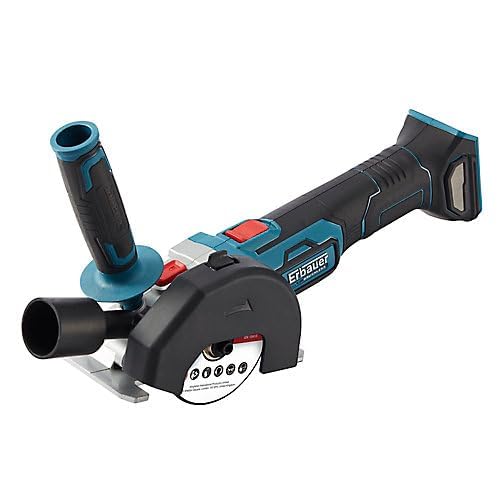
Image 1.1: The ERBAUER EMCS18-Li 18V Brushless Mini Circular Saw. This image shows the compact design of the tool, highlighting its handle, blade guard, and base plate.
2. Safety Information
Always observe basic safety precautions to reduce the risk of fire, electric shock, and personal injury. Keep this manual handy for quick reference.
General Power Tool Safety Warnings
- Work Area Safety: Keep the work area clean and well-lit. Cluttered or dark areas invite accidents. Do not operate power tools in explosive atmospheres, such as in the presence of flammable liquids, gases, or dust.
- Electrical Safety: Power tool plugs must match the outlet. Never modify the plug in any way. Do not expose power tools to rain or wet conditions.
- Personal Safety: Always wear eye protection. Use hearing protection when operating the tool. Dress properly; do not wear loose clothing or jewelry. Keep hair, clothing, and gloves away from moving parts.
- Tool Use and Care: Do not force the power tool. Use the correct power tool for your application. Disconnect the battery pack from the power tool before making any adjustments, changing accessories, or storing power tools.
- Service: Have your power tool serviced by a qualified repair person using only identical replacement parts.
Specific Circular Saw Safety Warnings
- Hold the tool firmly: Always hold the saw with both hands to maintain control.
- Keep hands away from cutting area: Do not reach underneath the workpiece.
- Check for proper blade installation: Ensure the blade is correctly installed and tightened before use.
- Avoid kickback: Maintain a firm grip, position your body and arm to resist kickback forces. Do not overreach.
- Use appropriate blades: Only use blades suitable for the material being cut.
3. Components and Parts List
The ERBAUER EMCS18-Li Mini Circular Saw is supplied as a bare tool. The following components are typically included in the packaging:
- ERBAUER EMCS18-Li 18V Brushless Mini Circular Saw (Tool Body)
- Circular Saw Blade (often pre-installed or included separately)
- Hex Key (for blade changes)
- Parallel Guide (for straight cuts)
- User Manual
Note: Battery pack and charger are sold separately.
4. Setup
Before operating the saw, ensure proper setup and safety checks are performed.
4.1. Battery Installation
- Ensure the saw is switched off.
- Align the battery pack with the battery port on the saw handle.
- Slide the battery pack into the port until it clicks securely into place.
- To remove, press the battery release button and slide the battery out.
Image description: A conceptual image showing a battery pack being inserted into the base of the saw's handle, illustrating the correct alignment and insertion method.
4.2. Blade Installation/Replacement
Always disconnect the battery before changing the blade.
- Disconnect the battery pack.
- Press and hold the spindle lock button to prevent the blade from rotating.
- Using the provided hex key, loosen the blade retaining screw by turning it counter-clockwise.
- Remove the outer flange and the old blade.
- Clean any dust or debris from the blade flanges.
- Place the new blade onto the spindle, ensuring the teeth are pointing in the direction of rotation (usually indicated by an arrow on the blade and saw).
- Replace the outer flange and tighten the blade retaining screw clockwise with the hex key while holding the spindle lock button. Do not overtighten.
- Release the spindle lock and check that the blade rotates freely.
Image description: A conceptual image illustrating the process of changing the saw blade, showing the spindle lock button, the hex key used to loosen the blade screw, and the correct orientation of the new blade.
4.3. Adjusting Cutting Depth
The cutting depth can be adjusted to suit the thickness of your workpiece.
- Loosen the depth adjustment lever/knob.
- Raise or lower the base plate to achieve the desired cutting depth. A scale is usually provided for reference.
- Ensure the blade extends approximately 3-6mm below the workpiece for optimal cutting.
- Tighten the depth adjustment lever/knob securely.
Image description: A conceptual image demonstrating how to adjust the cutting depth, highlighting the depth adjustment lever and the scale on the saw's base plate.
4.4. Adjusting Bevel Angle (45 Degrees Capacity)
The saw allows for bevel cuts up to 45 degrees.
- Loosen the bevel adjustment lever/knob.
- Tilt the base plate to the desired angle (up to 45 degrees). A scale is usually provided.
- Tighten the bevel adjustment lever/knob securely.
Image description: A conceptual image showing the saw's base plate tilted to a bevel angle, with the bevel adjustment lever clearly visible.
5. Operating Instructions
Follow these steps for safe and effective operation of your mini circular saw.
5.1. Before Starting a Cut
- Ensure the workpiece is securely clamped to prevent movement during cutting.
- Mark your cutting line clearly.
- Check that the blade is sharp and suitable for the material.
- Verify that the cutting depth and bevel angle are correctly set and secured.
- Ensure the area below the workpiece is clear to avoid cutting into unintended surfaces.
5.2. Making a Cut
- Hold the saw firmly with both hands.
- Position the front edge of the base plate on the workpiece, ensuring the blade is not touching the material.
- Press the trigger to start the saw, allowing the blade to reach full speed before engaging the material.
- Slowly and steadily guide the saw along the marked cutting line. Do not force the saw; let the blade do the work.
- Maintain a consistent feed rate.
- Once the cut is complete, release the trigger and allow the blade to stop completely before lifting the saw from the workpiece.
5.3. Using the Parallel Guide
The parallel guide helps make straight cuts parallel to an edge.
- Insert the guide into the slots on the saw's base plate.
- Adjust the guide to the desired distance from the blade.
- Tighten the guide's locking screw.
- During the cut, keep the guide pressed firmly against the edge of the workpiece.
Image description: A conceptual image showing the parallel guide attached to the saw's base plate, positioned against the edge of a wooden board, ready for a straight cut.
6. Maintenance
Regular maintenance ensures the longevity and safe operation of your tool.
6.1. Cleaning
- Always disconnect the battery before cleaning.
- Use a soft brush or compressed air to remove dust and debris from the ventilation openings and around the blade guard.
- Wipe the tool housing with a damp cloth. Do not use harsh chemicals or abrasive cleaners.
- Keep the base plate clean to ensure smooth gliding over the workpiece.
6.2. Blade Care
- Regularly inspect the blade for sharpness, damage, or missing teeth. Replace dull or damaged blades immediately.
- Clean resin and pitch buildup from the blade using a suitable blade cleaner.
6.3. Storage
- Store the tool in a dry, secure place, out of reach of children.
- Remove the battery pack before storing for extended periods.
7. Troubleshooting
This section addresses common issues you might encounter.
| Problem | Possible Cause | Solution |
|---|---|---|
| Saw does not start | Battery not charged or improperly installed. | Charge the battery. Ensure battery is fully inserted until it clicks. |
| Saw loses power during operation | Battery low or overheated. Overloading the tool. | Recharge or replace battery. Allow tool to cool down. Reduce cutting pressure. |
| Poor cut quality / Blade binding | Dull or incorrect blade. Improper cutting depth. Workpiece not secured. | Replace blade. Adjust cutting depth. Secure workpiece firmly. |
| Excessive vibration | Damaged blade. Loose blade retaining screw. | Inspect and replace blade if damaged. Tighten blade screw. |
8. Specifications
Technical data for the ERBAUER EMCS18-Li 18V Brushless Mini Circular Saw.
- Model Number: EMCS18-Li
- Brand: ERBAUER
- Voltage: 18 Volts (Battery Powered)
- Motor Type: Brushless
- Blade Material: High-Speed Steel
- Blade Shape: Round
- Number of Teeth: 80 (typical, may vary with blade)
- Special Features: Bevel Capacity, Brake
- Bevel Angle: Up to 45 Degrees
- Recommended Surface: Wood
- Handle Material: Plastic
- Included Components: Bare Tool (Battery and Charger sold separately)
9. Warranty and Support
ERBAUER products are manufactured to high-quality standards. This product is covered by the manufacturer's original warranty. Please refer to the warranty card included with your purchase or visit the official ERBAUER website for detailed warranty terms and conditions.
For technical support, spare parts, or service inquiries, please contact your retailer or the ERBAUER customer service department. Keep your proof of purchase and the product's model number (EMCS18-Li) ready when contacting support.
10. Official Product Videos
Based on the provided product information, no official product videos from the seller are available for embedding at this time.
