
Introduction
This instruction manual provides detailed guidance for the installation, operation, and maintenance of the moseiny 23300-ET80A Starter Replacement. This starter is designed to replace the original starter in compatible Nissan vehicles, ensuring reliable engine starting performance. Please read this manual thoroughly before attempting any installation or maintenance procedures.
Safety Information
Automotive repair can be hazardous. Always follow safety precautions to prevent injury or damage to your vehicle. It is recommended that installation be performed by a qualified technician.
- Always disconnect the vehicle's negative battery terminal before beginning any electrical work.
- Wear appropriate personal protective equipment, including safety glasses and gloves.
- Ensure the vehicle is securely supported on jack stands if working underneath.
- Allow the engine to cool completely before working on engine components.
- Keep all tools and loose clothing away from moving engine parts.
Package Contents
Verify that all components are present and undamaged upon opening the package.
- 1 x moseiny 23300-ET80A Starter Replacement
Fitment Information
This starter replacement is compatible with the following vehicle models and years:
- Nissan Sentra: 2007, 2008, 2009, 2010, 2011, 2012
- Nissan Rogue: 2007, 2008, 2009, 2010, 2011, 2012, 2013
Reference OE Part Number: 23300-ET80A
Setup (Installation)
The following steps outline the general procedure for replacing a starter. Specific vehicle configurations may vary. Consult your vehicle's service manual for precise instructions.
Tools and Materials Required:
- Socket wrench set
- Extension bars
- Torque wrench
- Battery terminal cleaner
- Wire brush
- Safety glasses and gloves
- Vehicle jack and jack stands
Installation Steps:
- Prepare the Vehicle: Park the vehicle on a level surface, engage the parking brake, and turn off the ignition. Disconnect the negative battery terminal first, then the positive terminal.
- Locate the Starter: The starter motor is typically located on the lower part of the engine, often near the transmission bell housing. You may need to lift the vehicle and secure it with jack stands for access.
-
Disconnect Electrical Connections: Carefully disconnect the main battery cable and the solenoid wire from the old starter. Note their positions for reinstallation.

Image: Top view of the starter, highlighting the solenoid and electrical terminals where connections are made.
-
Remove Mounting Bolts: Remove the bolts securing the old starter to the engine block or transmission. Support the starter as you remove the last bolt to prevent it from falling.
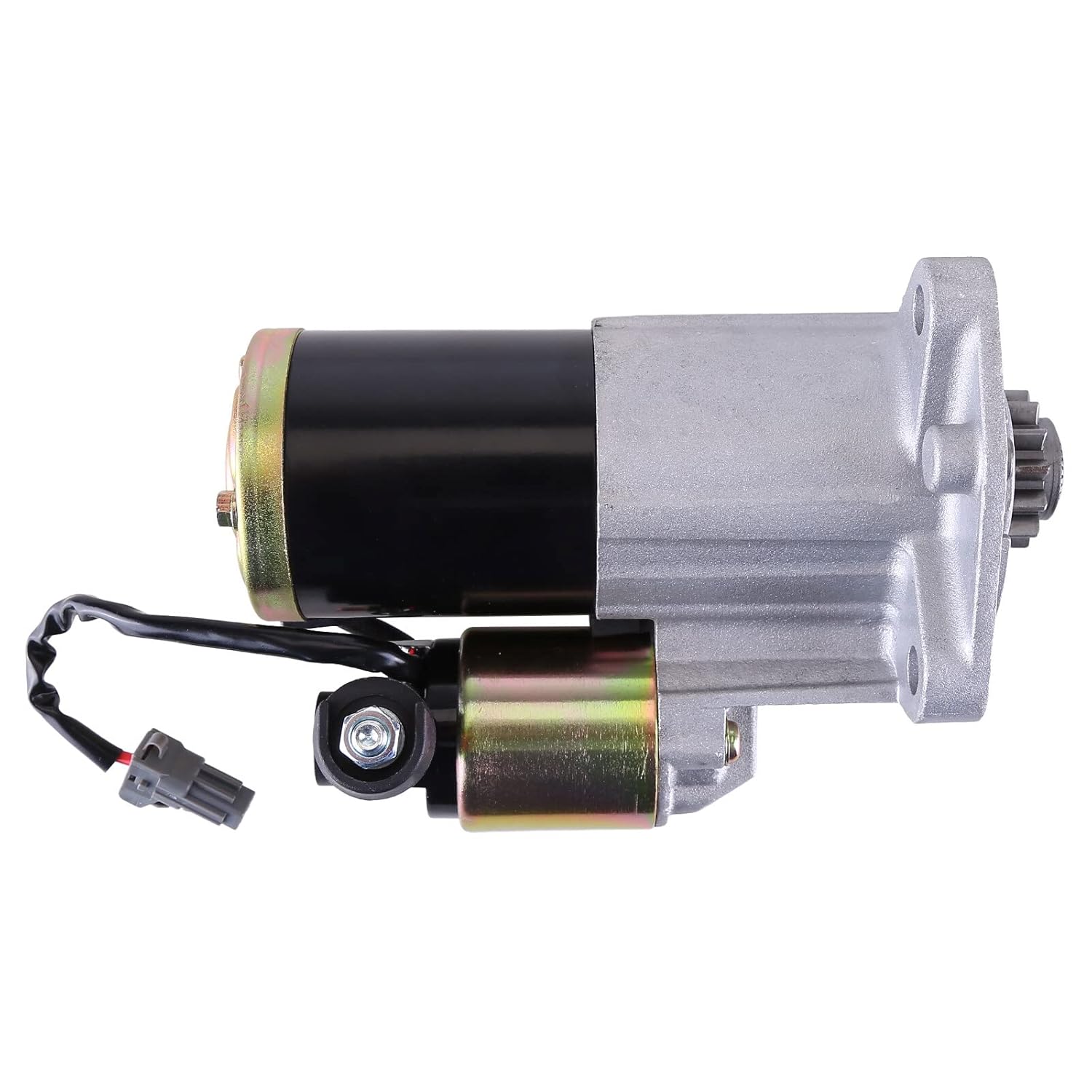
Image: Side view of the starter, illustrating the overall structure and typical mounting bolt locations.
-
Install New Starter: Position the new moseiny starter in place and hand-tighten the mounting bolts. Ensure the starter gear aligns correctly with the flywheel.

Image: Front view of the starter, displaying the pinion gear that engages with the engine's flywheel.
- Tighten Mounting Bolts: Torque the mounting bolts to the specifications provided in your vehicle's service manual. Overtightening or undertightening can cause damage.
-
Reconnect Electrical Connections: Reconnect the main battery cable and the solenoid wire to the new starter. Ensure connections are clean and secure.

Image: Side view of the starter, showing the electrical harness connector for the solenoid signal wire.
- Reconnect Battery: Reconnect the positive battery terminal first, then the negative battery terminal.
- Final Checks: Double-check all connections and ensure no tools or debris are left in the engine bay.
Operating
After installation, perform a functional test of the starter.
- Initial Start: Attempt to start the vehicle. The engine should crank smoothly and start as expected.
- Listen for Abnormal Noises: Pay attention to any unusual grinding, whirring, or clicking sounds during cranking. These could indicate an issue with installation or the starter itself.
- Multiple Starts: Perform several starts to ensure consistent operation.
Maintenance
The moseiny 23300-ET80A starter is designed for durability and requires minimal maintenance. However, periodic checks can help ensure its longevity.
- Battery Condition: Ensure your vehicle's battery is in good condition and fully charged. A weak battery can put undue strain on the starter.
- Cable Connections: Periodically inspect the battery cables and starter connections for corrosion or looseness. Clean and tighten as necessary.
- Visual Inspection: During other under-hood inspections, visually check the starter for any signs of physical damage, loose wires, or excessive dirt/debris buildup.
Troubleshooting
If you experience issues after installing the starter, consider the following common problems and solutions:
| Problem | Possible Cause | Solution |
|---|---|---|
| Engine does not crank or cranks slowly |
|
|
| Clicking sound, but no crank |
|
|
| Grinding noise during cranking |
|
|
If troubleshooting steps do not resolve the issue, it is recommended to consult a professional automotive technician.
Specifications
| Feature | Detail |
|---|---|
| Product Name | Metal Starter Replacement |
| Brand | moseiny |
| Model Number | NOWXUOK189-519A |
| OE Part Number | 23300-ET80A |
| Material | Metal |
| Product Dimensions (L x W x H) | 25 x 21 x 19 cm (9.8 x 8.3 x 7.5 inches) |
| Item Weight | 3.2 kg (7.05 lbs) |
| Voltage | 606 Volts (Note: This value appears unusually high and may be a data entry error. Standard automotive starters operate on 12V. Please verify with a qualified technician.) |
| Included Components | 1 x Starter |
Warranty and Support
Warranty information for the moseiny 23300-ET80A Starter Replacement is typically provided with the product packaging or by the retailer at the time of purchase. Please refer to these documents for specific warranty terms and conditions.
For technical support or further assistance, please contact the retailer or manufacturer directly using the contact information provided with your purchase.