
Introduction
This instruction manual provides essential information for the safe and effective installation, operation, and maintenance of your SOBOUR RKB1/DC Series DC Circuit Breaker. This device is designed to provide reliable overcurrent protection for various DC applications, including solar power systems, inverter circuits, and electric vehicle systems. Please read this manual thoroughly before installation and use.
Safety Information
Always adhere to the following safety precautions to prevent injury or damage to the equipment:
- Disconnect Power: Ensure all power sources are disconnected before installing or servicing the circuit breaker.
- Professional Installation: Installation should be performed by a qualified electrician or technician familiar with DC electrical systems.
- Correct Rating: Verify that the circuit breaker's voltage and current ratings match your application's requirements.
- Polarity: Observe correct DC polarity during wiring to prevent damage to the circuit breaker and connected equipment.
- Environmental Conditions: Do not expose the circuit breaker to excessive moisture, dust, or extreme temperatures beyond its specified operating range.
Product Overview
The SOBOUR RKB1/DC Series DC Circuit Breaker features a robust design for reliable circuit protection. It includes a toggle switch for manual operation (ON/OFF) and a clear indication of its status. The terminals are designed for secure wire connections.
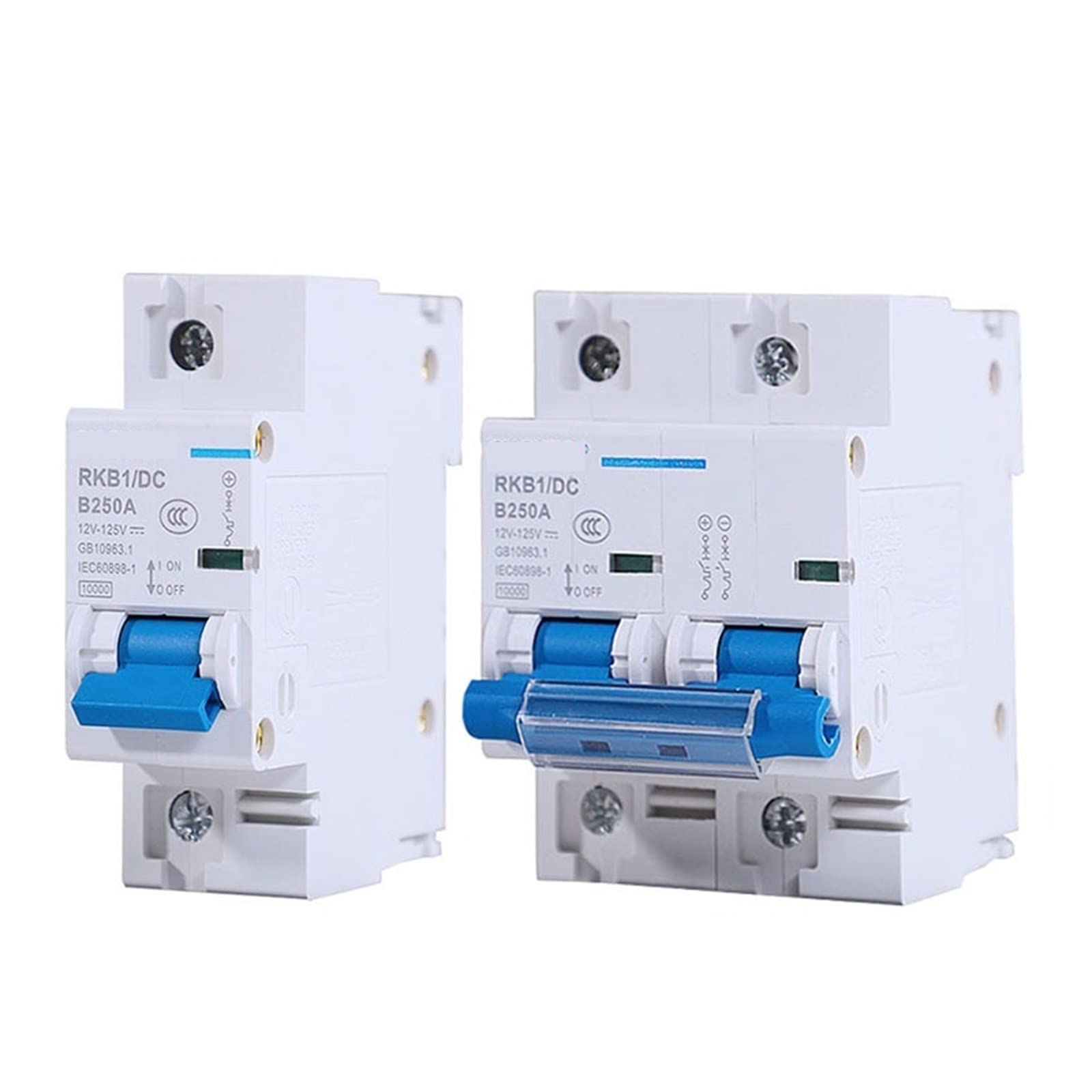
Image: Two SOBOUR RKB1/DC Series DC Circuit Breakers, illustrating their compact design and terminal connections. One breaker is shown from the front, the other from a slight angle, highlighting the toggle switch and rating labels.
Installation Instructions
Follow these steps for proper installation of your DC Circuit Breaker:
- Mounting: Securely mount the circuit breaker onto a DIN rail or appropriate mounting surface within an enclosure, ensuring adequate ventilation.
- Wiring Preparation: Strip the insulation from the DC power cables to the appropriate length, ensuring no loose strands.
- Connect Input: Connect the positive (+) DC input cable to the terminal marked with a '+' or 'IN' (typically the top terminal). Connect the negative (-) DC input cable to the terminal marked with a '-' or 'IN'.
- Connect Output: Connect the positive (+) DC output cable to the terminal marked with a '+' or 'OUT' (typically the bottom terminal). Connect the negative (-) DC output cable to the terminal marked with a '-' or 'OUT'.
- Tighten Terminals: Use a screwdriver to securely tighten all terminal screws. Do not overtighten.
- Verify Connections: Double-check all wiring for correct polarity and secure connections before restoring power.

Image: Front view of a single-pole SOBOUR RKB1/DC Series DC Circuit Breaker, showing the toggle switch in the 'OFF' position and the clear labeling for voltage, current, and standards.
Operating Instructions
The SOBOUR RKB1/DC Series DC Circuit Breaker is designed for simple operation:
- Turning ON: Push the toggle switch upwards to the 'ON' position.
- Turning OFF: Push the toggle switch downwards to the 'OFF' position.
- Automatic Tripping: In the event of an overcurrent or short circuit, the circuit breaker will automatically trip to the 'OFF' position to protect the circuit.
- Resetting: After an automatic trip, identify and resolve the cause of the fault. Once the fault is cleared, push the toggle switch fully to the 'OFF' position, then push it upwards to the 'ON' position to reset the breaker. If the breaker trips immediately again, do not force it; re-examine the circuit for persistent faults.
Maintenance
The SOBOUR RKB1/DC Series DC Circuit Breaker requires minimal maintenance:
- Periodic Inspection: Regularly inspect the circuit breaker and its connections for any signs of damage, corrosion, or loose wiring.
- Cleaning: Keep the circuit breaker clean and free from dust and debris. Use a dry, soft cloth for cleaning. Do not use liquid cleaners.
- Functional Check: Periodically test the circuit breaker's tripping mechanism if your system allows for safe testing procedures.
Troubleshooting
If you encounter issues with your circuit breaker, consider the following:
- Breaker Trips Frequently:
- Cause: Overload on the circuit, short circuit, or faulty appliance/wiring.
- Solution: Disconnect loads, inspect wiring for shorts, reduce load, or replace faulty components.
- Breaker Does Not Reset:
- Cause: Persistent fault in the circuit, or internal damage to the breaker.
- Solution: Ensure all faults are cleared. If it still doesn't reset, the breaker may be damaged and require replacement.
- No Power to Circuit:
- Cause: Breaker is in 'OFF' or tripped position, or upstream power issue.
- Solution: Check breaker status and reset if tripped. Verify power supply to the breaker.
Specifications
| Feature | Specification |
|---|---|
| Brand | SOBOUR |
| Model Series | RKB1/DC |
| Voltage Rating | 12V, 24V, 48V, 60V, 120V DC |
| Current Ratings Available | 80A, 100A, 125A, 150A, 200A, 250A |
| Number of Poles | 1P (Single Pole) |
| Standards | GB10963, IEC60898-1 |
| Application | Inverter, Electric Car, Solar Protection, General DC Circuits |
| ASIN | B0C49687K5 |
Warranty and Support
Specific warranty details for this SOBOUR RKB1/DC Series DC Circuit Breaker are not provided in the product information. For warranty claims, technical support, or further assistance, please contact the seller or manufacturer directly through your purchase platform. Keep your purchase receipt as proof of purchase.


