
1. Introduction and Overview
The JESSINIE HLK-LD2410 is a 24GHz human presence sensor radar module designed for accurate detection of human presence, including static, micro-motion, sitting, and lying states. This module offers a wide detection angle and configurable sensing distances, making it suitable for various applications requiring precise human presence detection.
This manual provides essential information for the proper setup, operation, and maintenance of your HLK-LD2410 module. Please read it thoroughly before use.
2. Product Features
- High Sensitivity: Capable of detecting static, micro-motion, sitting, and lying human bodies, which traditional sensors may miss.
- Wide Detection Range: Farthest sensing distance up to 5 meters with a detection angle of up to ±60 degrees.
- Environmental Adaptability: Performance is not affected by environmental factors such as temperature, brightness, humidity, or light fluctuations.
- Concealed Operation: Can be hidden within product enclosures, eliminating the need for surface openings and improving product aesthetics.
- Configurable Parameters: Flexible configuration of sensing distance and sensitivity for different zones.
- Easy Integration: Designed for plug-and-play assembly with a compact form factor.
3. Product Components and Dimensions
The HLK-LD2410 module is a compact circuit board with integrated radar components and a pin header for connectivity.

Figure 3.1: Top view of the HLK-LD2410 radar module, showing the main components and pin header.

Figure 3.2: Bottom view of the HLK-LD2410 radar module, highlighting the WiGig antenna design.
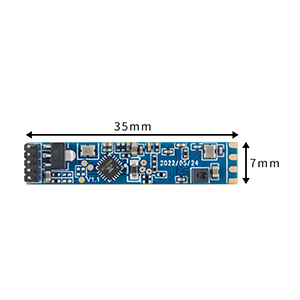
Figure 3.3: Dimensions of the HLK-LD2410 module, measuring approximately 35mm in length and 7mm in width.
The module typically comes with a Dupont cable for easy connection to development boards or other systems.
4. Setup Instructions
- Power Supply: Connect the module to a stable DC 5V power supply. Refer to the pinout diagram for correct voltage and ground connections.
- Data Connection: Use the provided Dupont cable to connect the module's data pins (e.g., UART TX/RX) to your microcontroller or development board.
- Mounting: Position the module in the desired detection area. Ensure there are no metallic obstructions directly in front of the radar antenna that could interfere with signal transmission. The module can be concealed behind non-metallic materials.
- Software Configuration: Depending on your application, you may need to configure the module's parameters (e.g., detection distance, sensitivity) via a serial interface or dedicated software. Consult the HLK-LD2410 datasheet for detailed communication protocols and commands.
Video 4.1: An overview of the HLK-LD2410B-P Human Presence Radar Module Sensor Board, demonstrating its physical characteristics and potential for integration. This video is provided by Jessinie, the brand seller.
5. Operating Instructions
Once powered and configured, the HLK-LD2410 module continuously emits 24GHz millimeter waves to detect human presence. The module outputs data indicating presence, motion, and distance information through its serial interface.
- Presence Detection: The module can distinguish between a person being present (static or micro-motion) and no presence.
- Motion Detection: It can detect gross motion within its field of view.
- Distance Information: The module provides approximate distance to the detected object, which can be used for zone-based detection.
- Customization: Utilize the module's configuration options to fine-tune sensitivity and detection zones to match specific application requirements. For example, you can set different sensitivity levels for various distances to avoid false triggers.
6. Maintenance
The HLK-LD2410 module is designed for low maintenance. Follow these guidelines to ensure optimal performance:
- Keep Clean: Ensure the module and its immediate surroundings are free from dust and debris.
- Avoid Physical Damage: Handle the module with care to prevent damage to the circuit board or antenna.
- Environmental Conditions: Operate the module within its specified temperature range of -40°C to +85°C. Avoid exposure to extreme moisture or corrosive environments.
- Firmware Updates: Periodically check the manufacturer's website for any available firmware updates that may improve performance or add new features.
7. Troubleshooting
| Problem | Possible Cause | Solution |
|---|---|---|
| No detection or inconsistent detection | Incorrect power supply; Obstruction in detection path; Incorrect sensitivity settings; Outdated firmware. | Verify 5V DC power supply; Ensure clear line of sight for radar or use appropriate non-metallic enclosure; Adjust sensitivity and distance parameters; Check for and apply firmware updates. |
| Module not responding via serial interface | Incorrect wiring; Incorrect serial port settings (baud rate, etc.); Module damage. | Check pin connections (TX/RX, GND, VCC); Confirm serial port settings match module specifications; Test with a known working module if possible. |
| False detections | High sensitivity; Environmental interference (e.g., strong vibrations, large moving objects outside intended zone). | Reduce sensitivity; Refine detection zones; Ensure proper mounting to minimize vibrations. |
8. Specifications
- Model: HLK-LD2410
- Operating Frequency Band: 24GHz - 24.25GHz
- Detection Angle: ±60 degrees
- Farthest Sensing Distance: Up to 5 meters
- Power Source: DC power supply
- Voltage: 5 Volts
- Operating Temperature Range: -40°C to +85°C
- Dimensions: Approximately 35mm x 7mm (Length x Width)
- Item Weight: Approximately 0.317 ounces
9. Warranty and Support
JESSINIE products are manufactured to high-quality standards. For warranty information, technical support, or further assistance, please refer to the official JESSINIE website or contact your retailer.
Please retain your proof of purchase for any warranty claims.