
1. Introduction
The Garosa 45° Portable Pneumatic Chamfering Machine is a compact and efficient tool designed for deburring, trimming, and chamfering various materials such as metal, plastic, and composites. It provides a precise 45° chamfer, making it ideal for machinists, fabricators, and maintenance professionals requiring smooth edge finishes. This manual provides essential information for the safe and effective use of your new tool.
2. Safety Instructions
Always observe the following safety precautions to prevent injury and damage to the tool:
- Read the entire manual: Understand all instructions and warnings before operating the tool.
- Wear personal protective equipment (PPE): Always wear safety glasses, hearing protection, and gloves.
- Ensure proper air supply: Connect the tool to a clean, dry, regulated air supply within the specified pressure range.
- Secure workpiece: Always clamp or secure the workpiece firmly to prevent movement during operation.
- Keep hands clear: Never place hands or fingers near the rotating cutter head.
- Disconnect air supply: Always disconnect the air supply before changing accessories, performing maintenance, or when the tool is not in use.
- Inspect tool: Before each use, check the tool for any damage, loose parts, or dull blades. Do not use a damaged tool.
- Work in a well-ventilated area: Ensure adequate ventilation to disperse any dust or debris generated.
- Avoid accidental starting: Ensure the safety switch is engaged when not actively chamfering.
3. Package Contents
Upon unpacking, verify that all items are present and undamaged:
- Garosa 45° Portable Pneumatic Chamfering Machine
- Pneumatic Connector
- Hex Wrenches (for blade replacement)
- User Manual (this document)

Figure 3.1: Chamfering machine with its accessories and examples of finished edges.
4. Product Overview
Familiarize yourself with the components of your chamfering machine:

Figure 4.1: Key components of the chamfering machine.
- Chamfer Size Adjustment: Dial to set the desired chamfer depth.
- Safety Start Switch: Lever mechanism to prevent accidental activation.
- Air Intake: Port for connecting the pneumatic air supply.
- Tungsten Carbide Triangular Double Piece Cutter Head: The durable cutting component.
- Alloy Baffle: Protective guard around the cutter head.
- Air Outlet: Exhaust port for spent air.
5. Setup
Follow these steps to set up your chamfering machine for first use:
- Connect Air Supply: Attach the pneumatic connector to the air intake port of the tool. Ensure your air compressor provides clean, dry air at the recommended pressure (refer to specifications). The air port requires access of at least 7 mm (0.28 inches).
- Adjust Chamfer Depth: The chamfer depth can be adjusted from 0.1 mm to 0.9 mm. Rotate the chamfer size adjustment dial (located near the cutter head) to your desired depth. This twist-and-lock mechanism does not require additional tools.
- Inspect Blade: Ensure the tungsten carbide blade is securely installed and sharp. Replace if dull or damaged (refer to Maintenance section).
6. Operating Instructions
Once set up, the chamfering machine is ready for operation:
- Secure Workpiece: Firmly secure the material you intend to chamfer.
- Grip Tool: Hold the chamfering machine firmly with one hand, ensuring a stable grip.
- Activate Tool: Press the safety start switch to activate the tool. The cutter head will reach a no-load speed of up to 30,000 rpm.
- Begin Chamfering: Gently guide the rotating cutter head along the edge of the workpiece. Apply steady, even pressure. The tool is designed for quick and clean chamfering.
- Monitor Progress: Observe the chamfer being created and adjust your technique or depth setting as needed.
- Deactivate Tool: Release the safety start switch to stop the tool.

Figure 6.1: Operating the chamfering machine on a workpiece.
7. Maintenance
Regular maintenance ensures the longevity and performance of your chamfering machine.
Blade Replacement
The tungsten carbide blade is a wear item and will need replacement when it becomes dull or damaged. Use the provided hex wrenches for this procedure.

Figure 7.1: Tungsten carbide triangular blade.

Figure 7.2: Blade dimensions for replacement.
- Disconnect Air: Always disconnect the air supply from the tool before attempting any maintenance.
- Remove Baffle: Use the appropriate hex wrench to loosen and remove the screws securing the alloy baffle. Carefully remove the baffle.
- Remove Blade: Use the smaller hex wrench to loosen the screw holding the triangular blade in place. Carefully remove the old blade.
- Install New Blade: Position the new tungsten carbide blade onto the cutter head, ensuring it sits flush. Secure it with the screw, but do not overtighten.
- Reattach Baffle: Place the alloy baffle back into position and secure it with its screws.
General Maintenance
- Lubrication: Apply a few drops of pneumatic tool oil into the air intake before and after each use to lubricate internal components.
- Cleaning: Keep the tool clean and free of debris. Use compressed air to blow out any dust from the air outlet and around the cutter head.
- Storage: Store the tool in a dry, clean environment when not in use.
8. Troubleshooting
If you encounter issues with your chamfering machine, refer to the following common problems and solutions:
| Problem | Possible Cause | Solution |
|---|---|---|
| Tool does not start or runs slowly | Low air pressure; Clogged air intake; Safety switch not fully engaged | Check air compressor pressure; Clean air intake; Ensure safety switch is fully pressed |
| Poor chamfer quality or excessive vibration | Dull or damaged blade; Incorrect chamfer depth setting; Loose components | Replace blade; Adjust chamfer depth; Check for loose screws and tighten |
| Air leakage | Loose air connector; Damaged O-rings or seals | Tighten air connector; Inspect and replace O-rings/seals if necessary |
9. Specifications
Technical specifications for the Garosa 45° Portable Pneumatic Chamfering Machine:
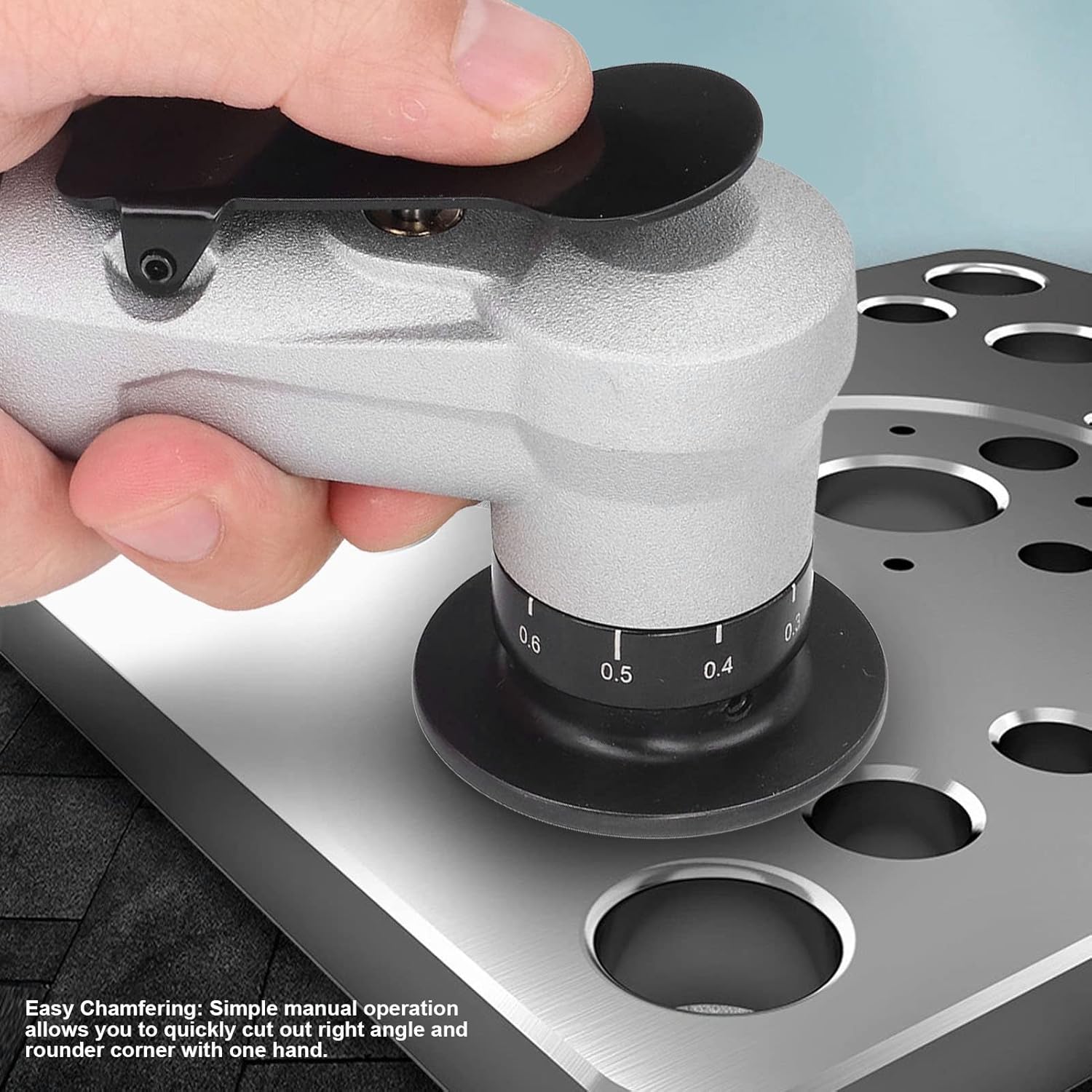
Figure 9.1: Product dimensions.
| Feature | Specification |
|---|---|
| Model Number | Garosapnzs2643rm |
| No-Load Speed | Up to 30,000 rpm |
| Air Consumption | 0.14 m³/min |
| Air Port Access | ≥7 mm (0.28 inches) |
| Adjustable Chamfer Depth | 0.1 mm to 0.9 mm |
| Chamfer Angle | 45° |
| Body Material | Aluminum Alloy |
| Cutter Material | Tungsten Carbide |
| Item Weight | 440 g (0.97 lbs) |
| Product Dimensions | 15.6 x 9.4 x 4.9 cm (6.14 x 3.7 x 1.93 inches) |
10. Warranty & Support
For warranty information or technical support, please refer to the retailer where the product was purchased or visit the official Garosa brand store online. Keep your purchase receipt as proof of purchase.
Garosa Brand Store: Visit Garosa Store