
Introduction
This manual provides comprehensive instructions for the proper setup, operation, and maintenance of the Generic MB2610 Triple Beam Mechanical Balance Scale. Designed for precise measurements in laboratory, analytical, and educational settings, this scale offers a maximum weighing capacity of 2610 grams with a resolution of 0.1 grams. Its robust mechanical design ensures durability and consistent performance without the need for external power sources or batteries.

Figure 1: The Generic MB2610 Triple Beam Mechanical Balance Scale, showcasing its main components and included additional weights.
Product Components
The MB2610 Triple Beam Mechanical Balance Scale includes the following main components:
- Scale Base: The sturdy foundation of the balance.
- Weighing Pan: A stainless steel pan for placing items to be weighed.
- Three Beams:
- Top Beam: 0-100g in 10g increments.
- Middle Beam: 0-500g in 100g increments.
- Bottom Beam: 0-10g in 0.1g increments.
- Sliding Poises (Weights): For adjusting the measurement on each beam.
- Pointer and Zero Mark: For indicating balance.
- Zero Adjustment Knob: For calibrating the scale to zero.
- Magnetic Damping System: To quickly stabilize the pointer.
- Attachment Weights: Additional weights (typically 1000g and 500g) to extend the weighing capacity up to 2610g.

Figure 2: Detailed view of the scale's beams with their respective increments and the additional weights.
Setup
- Unpacking: Carefully remove all components from the packaging. Inspect for any damage.
- Placement: Place the balance on a stable, level surface, free from vibrations, drafts, and direct sunlight.
- Remove Shipping Clip: Locate the shipping clip or arrestment mechanism, usually beneath the weighing pan or near the beam assembly. Ensure this clip is pulled out or disengaged before use. This allows the beam to move freely.

Figure 3: The shipping clip must be disengaged before operating the scale.
- Assemble Pan: Place the weighing pan securely onto the pan support.
- Zero Adjustment: With the pan empty and all poises at their zero positions, gently turn the zero adjustment knob (typically located on the left side of the beam) until the pointer aligns precisely with the zero mark on the scale. This ensures accurate measurements.
Operating Instructions
Follow these steps to accurately weigh an object:
- Verify Zero: Before each measurement, ensure the scale is properly zeroed with an empty pan and all poises at zero. Adjust if necessary.
- Place Object: Carefully place the object to be weighed onto the center of the weighing pan.
- Rough Measurement (Heavy Objects): If the object is heavy, the pointer will rise. Begin by moving the largest poise (500g) along its beam until the pointer drops below the zero mark. Then, move it back one notch.
- Medium Measurement: Next, move the 100g poise along its beam, following the same procedure: move it until the pointer drops, then move it back one notch.
- Fine Measurement: Finally, move the smallest poise (10g) along its beam until the pointer aligns exactly with the zero mark. This poise allows for precise adjustments down to 0.1g.
- Using Attachment Weights (for objects over 610g): For objects exceeding the 610g capacity of the beams, hang the appropriate attachment weights onto the designated hooks on the beam. Start with the largest weights first (e.g., 1000g, then 500g) until the pointer drops, then proceed with the beam poises as described in steps 3-5. The total weight is the sum of the hanging weights and the readings from the three beams.

Figure 4: The scale in use, demonstrating how an object is placed on the pan for weighing.

Figure 5: An example of weighing a heavier object, requiring the use of an additional hanging weight.
- Read Measurement: Once the pointer is balanced at the zero mark, read the values indicated by each poise on its respective beam. Sum these values to obtain the total weight of the object.
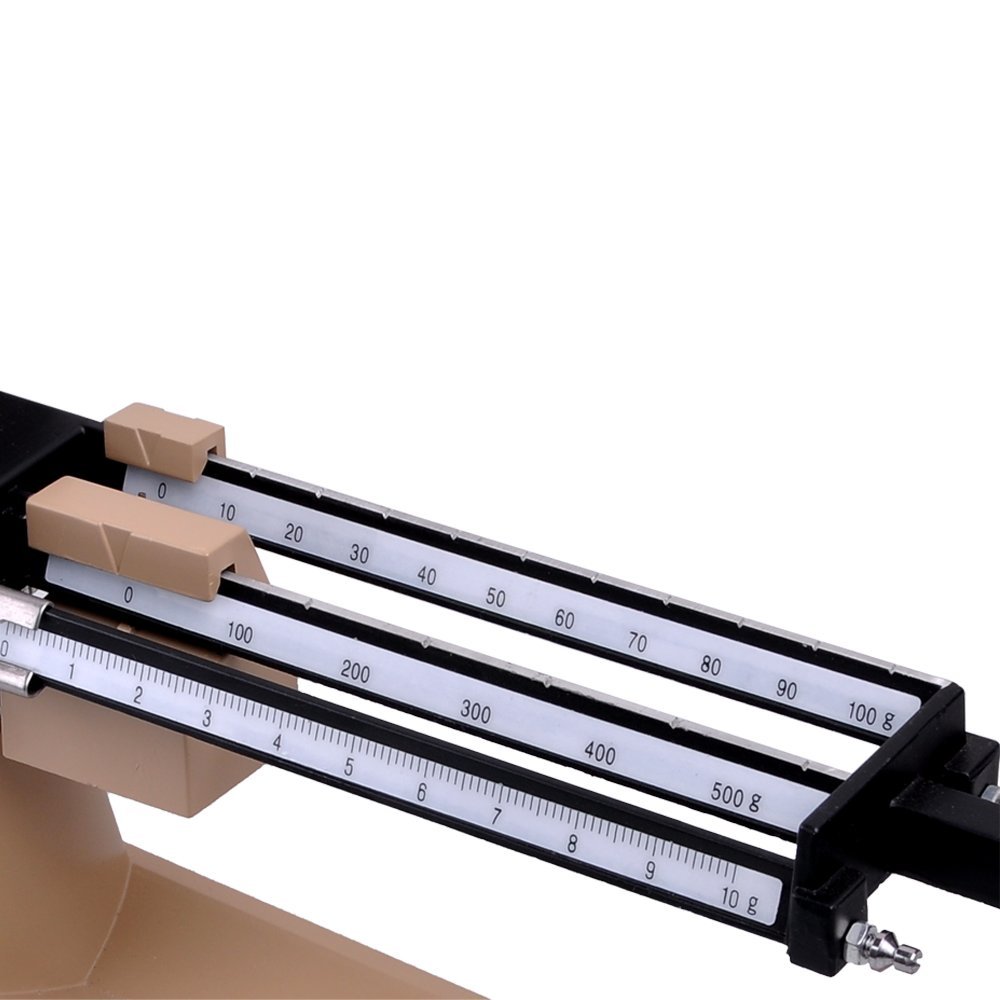
Figure 6: A close-up view of the three beams, illustrating how to read the precise measurement from each poise.
- Remove Object: Carefully remove the object from the pan after measurement. Return all poises to their zero positions.
Maintenance
Proper maintenance ensures the longevity and accuracy of your balance scale:
- Cleaning: Wipe the scale with a soft, dry cloth after each use. For stubborn dirt, use a slightly damp cloth with mild soap, then dry thoroughly. Avoid abrasive cleaners or solvents.
- Storage: Store the balance in a clean, dry, and stable environment, away from extreme temperatures, humidity, and corrosive chemicals.
- Handling: Always handle the scale with care. Avoid dropping or subjecting it to sudden impacts, which can affect its calibration and delicate mechanisms.
- Calibration Check: Periodically check the zero point calibration. If the scale consistently fails to zero or provides inconsistent readings, refer to the troubleshooting section.
Troubleshooting
| Problem | Possible Cause | Solution |
|---|---|---|
| Scale does not zero properly. |
|
|
| Pointer swings excessively or takes too long to stabilize. |
|
|
| Inaccurate readings. |
|
|
Specifications
- Model: MB2610
- Brand: Generic
- Manufacturer: MBB
- Weighing Capacity: 2610 grams (2.61 kg)
- Readability/Resolution: 0.1 grams
- Beam Increments:
- Front Beam: 0-10 grams (0.1g increments)
- Middle Beam: 0-500 grams (100g increments)
- Rear Beam: 0-100 grams (10g increments)
- Additional Weights: Included to extend capacity up to 2610g.
- Product Dimensions: 18.8 x 8.2 x 7.2 inches
- Product Weight: 6.11 Pounds
- Recommended Use: General Weighing, Lab Analytical, School
- Power Source: Mechanical (No batteries required)
Warranty and Support
For warranty information or technical support regarding your Generic MB2610 Triple Beam Mechanical Balance Scale, please refer to the documentation provided at the time of purchase or contact the manufacturer, MBB, directly. Support contact details are typically found on the product packaging or the manufacturer's official website.
Please have your model number (MB2610) and purchase date ready when contacting support.