
WGSP
Wire Gauge Reference Samples User Manual
Model: WGSP
Introduction
The Wire Gauge Reference Samples (Model WGSP) provide a convenient and accurate method for identifying common American Wire Gauge (AWG) sizes. This tool is designed for electricians, home inspectors, and anyone requiring quick and reliable wire size verification. Each sample is clearly labeled with its AWG size and suggested maximum amperage, aiding in preventing costly errors and ensuring compliance with electrical standards.
Product Overview
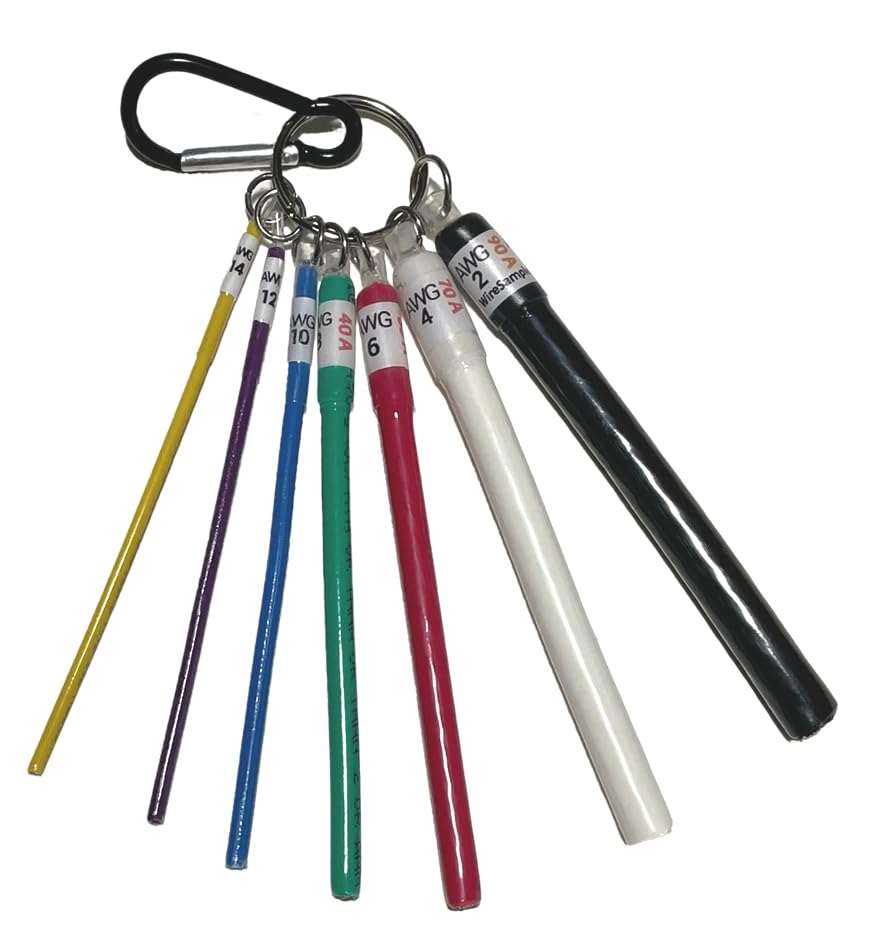
This image displays the complete set of Wire Gauge Reference Samples. The samples are attached to a durable keychain with a carabiner clip for easy portability and access. Each sample is a short length of insulated copper wire, clearly marked with its AWG size. The set includes common sizes such as AWG 2, 4, 6, 8, 10, 12, and 14, making it a comprehensive tool for various electrical inspection and identification tasks.
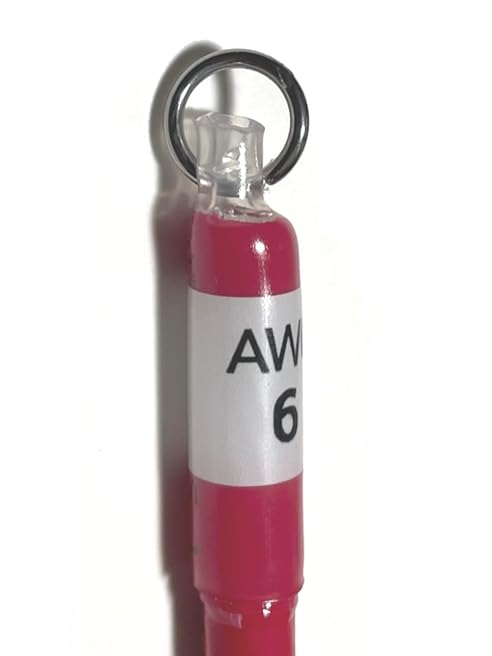
A close-up view of a single wire sample, specifically AWG 6. This image highlights the clear labeling on each sample, indicating its American Wire Gauge size. The insulation color may vary, but the printed label ensures accurate identification. This detail emphasizes the ease of use and precision offered by the reference samples.

This image illustrates the quality difference in copper wire. It shows cross-sections of copper building wire manufactured in the USA compared to wire from China. The US-made wire (top row) demonstrates consistent, high-quality copper strands, while the Chinese-made wire (bottom row) appears to contain less copper or different materials. This visual emphasizes the product's commitment to using only USA-manufactured copper building wire, ensuring compliance with American Wire Gauge sizing standards and superior conductivity.

This image depicts a hand holding a traditional circular wire gauge tool, with a large red 'X' superimposed, indicating that this method is not recommended. The background shows a complex electrical panel with numerous wires. This visual highlights the potential risks, such as dislodging wires or electrocution, associated with using less precise or intrusive methods for wire identification compared to the safe and direct comparison offered by the Wire Gauge Reference Samples.
Setup
The Wire Gauge Reference Samples require no complex setup. Upon receipt, simply remove the samples from their packaging. They are pre-assembled on a keychain for immediate use and portability. Ensure all seven samples (AWG 2, 4, 6, 8, 10, 12, 14) are present and securely attached to the keyring.
Operating Instructions
To accurately identify the gauge of an unknown wire, follow these steps:
- Safety First: Always ensure the wire you are inspecting is de-energized before attempting any physical comparison. Electrical work should only be performed by qualified individuals.
- Select a Sample: Choose a wire sample from the set that appears to be closest in diameter to the unknown wire.
- Compare Diameters: Hold the selected reference sample next to the unknown wire. Visually compare their diameters. For best results, try to align the ends or sides of the wires.
- Verify Label: Once a match is found, confirm the AWG size and suggested maximum amperage printed on the label of the reference sample.
- Repeat if Necessary: If the initial sample does not provide a clear match, try a slightly larger or smaller gauge sample until the most accurate visual comparison is achieved.
This method allows for quick and non-intrusive wire identification, reducing the risk of damage to existing installations.
Maintenance
The Wire Gauge Reference Samples are designed for durability and require minimal maintenance. To ensure their longevity and accuracy:
- Cleaning: Wipe the samples periodically with a dry, soft cloth to remove dust or grime. Avoid using harsh chemicals or abrasive materials that could damage the insulation or labels.
- Storage: Store the samples in a dry environment, away from extreme temperatures or direct sunlight, to prevent material degradation. The included keychain is ideal for keeping them organized and protected.
- Inspection: Periodically inspect the wire samples and their labels for any signs of wear, damage, or fading. Ensure the keyring and carabiner are secure.
Troubleshooting
While the Wire Gauge Reference Samples are straightforward, here are some common inquiries and solutions:
- Lost a Wire Sample: If you happen to lose one of the wire samples, please contact customer support. The manufacturer offers a free replacement wire for lost samples.
- Label Fading: If a label begins to fade, gently clean the area and consider applying a clear protective tape over the label to preserve its legibility.
- Difficulty Identifying Wire: Ensure you are comparing the conductor diameter (the metal part) if the unknown wire's insulation is significantly different or damaged. For precise measurements, always refer to official electrical codes and standards.
Specifications
| Feature | Detail |
|---|---|
| Model Number | WGSP |
| Included AWG Sizes | 2, 4, 6, 8, 10, 12, 14 |
| Material | US-Made Copper Stranded & Solid Core Wire |
| Product Dimensions | Approximately 5 x 2 x 0.5 inches (12.7 x 5.08 x 1.27 cm) |
| Item Weight | Approximately 3.84 ounces (108.87 grams) |
| Country of Origin | USA |
Warranty and Support
The manufacturer, Nitty Gritty, stands behind the quality of the Wire Gauge Reference Samples. While specific warranty terms are not detailed here, the manufacturer has publicly stated a commitment to customer satisfaction, including offering free replacement wires for lost samples.
For support, inquiries, or to request a replacement wire, please contact the manufacturer directly. Refer to the product packaging or the point of purchase for the most current contact information. Your satisfaction is important to us.
Ask a question about this manual
Ask about setup, troubleshooting, compatibility, parts, safety, or missing instructions. Manuals+ will review the question and use this page’s manual context to help answer it.