
Rode PODMICUSB
RØDE PodMic USB Dynamic Broadcast Microphone User Manual
Model: PODMICUSB
Introduction
This manual provides detailed instructions for the setup, operation, and maintenance of your RØDE PodMic USB dynamic broadcast microphone. The PodMic USB is engineered for high-quality audio capture across various applications, including podcasting, streaming, gaming, and voice-overs. It offers versatile connectivity options, featuring both XLR and USB-C outputs, and incorporates integrated digital signal processing for enhanced sound performance.
Package Contents
Verify that all items listed below are present in your RØDE PodMic USB package:
- RØDE PodMic USB Microphone
- External Pop Filter
- SC29 USB-C to USB-C Cable (3m)
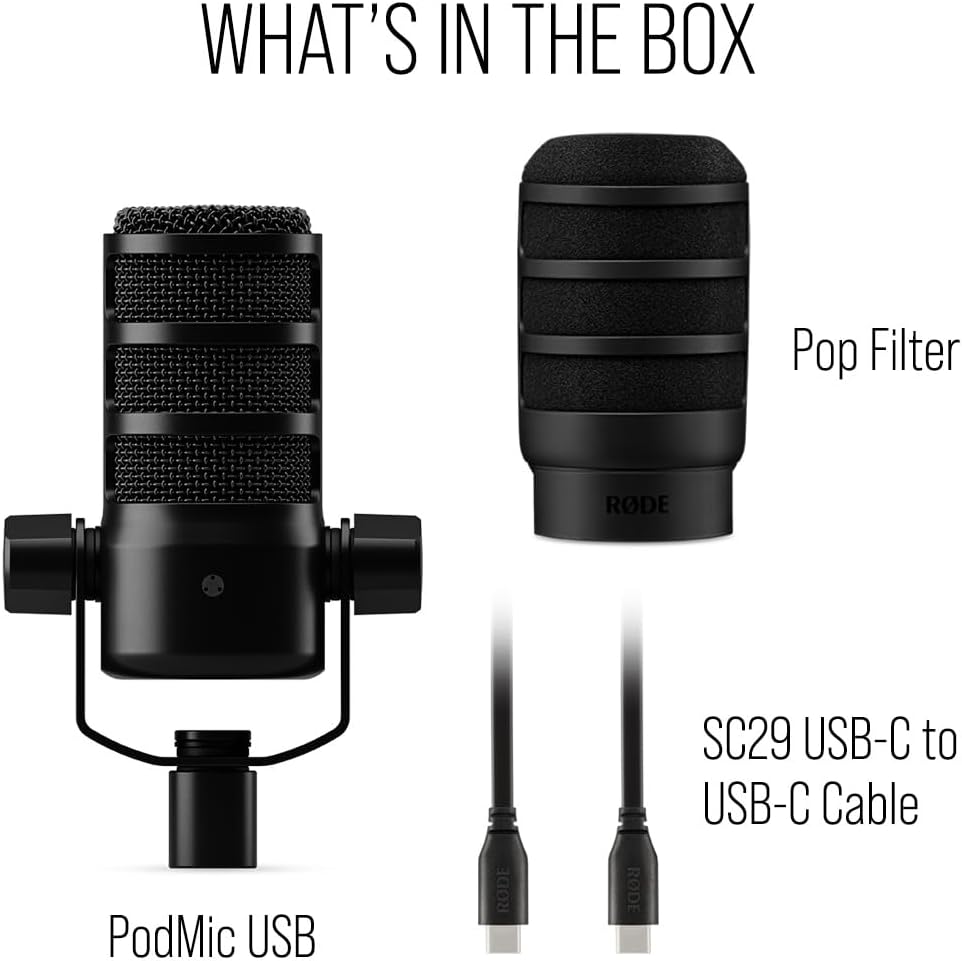
Image: Package Contents. This image displays the RØDE PodMic USB microphone, an external pop filter, and the included SC29 USB-C to USB-C cable, which are all part of the standard package.
Setup
1. Physical Installation
- Mounting the Microphone: The PodMic USB features an integrated swing mount. Attach the microphone securely to a compatible microphone stand or boom arm. Ensure the chosen stand is robust enough to support the microphone's weight (approximately 1.9 pounds or 0.86 kg).
- Positioning: For optimal sound capture and clarity, position the microphone directly in front of the sound source (e.g., your mouth) at a distance of 2-6 inches (5-15 cm). The integrated internal pop filter and external pop filter work together to minimize plosive sounds (harsh 'p' and 'b' sounds).
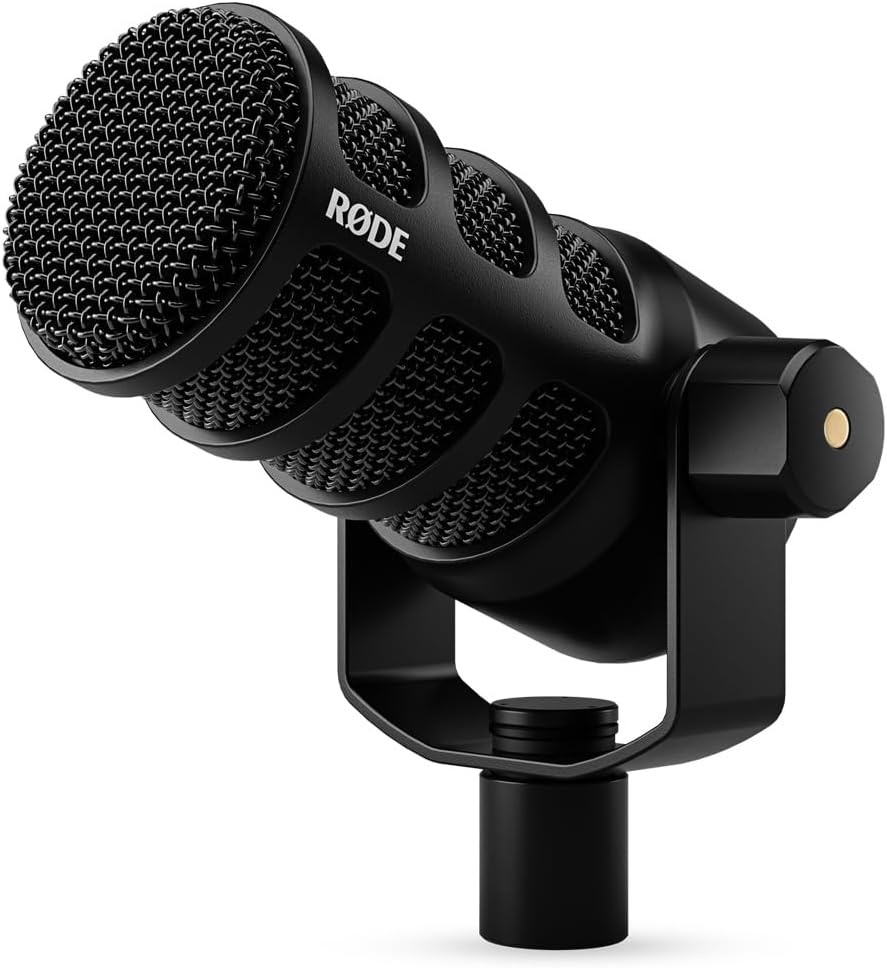
Image: Microphone Setup. The RØDE PodMic USB microphone is shown mounted on a stand, angled for optimal sound capture. Proper positioning is essential for achieving high-quality audio.
2. Connectivity Options
The PodMic USB offers two primary connection methods to suit various recording and streaming setups:
- XLR Connection (Analog):
Connect a standard 3-pin XLR cable (not included) from the XLR output on the microphone to an audio interface, mixer, or preamplifier. This connection provides a traditional analog signal path, suitable for professional audio environments.
- USB-C Connection (Digital):
Use the supplied SC29 USB-C to USB-C cable to connect the microphone directly to a computer (Windows, macOS) or a compatible mobile device (iOS, Android). This connection enables digital audio transmission and provides access to internal Digital Signal Processing (DSP) features via the RØDE Central software.
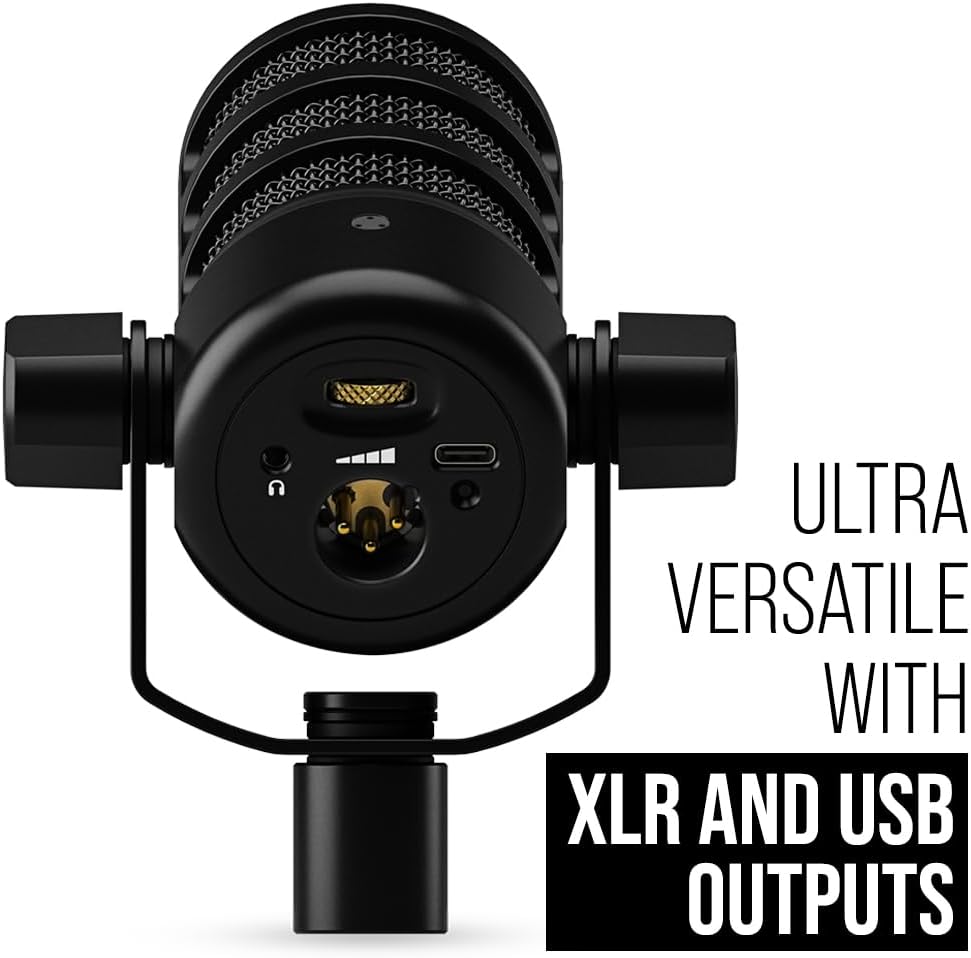
Image: Connectivity Ports. This image highlights the XLR and USB-C output ports, along with the 3.5mm headphone monitoring jack, located at the base of the microphone.
Operating Instructions
1. USB Mode Operation
- Connecting to a Computer/Mobile Device: Plug the USB-C cable into the microphone and then into your computer or mobile device. The device should automatically recognize the microphone as an audio input device.
- Monitoring Audio: Connect headphones to the 3.5mm headphone jack on the microphone for direct, zero-latency monitoring of your audio. Adjust the headphone volume using the dedicated control knob located next to the headphone jack on the microphone.
- RØDE Central Software: Download and install the RØDE Central application from the official RØDE website (rode.com/software/rode-central). This software provides access to advanced features and settings, including:
- Adjusting microphone gain levels.
- Activating APHEX® digital signal processing (Aural Exciter and Big Bottom) for enhanced vocal presence and depth.
- Performing firmware updates to ensure your microphone has the latest features and improvements.
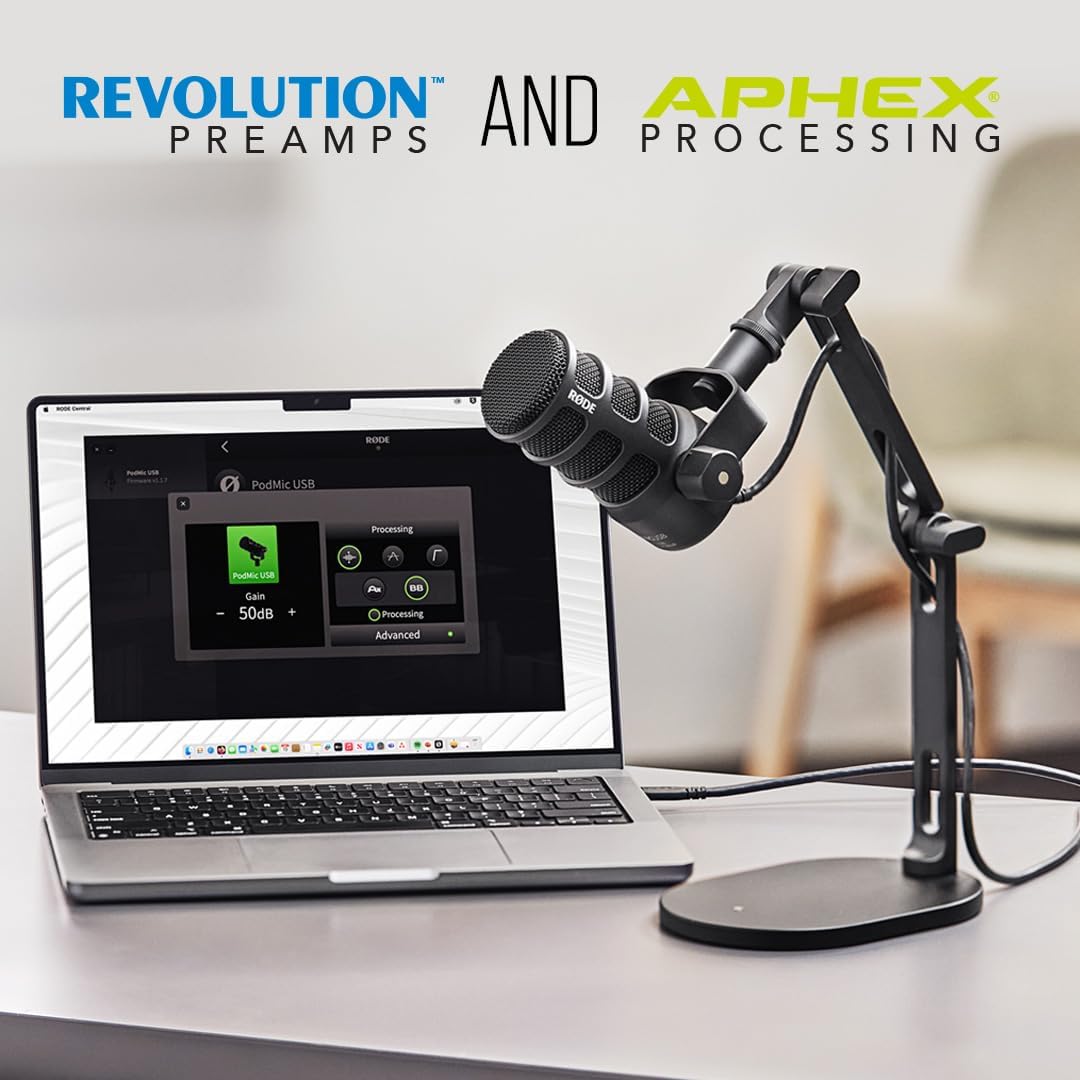
Image: RØDE Central Interface. This image shows the RØDE Central application running on a laptop, illustrating how users can control microphone settings and apply DSP features.
- Recording: Select the "RØDE PodMic USB" as your audio input device within your preferred audio recording, streaming, or communication software.
2. XLR Mode Operation
- Connecting to an Audio Interface/Mixer: Connect the XLR cable from the microphone to an available XLR input on your audio interface or mixer.
- Gain Staging: Adjust the preamplifier gain on your audio interface or mixer to achieve an optimal input level. The PodMic USB is a dynamic microphone and typically requires a higher gain setting compared to condenser microphones to reach a suitable recording level without noise. Monitor your levels to avoid clipping (distortion).
- Monitoring: Monitor your audio through your audio interface or mixer's dedicated headphone output.
Maintenance
Proper maintenance ensures the longevity and optimal performance of your RØDE PodMic USB microphone.
- Cleaning: Use a soft, dry, lint-free cloth to gently clean the exterior surfaces of the microphone. Avoid using liquid cleaners, abrasive materials, or solvents, as these can damage the microphone's finish or internal components.
- Storage: When not in use, store the microphone in a clean, dry environment, away from extreme temperatures and humidity. Utilizing its original packaging or a dedicated protective case is recommended to prevent dust accumulation and potential physical damage.
- Pop Filter: The external pop filter can be gently cleaned with a slightly damp cloth if necessary. Ensure it is completely dry before reattaching it to the microphone.
Troubleshooting
If you encounter issues with your RØDE PodMic USB, refer to the following table for common problems and their solutions.
| Problem | Possible Cause | Solution |
|---|---|---|
| No audio output (USB) |
|
|
| No audio output (XLR) |
|
|
| Distorted audio |
|
|
| Excessive background noise |
|
|
Specifications
Detailed technical specifications for the RØDE PodMic USB microphone:
| Feature | Detail |
|---|---|
| Microphone Type | Dynamic |
| Polar Pattern | Unidirectional (Cardioid) |
| Connectivity | XLR, USB Type-C |
| Power Source | XLR (Phantom Power not required), USB Bus Power |
| Signal-to-Noise Ratio | 60 dB |
| Item Weight | 1.9 pounds (0.86 kg) |
| Product Dimensions (L x W x H) | 4.84 x 4.29 x 4.33 inches (12.29 x 10.89 x 11 cm) |
| Material | All-metal construction |
| Compatible Devices | Android, Windows, iOS, macOS |
| Special Features | XLR and USB Outputs, Internal DSP (APHEX®), Zero-latency Headphone Monitoring, Integrated Pop Filter, Internal Shock Mount |
Warranty and Support
RØDE products are designed for durability and high performance. For detailed warranty information and to register your product, please visit the official RØDE website. Product registration may extend your warranty period, with some users reporting a 5-year warranty upon registration.
For technical support, firmware updates, or additional resources, please refer to the RØDE support page or contact their customer service directly. Keep your purchase receipt as proof of purchase for any warranty claims.
Official RØDE Website: https://www.rode.com
RØDE Central Software: https://www.rode.com/software/rode-central
Product Videos
The following video provides a visual overview and demonstration of the RØDE PodMic USB microphone.
RØDE PodMic USB Overview
Video: RØDE PodMic USB Overview. This video provides a general overview of the RØDE PodMic USB microphone, showcasing its key features, design, and versatile applications for content creators.
Related documentsPODMICUSB


Ask a question about this manual
Ask about setup, troubleshooting, compatibility, parts, safety, or missing instructions. Manuals+ will review the question and use this page’s manual context to help answer it.