
1. Product Overview
The JESSINIE SX1278 LoRa Ra-02 Wireless Module is designed for ultra-long-range spread spectrum communication. It utilizes the SX1278 RF chip, which incorporates LoRa remote modem technology to achieve robust, long-distance wireless data transmission with minimal current consumption. This module offers strong anti-interference capabilities and high reliability, making it suitable for various applications requiring extended range and low power.
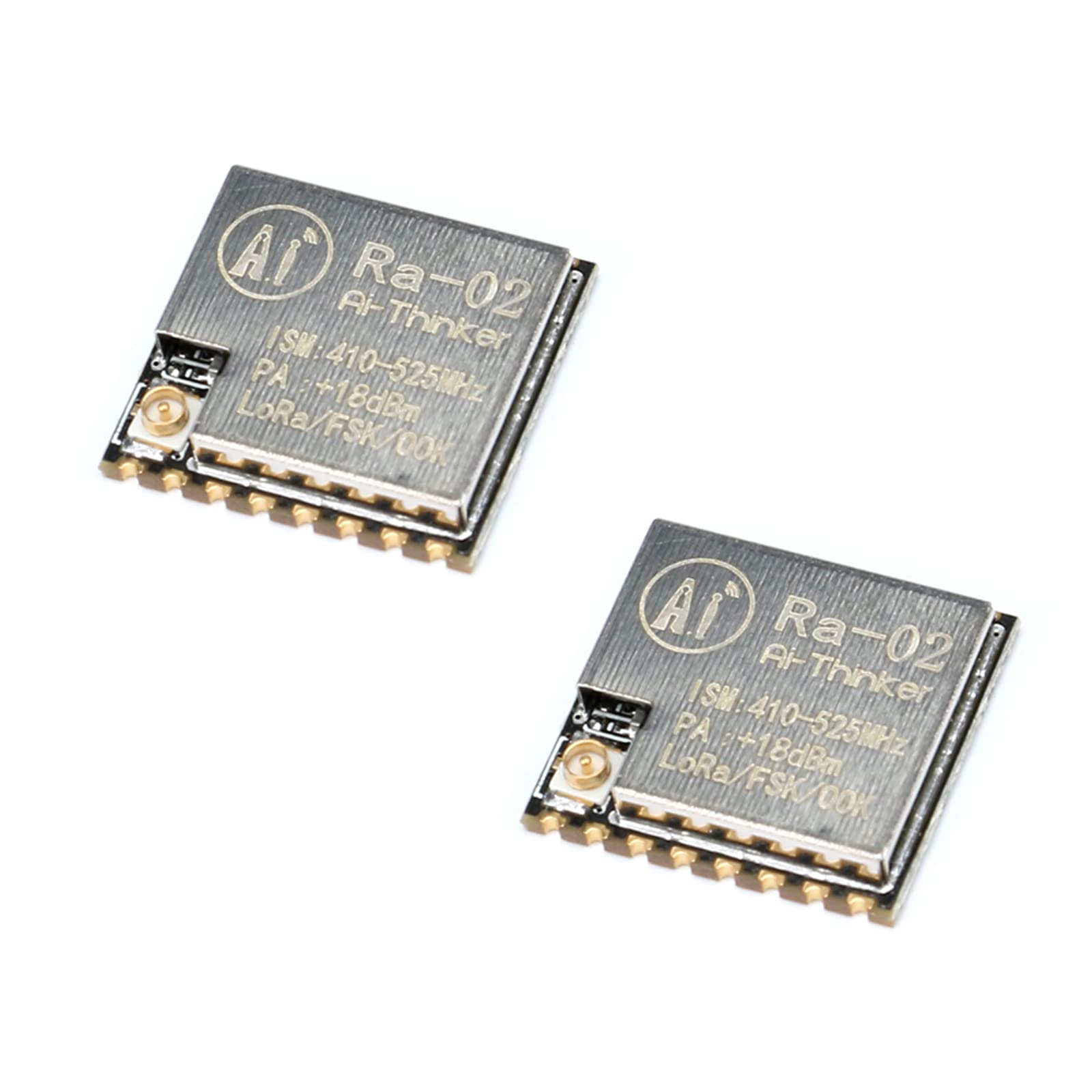
Image 1.1: Top view of the JESSINIE SX1278 LoRa Ra-02 Wireless Module, showing the 'Ai-Thinker Ra-02' branding and frequency range.
Key Features:
- Modulation Support: LoRa modem supports FSK, GFSK, MSK, GMSK, LoRa, and OOK modulation methods.
- Frequency Band: Operates within the 410MHz to 525MHz frequency range.
- Working Voltage: Requires a 3.3V power supply.
- Output Power: Maximum output power of 20dBm.
- Current Consumption: Maximum working current of 105mA. Low power consumption in receiving state (12.15mA) and standby (1.6mA).
- Sensitivity: High sensitivity, as low as -140dBm.
- Interface: Utilizes SPI interface for half-duplex communication.
- Packet Engine: Features CRC and supports up to 256 bytes of packet engine.
- Bit Rate: Programmable bit rate up to 300kbps.
2. Specifications
| Specification | Value |
|---|---|
| Brand | JESSINIE |
| Model | Ra-02 (SX1278) |
| Hardware Interface | Serial Interface (SPI) |
| Frequency Band | 410MHz ~ 525MHz |
| Working Voltage | 2.7V ~ 3.6V (Typical 3.3V) |
| Max Output Power | 20dBm |
| Max Working Current | 105mA |
| Receiving Current | 12.15mA |
| Standby Current | 1.6mA |
| Sensitivity | -140dBm (low as) |
| Data Transfer Rate | Up to 300kbps (programmable) |
| Communication Protocol | SPI, Half-duplex |
| Packet Engine | CRC, up to 256 bytes |
| Item Weight | 0.01 Kilograms |
3. Setup
This section outlines the basic steps for connecting and preparing your Ra-02 module for operation. Ensure all connections are secure and power is supplied correctly to prevent damage.
3.1 Pinout Diagram
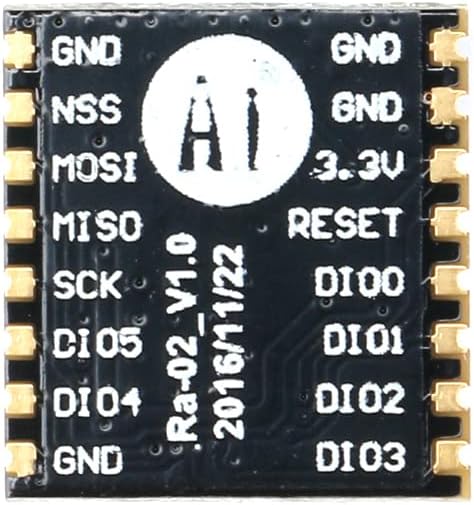
Image 3.1: Bottom view of the Ra-02 module, illustrating the pin assignments for connection.
3.2 Connection Steps
- Power Supply: Connect the 3.3V pin to a stable 3.3V power source and the GND pins to ground. Ensure your power supply can provide at least 200mA.
- SPI Interface: Connect the SPI pins (NSS, MOSI, MISO, SCK) to your microcontroller's corresponding SPI pins.
- Reset Pin: Connect the RESET pin to a GPIO pin on your microcontroller to control the module's reset function.
- DIO Pins: The DIO0 to DIO5 pins are general-purpose digital I/O pins used for interrupt signaling (e.g., packet received, transmit done). Connect these to appropriate GPIO pins on your microcontroller as required by your application.
- Antenna: Connect a 433MHz antenna to the module's antenna connector. Ensure the antenna is properly matched for optimal performance.
Note: Always double-check your wiring before applying power to prevent damage to the module or your development board.
4. Operating Principles
The Ra-02 module leverages Semtech's LoRa technology, which is a spread spectrum modulation technique derived from chirp spread spectrum (CSS) technology. This approach provides significant advantages in terms of communication range, interference immunity, and power efficiency compared to traditional modulation schemes.
4.1 LoRa Modulation
LoRa modulation encodes information using wideband linear frequency modulated chirps. The rate at which the chirp sweeps across the frequency band is known as the spreading factor. A higher spreading factor increases the signal's immunity to noise and interference, extending range at the cost of data rate. The module supports various spreading factors and bandwidths, which can be configured via the SPI interface.
4.2 Frequency and Power
The module operates in the 410MHz to 525MHz ISM band. The transmit power is configurable up to 20dBm, allowing optimization between range and power consumption. Higher transmit power generally increases range but also increases current draw.
4.3 Data Communication
Communication with the Ra-02 module is performed via the Serial Peripheral Interface (SPI). It operates in half-duplex mode, meaning it can either transmit or receive data at any given time, but not simultaneously. The module includes a packet engine with Cyclic Redundancy Check (CRC) for data integrity and supports packet lengths up to 256 bytes.
5. Usage & Configuration
The Ra-02 module's functionality is controlled through registers accessible via the SPI interface. A microcontroller is typically used to configure these registers to set parameters such as frequency, spreading factor, bandwidth, coding rate, and transmit power.
5.1 Basic Configuration Parameters
- Operating Mode: Set the module to sleep, standby, transmit, or receive mode.
- Frequency: Configure the central operating frequency within the 410-525MHz range.
- LoRa Parameters: Adjust spreading factor (SF), bandwidth (BW), and coding rate (CR) to optimize for range or data rate.
- Packet Handling: Enable/disable CRC, set implicit/explicit header mode, and configure payload length.
- Interrupts: Configure DIO pins to signal events like packet reception, transmit completion, or CRC errors.
5.2 Typical Applications
The module's long-range and low-power characteristics make it suitable for various IoT and remote sensing applications:
- Automatic Meter Reading (AMR)
- Home and Building Automation
- Security Systems
- Remote Irrigation Systems
- Industrial Control and Monitoring
- Environmental Sensing
6. Maintenance
The Ra-02 module is a robust electronic component, but proper handling and care can extend its lifespan and ensure reliable operation.
- Handling: Always handle the module by its edges to avoid touching the sensitive electronic components. Use anti-static precautions (e.g., anti-static wrist strap) when working with the module to prevent electrostatic discharge (ESD) damage.
- Cleaning: If necessary, clean the module gently with a soft, dry, lint-free cloth. Avoid using liquids or abrasive materials.
- Storage: Store the module in a dry, cool environment, preferably in its original anti-static packaging, away from direct sunlight and extreme temperatures.
- Connections: Periodically inspect all connections for corrosion or loose contacts, especially in environments with high humidity or vibration.
7. Troubleshooting
If you encounter issues with your Ra-02 module, consider the following troubleshooting steps:
7.1 No Power/Module Not Responding
- Check Power Supply: Verify that the 3.3V power supply is stable and correctly connected to the module's 3.3V and GND pins. Ensure the power supply can deliver sufficient current (at least 200mA).
- Verify Connections: Double-check all power and ground connections for continuity and correct polarity.
- Reset Pin: Ensure the RESET pin is not held in a reset state by your microcontroller. Try toggling the RESET pin manually.
7.2 Communication Issues (SPI)
- SPI Wiring: Confirm that MOSI, MISO, SCK, and NSS pins are correctly connected to your microcontroller's SPI bus.
- SPI Configuration: Verify that your microcontroller's SPI settings (mode, clock speed) match the requirements of the Ra-02 module.
- NSS Pin: Ensure the NSS (Slave Select) pin is correctly controlled by your microcontroller, going low before each SPI transaction and high after.
7.3 Poor Range or No Transmission/Reception
- Antenna: Ensure a 433MHz antenna is securely connected to the module. A mismatched or improperly connected antenna can severely degrade performance.
- Frequency Settings: Verify that both transmitting and receiving modules are configured to the same frequency.
- LoRa Parameters: Check that spreading factor, bandwidth, and coding rate are consistent between communicating modules.
- Transmit Power: Ensure the transmit power is set appropriately for your application and regulatory limits.
- Environment: Consider environmental factors such as obstacles, interference from other 433MHz devices, or building materials that might attenuate the signal.
8. Safety Information
Please observe the following safety guidelines when working with the JESSINIE SX1278 LoRa Ra-02 Wireless Module:
- Power Supply: Only use power supplies that provide the specified voltage (2.7V to 3.6V, typical 3.3V). Exceeding this voltage can permanently damage the module.
- Electrostatic Discharge (ESD): Electronic components are sensitive to ESD. Always use appropriate ESD protection measures when handling the module.
- Soldering: If soldering is required, ensure proper ventilation and use appropriate safety equipment. Avoid prolonged exposure to solder fumes.
- Antenna: Do not operate the module without a properly connected antenna, as this can damage the RF output stage.
- Regulatory Compliance: Be aware of and comply with local radio frequency regulations regarding transmit power and frequency usage in your region.
- Children: Keep the module and its components out of reach of children.
9. Warranty and Support
JESSINIE products are manufactured to high-quality standards. For specific warranty information, please refer to the purchase documentation or contact your retailer. In the event of technical issues or questions not covered in this manual, please reach out to JESSINIE customer support.
For further assistance, you may visit the official JESSINIE store or contact their support channels:
- JESSINIE Store: Visit JESSINIE Store on Amazon
- Manufacturer: JESSINIE

