
1. Introduction
This manual provides comprehensive instructions for the installation, operation, and maintenance of the QWORK Electric Magnetic Lock (Model QS8521). This device is designed for secure door access control systems, offering a fail-safe NC (Normally Closed) mode operation, meaning the lock engages when power is applied.
2. Product Overview
The QWORK Electric Magnetic Lock provides a robust solution for securing various door types. It operates by creating a powerful electromagnetic force to hold the armature plate, thereby securing the door. The system includes the electromagnetic lock unit and a corresponding armature plate, along with necessary mounting hardware.
Key Features:
- Holding Force: 60kg (130lbs) for reliable security.
- Operating Mode: NC (Normally Closed) - locks when powered.
- Voltage: DC12V.
- Current Consumption: 0.11A ~ 0.15A.
- Door Compatibility: Suitable for 90-degree swinging wooden, glass, metal, and fire doors.
- Integrated Protection: Built-in voltage spike suppressor.
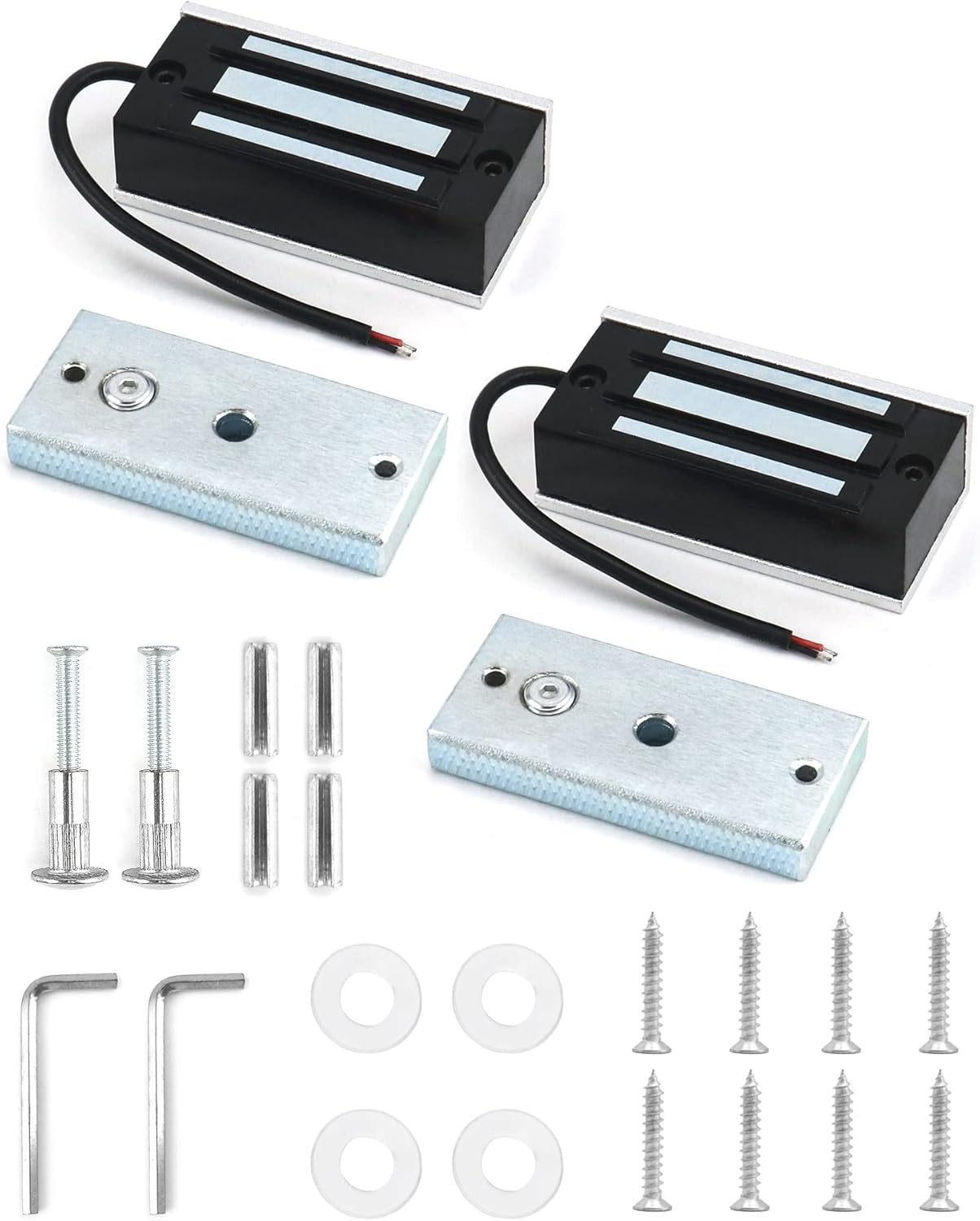
Figure 2.1: Overview of the QWORK Electric Magnetic Lock kit components, including two electromagnetic lock units, two armature plates, and various mounting screws and accessories.
3. Specifications
| Feature | Specification |
|---|---|
| Brand | QWORK |
| Model Name | QS8521 |
| Lock Type | Rim Lock |
| Material | Alloy Steel |
| Holding Force | 60kg (130lbs) |
| Operating Mode | NC (Normally Closed) |
| Voltage | DC12V |
| Current Consumption | 0.11A ~ 0.15A |
| Lock Unit Dimensions | 80L x 37.3W x 23.3H (mm) / 3-1/8"L x 1-1/2"W x 15/16"H |
| Armature Plate Dimensions | 74L x 32W x 11H (mm) / 2-15/16"L x 1-1/4"W x 3/8"H |
| Item Weight | 0.99 Kilograms (2.18 pounds) |
| Installation Method | Screw In |

Figure 3.1: Detailed dimensions for the electromagnetic lock unit and the armature plate in both millimeters and inches.
4. Safety Information
Please read and understand all safety instructions before installation and operation. Failure to follow these instructions may result in electric shock, fire, or serious injury.
- Ensure power is disconnected before performing any installation or maintenance.
- Only use the specified DC12V power supply.
- Do not attempt to disassemble or modify the lock unit.
- Keep hands and loose clothing away from moving parts during operation.
- This product is intended for indoor use or protected outdoor environments.
5. Setup and Installation
Proper installation is crucial for the optimal performance and security of the magnetic lock. The magnetic latch is typically mounted under the top of the door frame, with the armature plate attached to the door itself.
Installation Steps:
- Prepare the Mounting Surface: Identify the desired location on the door frame for the electromagnetic lock unit and on the door for the armature plate. Ensure surfaces are clean, flat, and structurally sound.
- Mount the Electromagnetic Lock Unit: Secure the electromagnetic lock unit to the door frame using the provided screws. Ensure it is firmly attached and aligned correctly with where the armature plate will sit on the door.
- Mount the Armature Plate: Attach the armature plate to the door. It is critical that the armature plate can self-align with the electromagnetic lock unit. Use the single large bolt in the center with the provided rubber washers to allow for slight movement and proper alignment. Do not overtighten the armature plate, as this can prevent it from making full contact and reduce holding force.
- Wiring: Connect the lock unit to a DC12V power supply and your access control system. The lock operates in NC (Normally Closed) mode, meaning it locks when power is supplied and unlocks when power is removed. Consult your access control system's wiring diagram for specific connections.
- Test Operation: After installation and wiring, test the lock's functionality. Ensure the door locks securely when power is applied and releases when power is removed. Verify that the armature plate makes full and even contact with the electromagnetic lock unit.

Figure 5.1: The electromagnetic lock unit and its corresponding armature plate, demonstrating how they connect to secure a door.

Figure 5.2: Side view of the electromagnetic lock unit, showing its compact design and wiring exit point, useful for planning installation space.
6. Operating Instructions
The QWORK Electric Magnetic Lock operates as a fail-safe device in NC (Normally Closed) mode.
- Locking: When DC12V power is supplied to the electromagnetic lock unit, it generates a magnetic field that attracts and holds the armature plate, thereby locking the door.
- Unlocking: When the power supply to the electromagnetic lock unit is interrupted (e.g., via an access control reader, push button, or power failure), the magnetic field dissipates, allowing the door to be opened.
- Integration: This lock is designed to integrate with various access control systems, including keypads, card readers, biometric scanners, and remote release buttons.
7. Maintenance
Regular maintenance ensures the longevity and reliable operation of your magnetic lock.
- Clean Surfaces: Periodically clean the contact surfaces of both the electromagnetic lock unit and the armature plate. Dust, dirt, or debris can reduce the magnetic holding force. Use a soft, dry cloth.
- Check Connections: Inspect all wiring connections regularly to ensure they are secure and free from corrosion or damage.
- Verify Alignment: Ensure the armature plate remains properly aligned with the electromagnetic lock unit. Misalignment can lead to reduced holding force.
- Inspect Hardware: Check all mounting screws and hardware for tightness. Tighten if necessary.
8. Troubleshooting
If you encounter issues with your QWORK Electric Magnetic Lock, refer to the following common problems and solutions:
- Issue: Weak Holding Force or Door Not Securing Properly.
Possible Causes:- Misalignment: The armature plate is not making full and even contact with the electromagnetic lock unit.
- Overtightened Armature Plate: The armature plate is too tightly secured, preventing its necessary self-alignment.
- Dirty Contact Surfaces: Dust or debris on the lock or plate surfaces.
- Insufficient Power: The lock is not receiving the correct DC12V power.
- Ensure the armature plate is mounted with the single central bolt and rubber washers, allowing it to pivot slightly for optimal alignment.
- Clean both the lock and armature plate surfaces thoroughly.
- Verify the power supply is providing a stable DC12V.
- Issue: Lock Does Not Release Immediately After Power Cut.
Possible Cause:- Residual Magnetism: A small amount of residual magnetism may remain after power is cut.
- This is a normal characteristic for some electromagnetic locks. A slight physical break (e.g., a gentle pull on the door) may be required to overcome the minimal residual magnetic hold and fully release the door.
- Issue: Lock Unit Not Powering On.
Possible Causes:- No Power: No power reaching the lock unit.
- Incorrect Wiring: Wiring errors.
- Faulty Power Supply: Power supply malfunction.
- Check all power connections and ensure the power supply is active.
- Review the wiring diagram and correct any errors.
- Test the power supply with a multimeter to confirm it outputs DC12V.
9. Warranty and Support
For warranty information or technical support, please refer to the QWORK official website or contact your retailer. Keep your purchase receipt for warranty claims.