
Introduction
This manual provides detailed instructions for the installation, operation, and maintenance of your Metty Metal 2-Step Wrought Iron Handrail. Designed for both indoor and outdoor use, this handrail offers enhanced safety and stability for 1 to 2 steps. Please read all instructions carefully before beginning installation to ensure proper setup and safe usage.
Safety Information
- Always wear appropriate safety gear, including gloves and eye protection, during installation.
- Ensure the mounting surface (wood or concrete) is structurally sound and capable of supporting the handrail's load capacity.
- Verify all fasteners are securely tightened after installation and periodically check for any loosening.
- Do not use the handrail for purposes other than providing support for ascending or descending steps.
- Keep children and pets away from the installation area.
Package Contents
Your Metty Metal Handrail kit includes all necessary components for assembly and installation. Please verify that all items listed below are present before starting.

Image: Complete installation kit including handrail components, various screws, drill bits, and a hex nut/bolt drive.
- 2 pcs Support column (34.4 in)
- 1 pcs Top bar (39.3 in)
- 2 pcs Center crossbar (29.3 in)
- 4 pcs Vertical railings (24.4 in)
- 8 pcs Pointed-tip screw (for wood)
- 8 pcs Concrete Wedge Anchors (for concrete)
- 8 pcs Flat-End Screw
- 8 pcs Screw sleeve
- 8 pcs Self-Drilling Screws
- Wood Pilot Hole Drill Bit
- Masonry Drill Bit
- Drill Bit Extender
- Hex Bit
- Hex Nut/Bolt Drive
- Post cover
- End cap
Specifications
| Feature | Specification |
|---|---|
| Brand | Metty Metal |
| Model Number | Q235 |
| Material | Wrought Iron |
| Color | Black with Balusters |
| Product Dimensions | 36"L x 25"W |
| Weight Capacity | 600 Pounds |
| Item Weight | 21 pounds |
| Finish Type | Powder Coated |
| Adjustability | Adjustable angle for 1 or 2 steps |
Installation
The Metty Metal Handrail is designed for straightforward installation. Follow these steps carefully for secure attachment.
Step 1: Assemble the Handrail Components
- Begin by connecting the top bar, support columns, center crossbars, and vertical railings using the provided screws. Do not fully tighten all screws until the handrail is positioned on the steps.
- Ensure the brackets for the lower cross-bar are installed opposite to each other (one up, one down), while the brackets for the top rail are installed in the same direction.

Image: Fully assembled handrail ready for ground attachment.
Step 2: Position and Mark
- Place the assembled handrail on your steps. The adjustable angle allows it to fit 1 or 2 steps without cutting. Adjust the angle to match your staircase incline.
- Once positioned correctly, mark the locations for drilling through the base plates onto your steps.

Image: Marking drill points for the base plate on the step surface.
Step 3: Drill and Secure
- Using the appropriate drill bit (wood pilot hole drill bit for wood, masonry drill bit for concrete) and the drill bit extender, pre-drill holes at the marked locations.
- For wood surfaces, use the pointed-tip screws. For concrete surfaces, insert the concrete wedge anchors into the pre-drilled holes.
- Align the handrail base plates with the drilled holes and secure it using the provided screws/anchors and the hex nut/bolt drive. Ensure all fasteners are tightened for maximum stability.
- Once the handrail is securely attached, place the post covers over the base plates and the end caps on the top bar for a finished look.

Image: Securing the handrail base plate to the step surface.
Installation Overview Video
Video: An overview of Metty Metal products, including a demonstration of handrail installation and various design options.
Operation
The Metty Metal Handrail is designed to provide stable support when navigating steps. Simply grasp the handrail firmly as you ascend or descend to maintain balance and prevent falls. The oval armrests are designed for a comfortable grip.

Image: The handrail features oval armrests for a more comfortable and secure grip.
Maintenance
Your Metty Metal Handrail is constructed from durable wrought iron with a powder-coated finish, designed for minimal maintenance and weather resistance. It is guaranteed for 10 years without rusting.
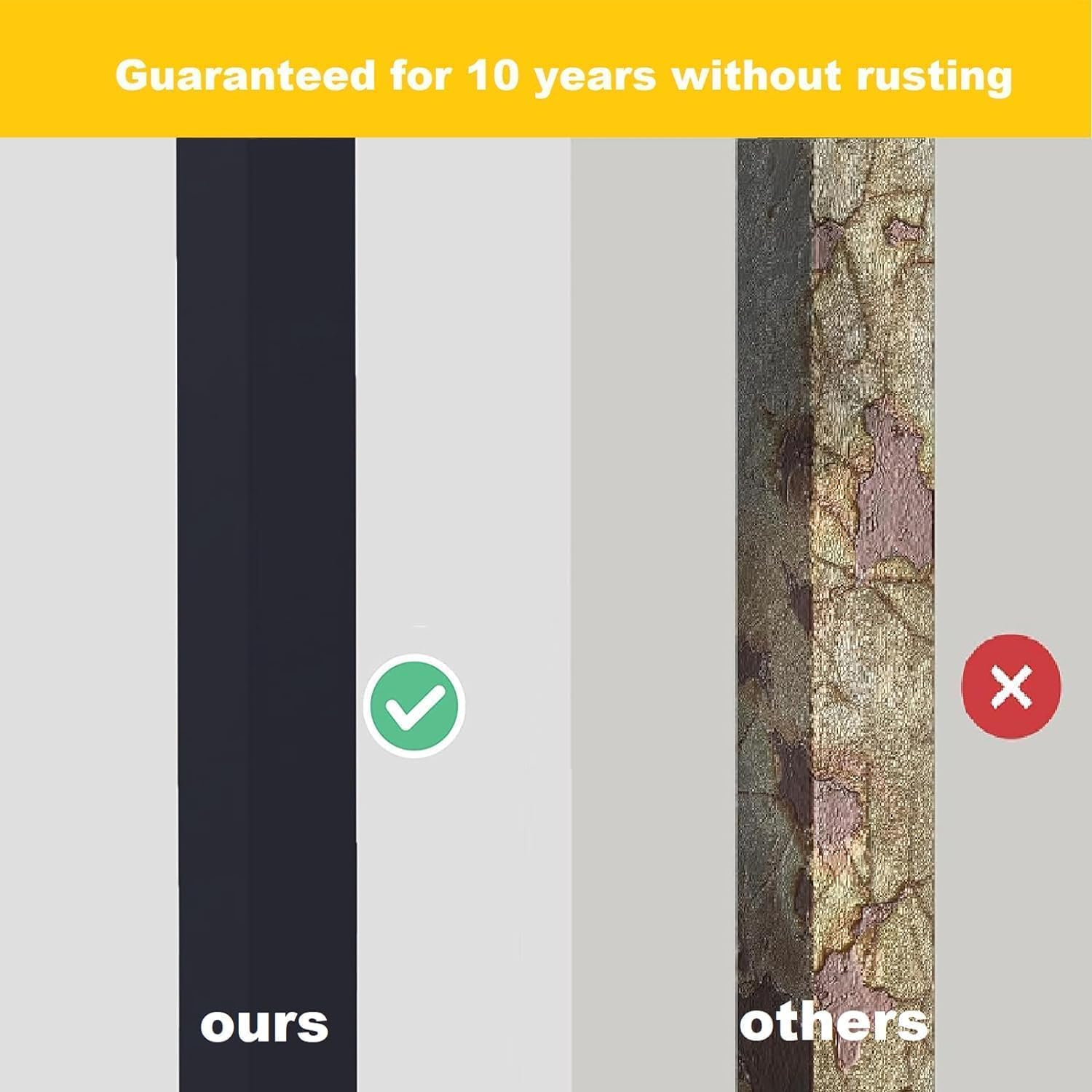
Image: Metty Metal handrails are designed to be rust-resistant for up to 10 years.
- Cleaning: Wipe down the handrail periodically with a damp cloth and mild soap to remove dirt and debris. Avoid abrasive cleaners or harsh chemicals that could damage the finish.
- Inspection: Regularly inspect all mounting points and connections to ensure they remain tight and secure. Re-tighten any loose fasteners as needed.
- Finish Care: The powder-coated finish provides excellent protection. If any scratches or chips occur, touch up with appropriate outdoor-grade paint to prevent rust.
Troubleshooting
Handrail feels wobbly after installation:
- Ensure all screws and anchors at the base plates are fully tightened.
- Verify that the mounting surface is solid and not compromised. If installing into wood, ensure the wood is not rotted or damaged. For concrete, confirm anchors are properly seated.
- Check the connections between the handrail components (top bar, crossbars, vertical railings) and tighten any loose screws.
Difficulty drilling into concrete:
- Ensure you are using a masonry drill bit and a hammer drill for concrete surfaces. A standard drill may not be sufficient.
- Verify the drill bit size matches the recommended size for the concrete wedge anchors.