
Introduction
The Ace Instruments Waco WI-1005 is a portable, hand-driven insulation tester designed for direct reading of insulation resistance in various electrical systems. This robust instrument is suitable for testing electrical operating machines, rotating plant equipment, stationary apparatus, insulation control switching equipment, distribution networks, communication cables, insulators, transformers, industrial installations, cables, electrical components, and wiring.
The WI-1005 assists in identifying intermittent shorts, defective electrical connections, and insulation or conductor failures, thereby preventing costly repairs and breakdowns. This manual provides essential information for the safe and effective use of your insulation tester.
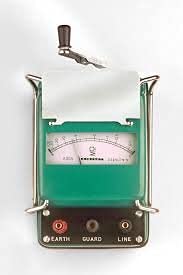
Figure 1: The Ace Instruments Waco WI-1005 Insulation Tester. This image displays the front view of the device, featuring a green analog meter with a needle indicator, a hand-crank mechanism at the top, and three terminals labeled "EARTH," "GUARD," and "LINE" at the bottom for test lead connections.
Safety Information
Adherence to safety precautions is paramount when operating electrical testing equipment. Failure to follow these guidelines may result in electric shock, injury, or damage to the instrument or equipment under test.
- De-energize Circuits: Always ensure the circuit under test is completely de-energized and safely discharged before connecting the insulation tester. Verify with a suitable voltage detector.
- Personal Protective Equipment (PPE): Wear appropriate PPE, including insulated gloves and safety glasses, when performing insulation tests.
- Inspect Instrument: Do not use the instrument if it appears damaged, if the casing is open, or if the test leads are frayed or compromised.
- Environmental Conditions: Operate the device in a dry environment, away from moisture, rain, and extreme temperatures. Avoid dusty conditions.
- Local Regulations: Always refer to and comply with local electrical safety codes, standards, and regulations applicable to insulation testing.
- Avoid Contact: Never touch the test leads or the circuit under test during the cranking operation or while a test is in progress.
- Proper Connections: Ensure all test lead connections are secure and correct before initiating a test.
Product Features
The Waco WI-1005 insulation tester incorporates several design and functional features for reliable performance:
- Silent Generator: Integrated hand-crank generator provides power for testing without external power sources.
- Accurate & Quick Response: Designed for precise measurements with a rapid stabilization time of approximately 3 seconds.
- High-Sensitive Cross Coil Indicator: Ensures accurate and stable readings on the analog display.
- Collapsible Driven Handle: The hand crank folds back flush into the casing for compact storage and protection when not in use.
- Chuck Nut Locking Arrangement: Prevents unintended anti-clockwise rotation of the handle during operation.
- Centrifugal Clutch (Governor): Maintains a constant output voltage once the optimal cranking speed is achieved, ensuring consistent test conditions.
- Guard Terminal & Infinity Adjuster: Includes a guard terminal for advanced measurements to eliminate surface leakage currents, and an externally accessible infinity adjuster for high insulation ranges (1000 MΩ and above).
- Robust Construction: Housed in an anti-magnetic aluminum body for durability and protection against external magnetic fields.
- Protective Display: Features a metallic flap over the glass window to shield the analog display from physical damage.
- Analog Display: Provides clear and easy-to-read insulation resistance values.
- Portable Design: Compact and lightweight, with an approximate weight of 2.5 kg, facilitating easy transport.
Setup
Before commencing any insulation resistance test, ensure the instrument is properly set up and the test environment is safe.
- Unpack and Inspect: Carefully remove the Waco WI-1005 insulation tester from its packaging. Visually inspect the unit, test leads, and accessories for any signs of damage, such as cracks in the casing or frayed wires. Do not use the instrument if damage is observed.
- Familiarize Components: Identify the key parts of the tester: the hand-driven crank handle, the analog meter display, and the three test terminals labeled "EARTH," "GUARD," and "LINE."
- Connect Test Leads: Securely connect the provided test leads to the corresponding terminals on the instrument.
- The LINE terminal is typically connected to the conductor or winding of the equipment under test.
- The EARTH terminal is connected to the ground, chassis, or frame of the equipment under test.
- The GUARD terminal is used for specific three-terminal measurements to shunt surface leakage currents, ensuring only the volume resistance of the insulation is measured. Connect it to the guard ring or a separate conductor if required for your test.
- Prepare Circuit for Test: Crucially, ensure the electrical circuit or equipment to be tested is completely de-energized, isolated from all power sources, and safely discharged. Use a known working voltage detector to confirm the absence of voltage.
Operating Instructions
Follow these steps to perform an insulation resistance test using the Waco WI-1005.
- Ensure Safety: Reconfirm that the circuit or equipment under test is de-energized and all safety precautions from the "Safety Information" section are observed.
- Connect to Circuit: Connect the test leads from the WI-1005 to the equipment under test as described in the "Setup" section. Double-check all connections for security and correctness.
- Extend Handle: Extend the collapsible hand-driven crank handle from its stored position.
- Initiate Test: Begin rotating the hand crank clockwise at a steady and consistent speed. Aim for approximately 160 revolutions per minute (R.P.M.). The internal centrifugal clutch (governor) will regulate the output voltage to a constant level once the optimal speed is reached.
- Read Measurement: Observe the analog display. The needle will move and indicate the insulation resistance value in Megohms (MΩ). Allow the needle to stabilize for approximately 3 seconds to obtain an accurate reading.
- Record Data: Note down the measured insulation resistance value. Compare this reading with manufacturer specifications or industry standards for the equipment being tested.
- Terminate Test: Once the measurement is complete and recorded, stop rotating the hand crank.
- Disconnect Leads: Carefully disconnect the test leads from the equipment under test. It is good practice to discharge any residual capacitive charge from the circuit after testing, especially on large inductive or capacitive loads.
- Store Instrument: Fold the hand crank back into its casing. Clean the instrument if necessary and store it in its protective case or a suitable dry location.
Maintenance
Proper maintenance ensures the longevity and accuracy of your Waco WI-1005 insulation tester.
- Cleaning: Keep the instrument clean. Wipe the exterior with a soft, dry, lint-free cloth. Do not use abrasive cleaners, solvents, or harsh chemicals, as these can damage the casing or display.
- Storage: When not in use, store the insulation tester in a clean, dry, and dust-free environment. Protect it from direct sunlight, extreme temperatures, and high humidity. The collapsible handle should be folded flush into the casing.
- Test Lead Inspection: Regularly inspect the test leads for any signs of wear, cuts, cracks, or damaged insulation. Damaged leads can pose a safety hazard and affect measurement accuracy. Replace any compromised leads immediately with genuine Ace Instruments replacements.
- Calibration: For professional applications and to ensure continued measurement accuracy, periodic calibration by an authorized service center or a certified calibration laboratory is highly recommended. Refer to your company's calibration schedule or industry standards.
- Handle Mechanism: Ensure the hand-crank mechanism operates smoothly. Avoid forcing the handle if it feels stiff.
Troubleshooting
This section addresses common issues you might encounter with the Waco WI-1005 insulation tester.
| Problem | Possible Cause | Solution |
|---|---|---|
| No reading or unstable reading on display. |
|
|
| Handle is stiff or difficult to rotate. |
|
|
| Reading is consistently too low or too high. |
|
|
Technical Specifications
The following are the key technical specifications for the Ace Instruments Waco WI-1005 Insulation Tester:
| Parameter | Value |
|---|---|
| Model | WI-1005 |
| Brand | Ace Instruments |
| Insulation Resistance Range | Up to 2,000 MΩ (Megohms) |
| Test Voltage Range | 100V - 5000V High Volts (Specific output voltage regulated by centrifugal clutch) |
| Resistance Test (at 500V D.C.) | Better than 50 Megohms |
| Power Source | Hand-driven (Silent Generator) |
| Recommended Rotation Speed | 160 R.P.M. (Revolutions Per Minute) |
| Response Time | Approximately 3 seconds |
| Withstand Voltage | Minimum 2000 Volts or (Rated voltage + 1000) Volts A.C. (rms) between electrical circuit and handle for one minute. |
| Display Type | Analog (Cross Coil Indicator) |
| Casing Material | Anti-magnetic aluminum body |
| Weight | Approximately 2.5 kg |
| Compliance | Conforms to ISS : 2992/1987 |
Warranty Information
Ace Instruments products are manufactured to high-quality standards. Specific warranty terms and conditions for the Waco WI-1005 Insulation Tester are typically provided with the product at the time of purchase, often included in a separate warranty card or within the comprehensive instruction manual supplied in the product packaging.
Please refer to the official warranty documentation included with your unit for details regarding warranty period, coverage, limitations, and procedures for making a warranty claim. Retain your proof of purchase for warranty validation.
Customer Support
For technical assistance, service, calibration, or inquiries regarding your Ace Instruments Waco WI-1005 Insulation Tester, please contact Ace Instruments customer support.
Contact information can typically be found on the official Ace Instruments website or in the documentation provided with your product. When contacting support, please have your product model (WI-1005) and serial number (if applicable) readily available to facilitate quicker service.
For general information about Ace Instruments, you may visit their official website.