
1. Setup Instructions
Proper setup ensures safe and efficient operation of your WEN PW1900 electric pressure washer.
1.1 Unpacking and Assembly
- Remove all components from the packaging.
- Attach the carrying handle to the main unit.
- Ensure all connections are secure before proceeding.
1.2 Water Connection
Connect the pressure washer to a cold water source using a standard garden hose. Ensure the water supply is turned on before powering the unit.

Image: Connect your garden hose to the water inlet on the pressure washer. Ensure a tight, leak-free connection.
1.3 High-Pressure Hose and Wand Connection
Connect the 16.5-foot reinforced high-pressure hose to the pressure washer's outlet and then to the spray wand.

Image: The WEN PW1900 with its high-pressure hose and spray wand fully assembled and ready for use.
1.4 Power Connection
Plug the 36-foot power cord into a grounded 120V outlet. Ensure the water supply is on and flowing through the unit before turning on the power to prevent pump damage.

Image: The WEN PW1900's power cord, designed for easy storage and access.
2. Operating Instructions
2.1 Powering On/Off
Once all connections are secure and the water supply is on, press the power button to turn on the unit. The 13-amp motor will activate. To turn off, simply press the power button again.
2.2 Using the Spray Wand
Squeeze the trigger on the spray wand to begin spraying. Release the trigger to stop the water flow. Always point the nozzle away from people, animals, and delicate objects.

Image: The WEN PW1900's briefcase-style design and carrying handle make it easy to transport and operate.
3. Nozzles and Spray Patterns
The WEN PW1900 features a variable flow nozzle, allowing you to easily adjust the spray width for different cleaning tasks.
3.1 Adjusting the Variable Flow Nozzle
- To adjust the spray width, simply turn the spray width adjustment ring on the nozzle left or right.
- Twist right for a direct stream spray (0 degrees) suitable for tough spots, stripping paint, oil, grease, and metal.
- Twist left for a full fan spray (up to 60 degrees) ideal for wood, siding, brick, cement, patio furniture, boats, and cars.

Image: Visual guide to the variable flow nozzle, illustrating spray angles from a concentrated 0-degree stream to a wide 60-degree fan, suitable for various surfaces like wood, brick, and vehicles.
4. Detergent Application
For enhanced cleaning power, use the attachable soap tank with your preferred pressure washer detergent.
4.1 Filling the Soap Tank
- Unscrew the cap of the attachable soap tank.
- Pour up to 13 fluid ounces of pressure washer detergent into the tank.
- Securely screw the cap back on.
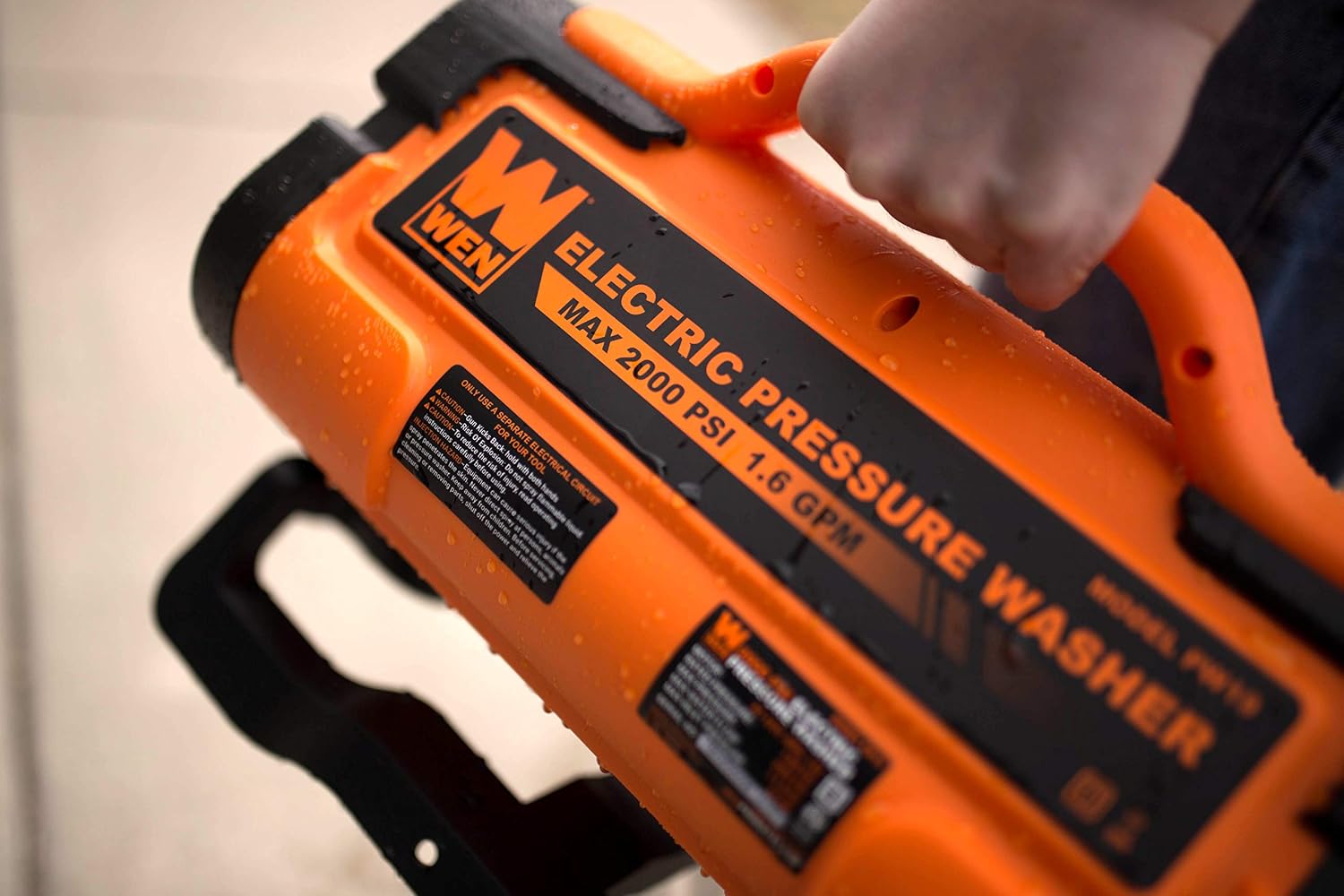
Image: The attachable detergent bottle for the WEN PW1900, designed for easy filling and integration with the spray wand.
4.2 Applying Detergent
With the soap tank attached, the pressure washer will automatically mix the detergent with the water during spraying. Use a wide fan spray setting for even application.
5. Maintenance
Regular maintenance ensures the longevity and optimal performance of your pressure washer.
5.1 Water Filter Inspection
- Periodically check the water filter strainer where the garden hose connects to the unit.
- Ensure it is not obstructed with any debris on every use to prevent damage to the pump.
5.2 Preventing Air in the System
Air in the system can cause the motor to die or cycle on and off. To prevent this:
- Connect the garden hose and pressure washer hose.
- Plug the unit into a GFCI socket.
- Turn on the garden hose to the unit.
- Before turning on the pressure washer, squeeze the trigger on the gun until a steady stream of water flows, indicating all air is out of the system.
- Then, turn on the pressure washer.
6. Troubleshooting
6.1 Inconsistent Pressure or Motor Cycling
If the machine pulses between no pressure and intermittent pressure, or the motor turns on and off, it is often due to air in the system. Refer to the


