
1. Introduction
This manual provides essential information for the safe and effective use, installation, and maintenance of your Generic PPO Plastic Water Pump Impeller. This component is designed as a mechanical repair part for household self-priming centrifugal pressurized water pumps. Please read this manual thoroughly before installation or operation to ensure proper function and longevity of the part.
2. Safety Information
Always observe the following safety precautions:
- Disconnect Power: Before attempting any installation, maintenance, or repair, ensure the water pump's power supply is completely disconnected to prevent electrical shock.
- Wear Protective Gear: Use appropriate personal protective equipment (PPE) such as gloves and eye protection during installation and handling.
- Professional Installation: If you are unsure about any step, consult a qualified technician. Improper installation can lead to damage or injury.
- Handle with Care: The impeller is a precision part. Avoid dropping or subjecting it to impact, which could cause damage.
- Material Compatibility: Ensure this PPO plastic impeller is compatible with your specific pump model and the fluids it will be handling.
3. Product Overview
The Generic PPO Plastic Water Pump Impeller is a durable replacement part designed for various household self-priming and centrifugal water pumps. It features a central copper inlay for secure shaft attachment and efficient power transfer. This impeller is made from high-quality PPO plastic, ensuring resistance to corrosion and wear in water environments.
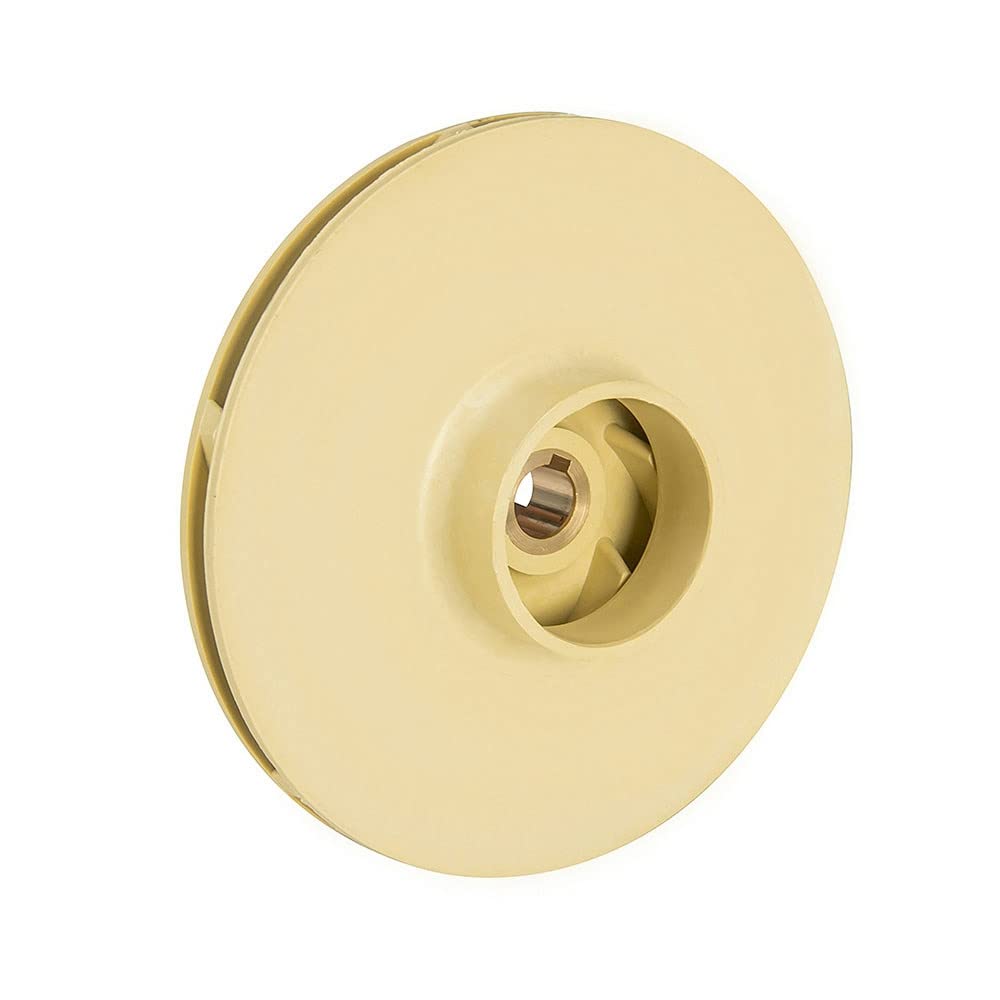
Figure 3.1: Front view of the PPO plastic water pump impeller. This beige-colored component features a central copper inlay for shaft connection and vanes designed for efficient water movement.

Figure 3.2: Impeller showing key dimensions. The overall diameter is 115mm, and the shaft diameter is 10mm, crucial for compatibility.
4. Specifications
| Feature | Detail |
|---|---|
| Model Number | 16101446 |
| Material | PPO Plastic with Central Copper Inlay |
| Color | Beige |
| Impeller Diameter | 115mm |
| Shaft Diameter | 10mm |
| Outer Diameter of Water Inlet | 40mm (1.57") |
| Inner Diameter of Water Inlet | 35mm (1.37") |
| Impeller Thickness | 9mm (0.35") |
| Weight | Approximately 200 Grams |
5. Installation (Setup)
This section outlines the general steps for replacing a water pump impeller. Specific procedures may vary depending on your pump model. Always refer to your pump's original service manual for detailed instructions.
- Preparation:
- Ensure the pump is disconnected from all power sources.
- Drain any water from the pump casing.
- Gather necessary tools (e.g., wrenches, screwdrivers, seal pullers).
- Access the Impeller:
- Carefully remove the pump casing or volute cover to expose the old impeller. This usually involves unbolting the cover.
- Note the orientation and position of the old impeller and any washers or spacers.
- Remove Old Impeller:
- Depending on the pump design, the impeller may be threaded onto the shaft, secured with a nut, or pressed on. Use appropriate tools to remove it without damaging the pump shaft.
- Clean the pump shaft and surrounding area thoroughly.
- Install New Impeller:
- Align the new impeller (Model 16101446, 115x10mm) with the pump shaft. The central copper inlay should fit snugly onto the shaft.
- If threaded, screw the impeller onto the shaft until it is firm. If pressed, ensure it is seated correctly.
- Ensure there is proper clearance between the impeller and the pump casing.
- Reassemble Pump:
- Replace any seals, gaskets, or O-rings as needed.
- Reattach the pump casing or volute cover, ensuring all bolts are tightened evenly and to the manufacturer's specifications.
- Refill the pump with water if required (priming).

Figure 5.1: Impeller held in hand, illustrating its size and the PPO material marking. This image provides a real-world context for the part during handling or installation.
6. Operation (Post-Installation Check)
After installing the new impeller, perform the following checks before resuming normal pump operation:
- Leak Check: Visually inspect all connections and seals for any signs of water leakage.
- Priming: Ensure the pump is properly primed according to its manufacturer's instructions. This is crucial for self-priming pumps.
- Initial Start-up: Reconnect power and start the pump. Listen for any unusual noises or vibrations.
- Performance Check: Monitor the pump's performance to ensure it is moving water efficiently and building adequate pressure.
If any issues are observed, immediately shut down the pump and refer to the Troubleshooting section.
7. Maintenance
The PPO plastic impeller itself requires minimal maintenance. However, regular inspection of the pump system is recommended to ensure optimal performance and longevity of all components, including the impeller.
- Regular Inspection: Periodically inspect the impeller for signs of wear, cracks, or debris accumulation.
- Cleaning: If the pump is used in environments with suspended solids, the impeller may accumulate debris. Disconnect power and clean the impeller as needed.
- Seal Integrity: Check pump seals and gaskets regularly. Worn seals can lead to air leaks, affecting pump performance and potentially damaging the impeller or shaft.
- Shaft Condition: Ensure the pump shaft is free from corrosion or damage that could affect impeller seating or balance.
8. Troubleshooting
This section provides general guidance for common issues related to impeller function. Always ensure power is disconnected before inspecting the pump.
| Problem | Possible Cause | Solution |
|---|---|---|
| Pump not priming / Low flow | Air leak in suction line or pump casing; Impeller clogged with debris; Impeller damaged or worn; Incorrect impeller rotation. | Check all connections for leaks; Clean impeller and pump casing; Inspect impeller for damage and replace if necessary; Verify correct motor wiring for rotation. |
| Excessive noise or vibration | Impeller unbalanced or damaged; Bearings worn; Cavitation due to insufficient water supply. | Inspect impeller for damage or debris and replace if necessary; Check pump bearings; Ensure adequate water supply to the pump. |
| Pump runs but no water moves | Pump not primed; Impeller completely detached from shaft; Suction line blocked. | Prime the pump; Inspect impeller attachment to shaft; Clear any blockages in the suction line. |
If troubleshooting steps do not resolve the issue, it is recommended to consult a qualified pump technician.
9. Warranty and Support
As this is a generic replacement part, specific warranty information may not be provided directly by the manufacturer. Please refer to the retailer's return policy or contact the seller (MATYASIGO-US) for details regarding product defects or support.
For technical assistance related to your water pump, it is advisable to consult the original pump manufacturer's documentation or a certified pump service professional.