
GOOZEEZOO 2.8inch tinysa
GOOZEEZOO V0.3.1 Portable Tiny SA Spectrum Analyzer Instruction Manual
Model: 2.8inch tinysa
Brand: GOOZEEZOO
Introduction
This manual provides detailed instructions for the operation and maintenance of your GOOZEEZOO V0.3.1 Portable Tiny SA Spectrum Analyzer. This handheld device offers frequency analysis from 100kHz to 960MHz across MF/HF/VHF/UHF inputs, featuring ESD protection and a 2.8-inch touch screen. It also functions as a signal generator.
1. Setup
1.1 Package Contents
Verify that all items are present in your package:
- 1x Tiny Spectrum Analyzer
- Antenna
- USB Cable
- SMA Cables (2x)
- Stylus
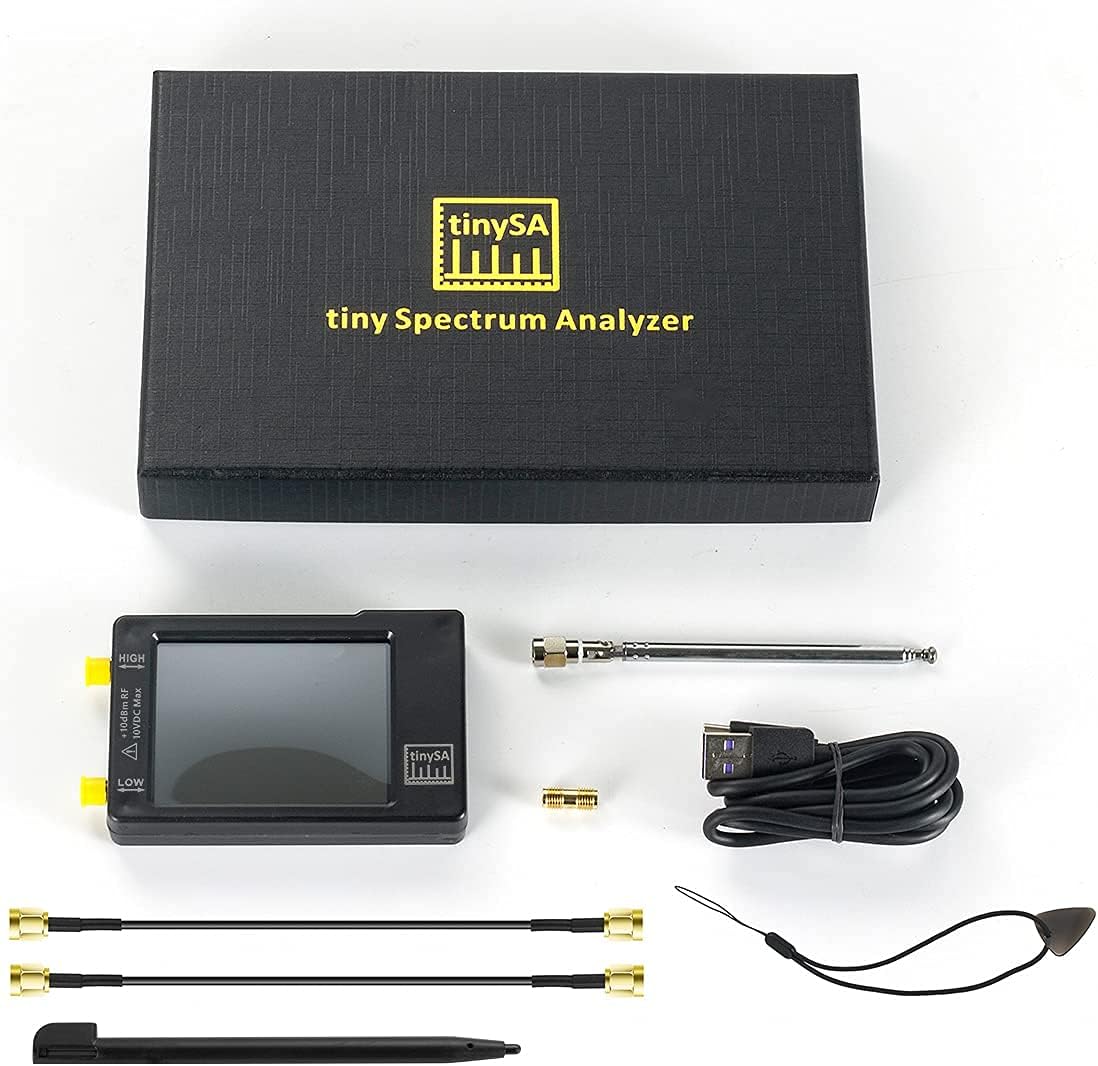
Figure 1: Included components of the Tiny SA Spectrum Analyzer.
1.2 Physical Overview
The device features a 2.8-inch touch screen for user interaction. Input and output ports are clearly labeled. The unit includes a multi-functional jog switch for navigation and control.

Figure 2: Front view of the Tiny SA Spectrum Analyzer highlighting the touch screen and controls.
1.3 Initial Charging
Before first use, fully charge the device. Charging time is approximately 1 hour using a 500mA minimum USB port or USB charger. A fully charged battery provides at least 2 hours of operation.
2. Operating Instructions
2.1 User Interface and Display
The device features a 320x240 pixel, 2.8-inch 16-bit RGB resistive touch screen. Navigation is primarily via touch control and a jog switch. The display shows scan points covering the frequency range.

Figure 3: Display showing firmware version V0.3.1 with ESD protection enabled.
2.2 Frequency Range and Input Modes
The Tiny SA Spectrum Analyzer operates with two inputs:
- MF/HF/VHF Input: 0.1MHz - 350MHz (High quality)
- UHF Input: 240MHz - 960MHz (Lesser quality)
Switchable resolution bandpass filters are available for both ranges, between 2.6kHz and 640kHz. The fastest scanning speed is achieved with an RBW of 300kHz or wider, at approximately 2 scans per second. Scanning speed decreases with increased frequency span and decreased RBW.
2.3 Signal Generator Function
When not in spectrum analyzer mode, the device can function as a signal generator:
- MF/HF/VHF Sinus Output: 0.1MHz - 350MHz
- UHF Square Wave Output: 240MHz - 960MHz
It includes a built-in calibration signal generator for automatic self-test and low input calibration. An optional square wave output with a fundamental at -25dBm can be connected to the high input/output. Frequencies can be set to 1MHz, 2MHz, 4MHz, 10MHz, 15MHz, or 30MHz.

Figure 4: Device operating as a signal generator.
2.4 PC Control
The USB interface supports the Serial over USB (CDC) protocol, allowing for a range of commands to perform measurements or update internal settings. Drivers for Windows install automatically. Linux drivers are built into the kernel. Two software applications are available for PC control, both capable of capturing the device's screen.

Figure 5: PC control setup with Windows and Linux.
2.5 Frequency Calibration
Frequency calibration ensures accurate measurements. This process involves measuring the internal reference frequency and applying a correction. The video below demonstrates how to perform frequency calibration using an external frequency counter.
Video 1: This video demonstrates the frequency calibration process for the Tiny SA Spectrum Analyzer. It shows how to connect an external frequency counter to measure the internal reference frequency, input the correction value into the device, and verify the corrected output frequency. The video highlights the importance of accurate frequency reference for precise measurements.
2.6 High Input Level Calibration
Calibrating the high input level is crucial for accurate power measurements. This procedure typically involves using a known signal source and adjusting the device's settings. The video below illustrates the steps for high input level calibration.
Video 2: This video guides users through the high input level calibration of the Tiny SA Spectrum Analyzer. It demonstrates connecting a signal generator with a known output level to the high input, adjusting the device's settings to match the known power, and verifying the calibration. The video also touches upon mirror suppression in the high input mode.
2.7 Measurement Capabilities
The Tiny SA Spectrum Analyzer is capable of various measurements, including:
- Measuring Harmonics
- Measuring Spectral Purity
- Measuring Phase Noise
- Measuring Third Order Intermodulation
- Measuring IQ Balance
- Measuring Spur Free Dynamic Range
- Measuring Low Frequencies
- Capturing ISM Transmissions
- Tuning Sweep Settings
- Coax Cable Impact
- Measuring harmonic content of a transmitter
- Measuring FM deviation
- Measuring AM modulation
- Adding an LNA
- Using a Tracking Generator to measure a Mixer

Figure 6: Overview of device measurement capabilities.
3. Maintenance
3.1 Battery Care
The device uses a Lithium Ion battery. Ensure regular charging to maintain battery health. Avoid extreme temperatures. The battery is included and required for operation.
3.2 Firmware Updates
The firmware of the Tiny SA can be updated by the user. For the newest firmware version and update instructions, please refer to the official website: tinysa.org.
4. Troubleshooting
If you encounter issues with your Tiny SA Spectrum Analyzer, consider the following general troubleshooting steps:
- Power Issues: Ensure the device is fully charged. Check the USB connection if charging or connected to a PC.
- Display Problems: If the screen is unresponsive, try restarting the device. Ensure the touch screen is clean.
- Measurement Inaccuracies: Perform frequency and level calibrations as described in Section 2.5 and 2.6. Verify correct input/output mode selection.
- PC Connectivity: Ensure the USB cable is securely connected. For Windows, verify drivers are installed. For Linux, drivers are typically built-in.
- Unexpected Behavior: Consider performing a self-test (if available in the device menu) or updating the firmware to the latest version.
For persistent issues, consult the official Tiny SA website or contact customer support.
5. Specifications
| Feature | Specification |
|---|---|
| Brand | GOOZEEZOO |
| Model Name | GOOZEEZOO V0.3.1 |
| Item Model Number | 2.8inch tinysa |
| Display Resolution | 320*240 pixels |
| Screen Diagonal | 2.8 inches (16 bits per RGB pixels) |
| Control Interface | Resistive touch, Jog switch, USB serial port |
| Input Frequency Range (MF/HF/VHF) | 0.1MHz - 350MHz |
| Input Frequency Range (UHF) | 240MHz - 960MHz |
| Output Frequency Range (MF/HF/VHF Sinus) | 0.1MHz - 350MHz |
| Output Frequency Range (UHF Square Wave) | 240MHz - 960MHz |
| Resolution Bandwidth (RBW) | 2.6kHz - 640kHz |
| ESD Protection | Diodes installed (Upgraded Version) |
| Power Source | Battery Powered (Lithium Ion, included) |
| Charging Time | Max 1 hour (with 500mA USB) |
| Operation Time (Full Charge) | At least 2 hours |
| Connectivity | USB |
| Material Type | Acrylonitrile Butadiene Styrene |
| Operating System (Internal) | Linux |
| Processor Type (Internal) | Core i5 |
| RAM Memory Technology (Internal) | DDR3 |
6. Warranty and Support
For warranty information and technical support, please refer to the documentation provided with your purchase or visit the official GOOZEEZOO website. Keep your proof of purchase for any warranty claims.
Related Documents - 2.8inch tinysa
 |
GOOZEEZOO Malachite DSP SDR Receiver User Manual User manual for the GOOZEEZOO Malachite DSP SDR Receiver, detailing its characteristics, features, menu functions, settings, and initial setup for radio reception. |
 |
tinySA Spectrum Analyzer Specifications and Features Detailed technical specifications for the tinySA spectrum analyzer, covering user interface, input/output modes, reference generator, and battery performance. Features include 100kHz-960MHz range and a 2.8-inch screen. |
 |
MESA 2.0 Mobility Enhanced Spectrum Analyzer User Manual User manual for the MESA 2.0 Mobility Enhanced Spectrum Analyzer by Research Electronics International (REI). This guide provides detailed instructions on operation, setup, features, and specifications for finding hidden electronic devices and analyzing RF signals. |
 |
ESTeem AirScope Spectrum Analyzer User's Manual Comprehensive user manual for the ESTeem AirScope Spectrum Analyzer, covering hardware setup, software configuration, modes of operation, and advanced features for RF analysis. |
 |
PeakTech 2860 2.7 GHz Frequency Counter - Operation Manual & Specifications Comprehensive operation manual and technical specifications for the PeakTech 2860 2.7 GHz Frequency Counter, covering safety precautions, features, measurements, and specifications. |
 |
Alinco DJ-580T/E VHF/UHF FM Twinband Handheld Transceiver - Technical Specifications Detailed specifications and features of the Alinco DJ-580T/E, a compact VHF/UHF FM twinband handheld transceiver, including frequency coverage, output power, receiver sensitivity, and optional accessories. |