
1. Introduction
This manual provides detailed instructions for the installation, operation, and maintenance of your Surpass Hobby Waterproof Electronic Speed Controller (ESC) and 3660 2800KV Brushless Motor Combo. This system is designed for 1/10 scale remote control cars, offering robust performance and waterproof capabilities. Please read this manual thoroughly before use to ensure proper function and longevity of the product.
2. Product Overview
The Surpass Hobby Waterproof ESC and 3660 2800KV Brushless Motor Combo is engineered for durability and performance in various conditions. Key features include:
- IP-67 Waterproof Rating: Ensures protection against water and dust, allowing operation in diverse environments such as mud, sand, ice, snow, and water.
- Powerful Built-in BEC: The ESC features a built-in Battery Eliminator Circuit with a continuous current of 6A. Output voltages are switchable between 6V, 7.4V, and 8.4V to support high-torque servos.
- Enhanced Stability and Reliability: Utilizes Infineon MOSFET chips and intelligent freewheeling technology for improved efficiency, lower operating temperatures, and increased system stability.
- Capacitor Thermal Protection: High-quality Ruby capacitors are protected against overheating and overloading to prevent damage.
- Efficient Cooling System: An integrated radiator design with a patented copper thermal conduction sink and an additional fan ensures effective heat dissipation for the ESC.
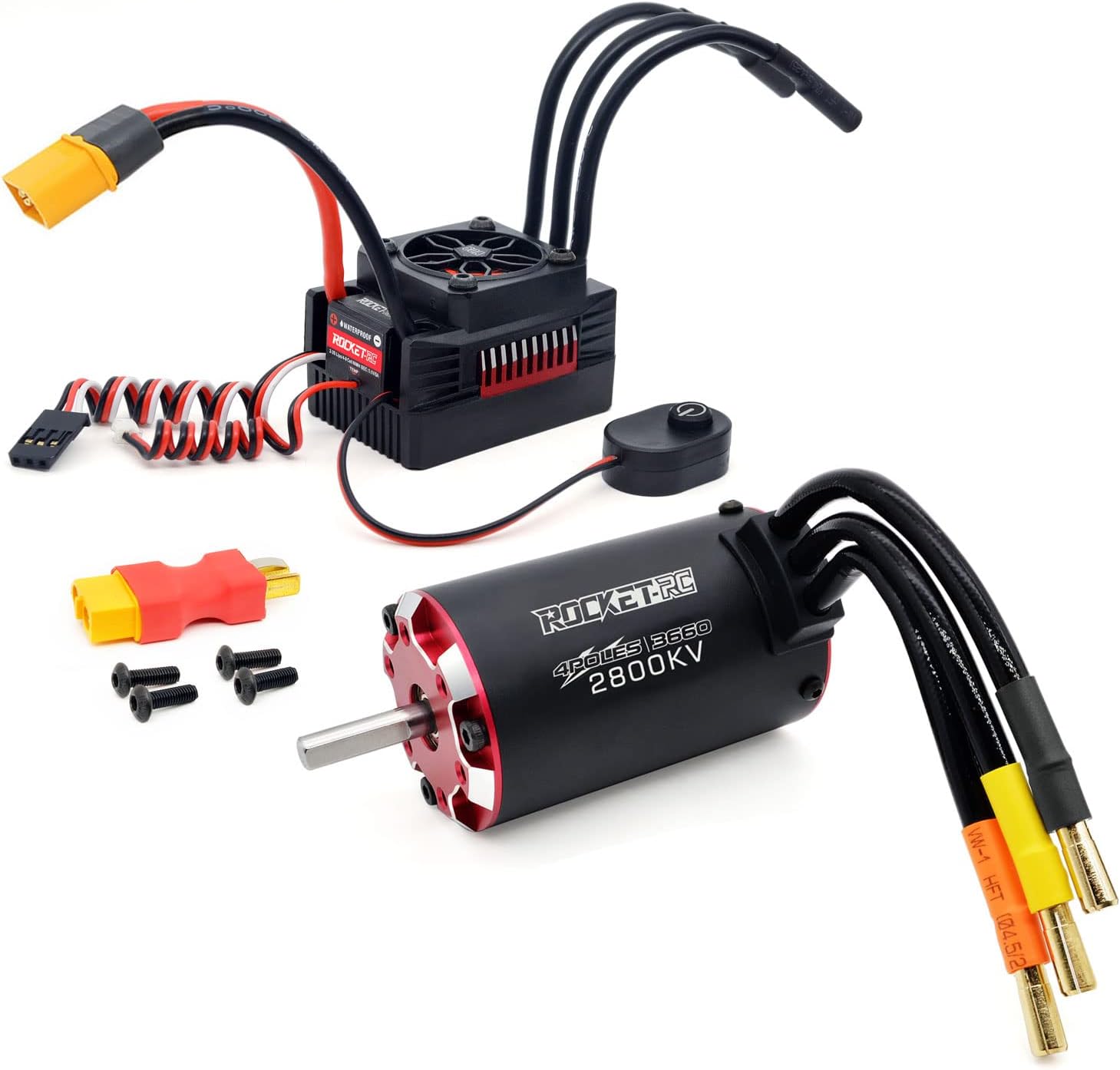
Figure 2.1: The complete Surpass Hobby Waterproof ESC and 3660 2800KV Brushless Motor Combo.

Figure 2.2: Individual components of the brushless motor and ESC combo, highlighting the motor, ESC, and connection accessories.
3. Specifications
3.1. 3660 Brushless Motor

Figure 3.1: Detailed view of the 3660 Brushless Motor, showing the alloy steel output shaft, CNC machined 6061-T6 billet aluminum heatsink can, and 4mm gold-plated plugs.
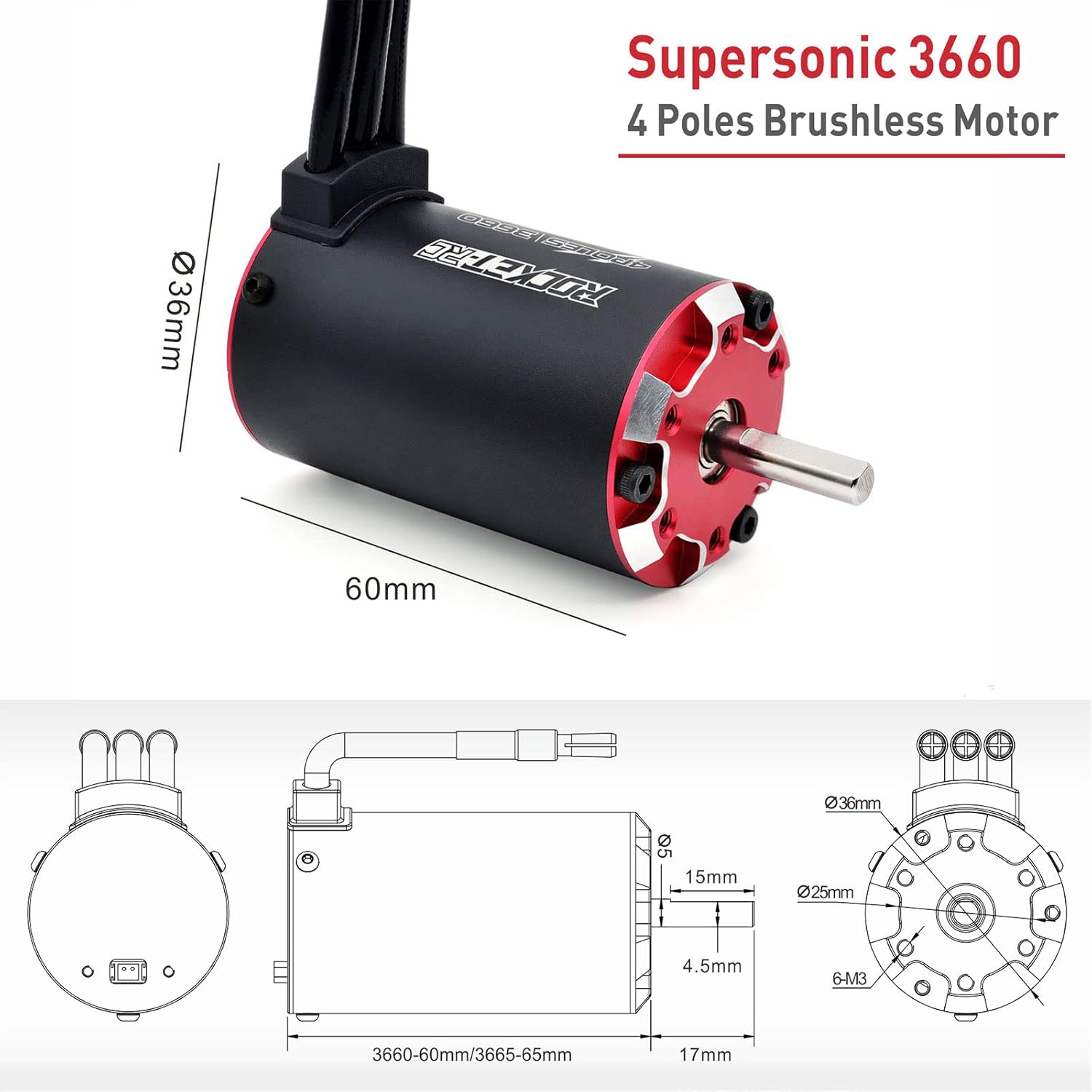
Figure 3.2: Technical drawing and dimensions of the Supersonic 3660 4-Pole Brushless Motor, including diameter, length, and shaft measurements.
| Parameter | Value |
|---|---|
| Motor Model | 3660 |
| KV (RPM/Volt) | 2800KV |
| Wattage | 1200W |
| Maximum Voltage | 19V |
| Maximum Current | 63A |
| Maximum Speed | 50000 RPM |
| No Load Current | 2.3A |
| Number of Motor Poles | 4 |
| Internal Resistance | 0.008 Ω |
| Motor Length (Without Shaft) | 60mm / 2.36in |
| Motor Diameter | 36mm / 1.4in |
| Shaft Diameter | 5mm / 0.196in |
| Shaft Length | 17mm / 0.66in |
| Gold Plated Plug | 4.0mm / 0.16in |
3.2. 60A Electronic Speed Controller (ESC)

Figure 3.3: The Supersonic Waterproof Brushless ESC, highlighting its waterproof design and motor overheat protection feature.
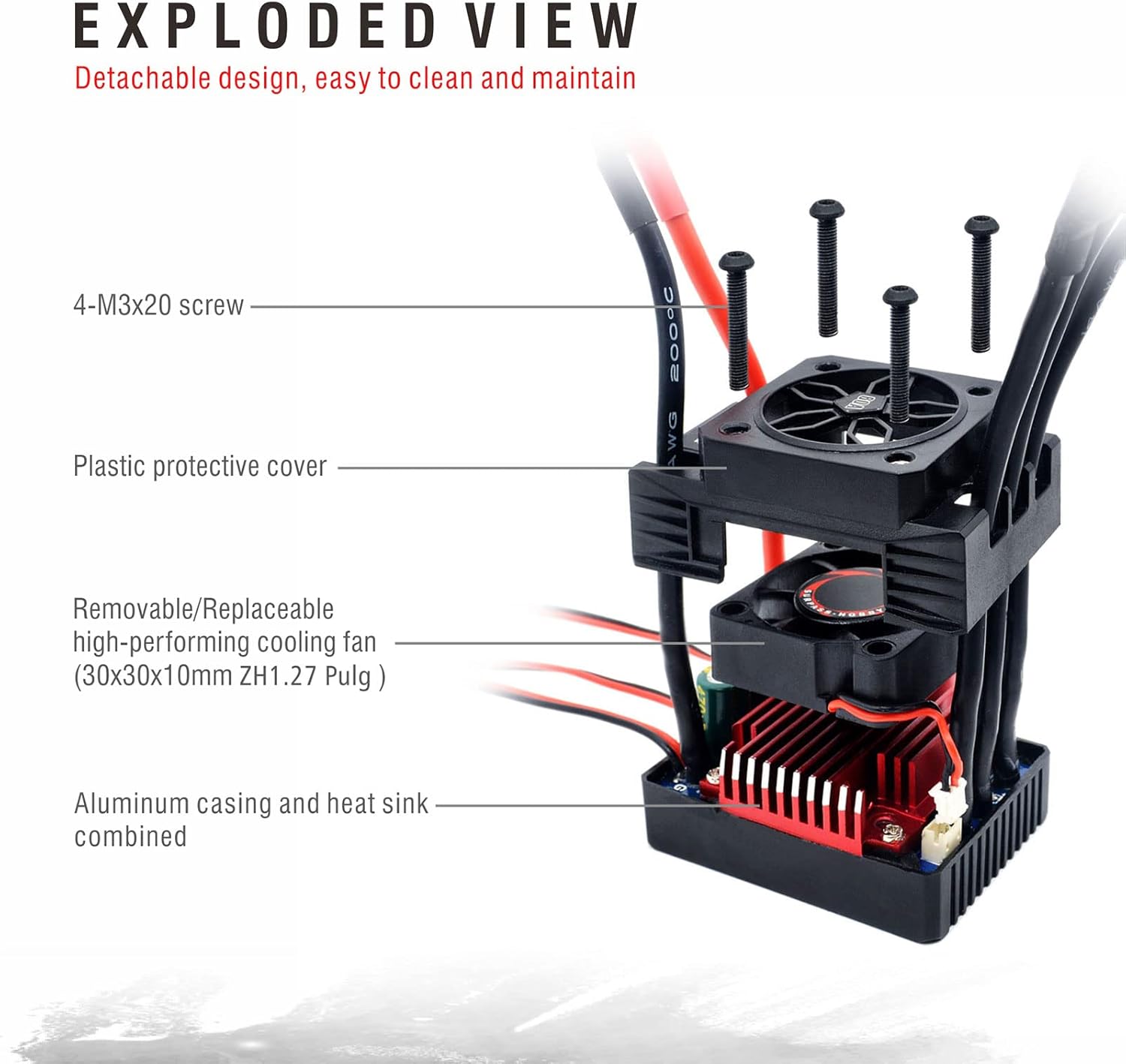
Figure 3.4: Exploded view of the ESC, illustrating its detachable design for easy cleaning and maintenance, including the plastic protective cover, removable cooling fan, and aluminum casing with heatsink.
| Parameter | Value |
|---|---|
| Continuous Current | 60A |
| Instantaneous Current | 360A |
| Motor Type | Non-Inductive Brushless Motor |
| Internal Resistance | 0.0007Ω |
| Battery Compatibility | 2-3S Lithium Battery / 4-9S NiMH |
| BEC Output | 5.8V/5V (Switching Mode) |
| Product Size | 50x35x34mm / 2.0x1.38x1.34in |
| Plug Type | XT60 to T Plug Connector |
4. Setup and Installation
Follow these steps for proper installation of the motor and ESC into your 1/10 scale remote control car chassis.
4.1. Component Identification

Figure 4.1: Identification of various connection points on the ESC, including battery connector, motor connectors, receiver connector, ZH1.27 plug, and electronic switch.
4.2. Connection Procedure
- Mount the Motor: Securely mount the 3660 brushless motor into your RC car chassis using appropriate screws. Ensure proper gear mesh with the pinion gear.
- Mount the ESC: Find a suitable location in your chassis to mount the 60A ESC. Ensure it is secured and has adequate airflow if possible, despite its integrated cooling system.
- Connect Motor to ESC: Connect the three motor wires from the 3660 motor to the corresponding three wires on the 60A ESC. While brushless motors typically do not have a specific order for these connections, reversing any two wires will reverse the motor's direction. Adjust as needed after initial testing.
- Connect ESC to Receiver: Plug the small signal cable from the ESC into the throttle channel (usually Channel 2) of your RC receiver.
- Connect Battery: Connect your compatible 2-3S Lithium Polymer (LiPo) or 4-9S Nickel-Metal Hydride (NiMH) battery to the XT60 to T Plug connector on the ESC. Ensure correct polarity.
- Electronic Switch: Connect the electronic switch to the designated port on the ESC. This switch will be used to power the ESC on and off.

Figure 4.2: Diagram illustrating the connection of the motor to the ESC, including the motor overheat protection sensor connection.
5. Operating Instructions
Once the motor and ESC are correctly installed and connected, follow these steps to operate your RC vehicle:
- Transmitter On: Always turn on your RC transmitter first.
- Power On ESC: Use the electronic switch to power on the ESC. The ESC will perform a self-test and emit a series of beeps, indicating battery cell count and readiness.
- Throttle Calibration (if necessary): If the throttle response is not correct, refer to your ESC's specific programming instructions for throttle calibration. This typically involves holding full throttle, powering on the ESC, then moving to full brake, and finally neutral.
- Begin Operation: You can now operate your RC vehicle. Start with gentle throttle inputs to confirm correct motor direction and control.
- Power Off Sequence: When finished, first power off the ESC using the electronic switch, then turn off your RC transmitter.
6. Maintenance
Regular maintenance ensures the longevity and optimal performance of your motor and ESC combo.
- ESC Cleaning: After use, especially in wet or dirty conditions, clean the ESC. Ensure to unload the cooling fan before cleaning if water exposure is expected. Wipe the ESC dry as soon as possible after use to prevent corrosion on connectors.
- Motor Inspection: Periodically inspect the motor for any debris, dirt, or signs of wear. Ensure the shaft rotates freely.
- Connector Check: Regularly check all electrical connectors (battery, motor, receiver) for secure fit and signs of damage or corrosion.
- Cooling Fan: Ensure the cooling fan on the ESC is free from obstructions and operating correctly. The fan is removable/replaceable for maintenance.
7. Troubleshooting
This section addresses common issues you might encounter with your motor and ESC combo.
- Motor Not Responding:
- Check battery connection and charge level.
- Ensure ESC is powered on.
- Verify receiver and transmitter are properly bound and powered.
- Check all motor and receiver connections for looseness or damage.
- Perform throttle calibration on the ESC.
- Motor Runs in Reverse:
- Reverse any two of the three motor wires connected to the ESC.
- Alternatively, adjust the motor direction setting in your ESC's programming (if applicable).
- ESC Overheating:
- Ensure adequate airflow around the ESC.
- Check for proper gear mesh; excessive friction can cause motor and ESC to work harder.
- Verify the cooling fan is operating.
- Consider reducing the vehicle's load or using a smaller pinion gear.
- Intermittent Power/Loss of Control:
- Inspect all wiring and connectors for damage, corrosion, or loose connections.
- Check battery voltage under load; a weak battery can cause issues.
- Ensure no radio interference is present.
8. Safety Information
Always observe the following safety precautions when handling and operating your RC electronics:
- Keep hands and loose clothing away from rotating parts of the motor.
- Always disconnect the battery from the ESC when not in use to prevent accidental activation.
- Ensure proper ventilation for the ESC and motor during operation to prevent overheating.
- Use only compatible batteries and chargers. Incorrect battery types or charging methods can lead to fire or explosion.
- Do not operate your RC vehicle in public areas where it could cause harm or damage.
- While the product is waterproof, avoid prolonged submersion or high-pressure water exposure. Always clean and dry thoroughly after wet use.
9. Warranty and Support
For warranty claims or technical support, please contact Surpass Hobby USA directly. Refer to your purchase documentation for specific warranty terms and contact information.
Protection plans may be available for purchase separately. For details on 3-Year, 4-Year, or Complete Protect plans, please consult the retailer where the product was purchased.
Manufacturer: SHENZHEN SURPASS TECH CO.,LTD