
Introduction
The Kelty Tanglewood 2 Person Tent is designed for ease of use in both backpacking and car camping scenarios. This manual provides detailed instructions for setting up, operating, maintaining, and troubleshooting your tent to ensure a comfortable and reliable outdoor experience. Please read all instructions carefully before initial use.
What's Included
Verify that all components are present before attempting to set up your tent:
- Tent Body
- Fiberglass Poles
- Stakes
- Rainfly
- Stuff Sack
Setup Instructions
Follow these steps for a quick and efficient tent setup:
- Unpack and Lay Out: Remove all components from the stuff sack. Lay the tent body flat on your chosen campsite, ensuring the floor is spread evenly.
- Assemble Poles: Connect the fiberglass pole sections. The Tanglewood tent features pre-bent poles for easier assembly.
- Insert Poles into Quick Corners: Locate the Quick Corners attachment system on the tent body. Insert the pole ends into these corner grommets. The Quick Corners are designed for fast setup.
- Attach Tent Clips: Work your way around the tent, clipping the tent body to the poles. This will raise the tent structure.
- Drape Rainfly: Place the rainfly over the tent body, aligning the vestibule door with the tent's main door. Ensure the rainfly is centered and covers the tent completely.
- Secure Rainfly: Clip the rainfly to the tent corners. Use the attached guylines to stake out the rainfly, pulling it taut to create a gap between the rainfly and the tent body for ventilation and weather protection.
- Stake Out Tent: Secure the tent corners and vestibule with the provided stakes. Ensure all points are firmly anchored to the ground for stability.

Image: Kelty Tanglewood 2 Person Tent fully set up with rainfly.

Image: Close-up view of the Kelty Quick Corners system, designed for rapid pole attachment.
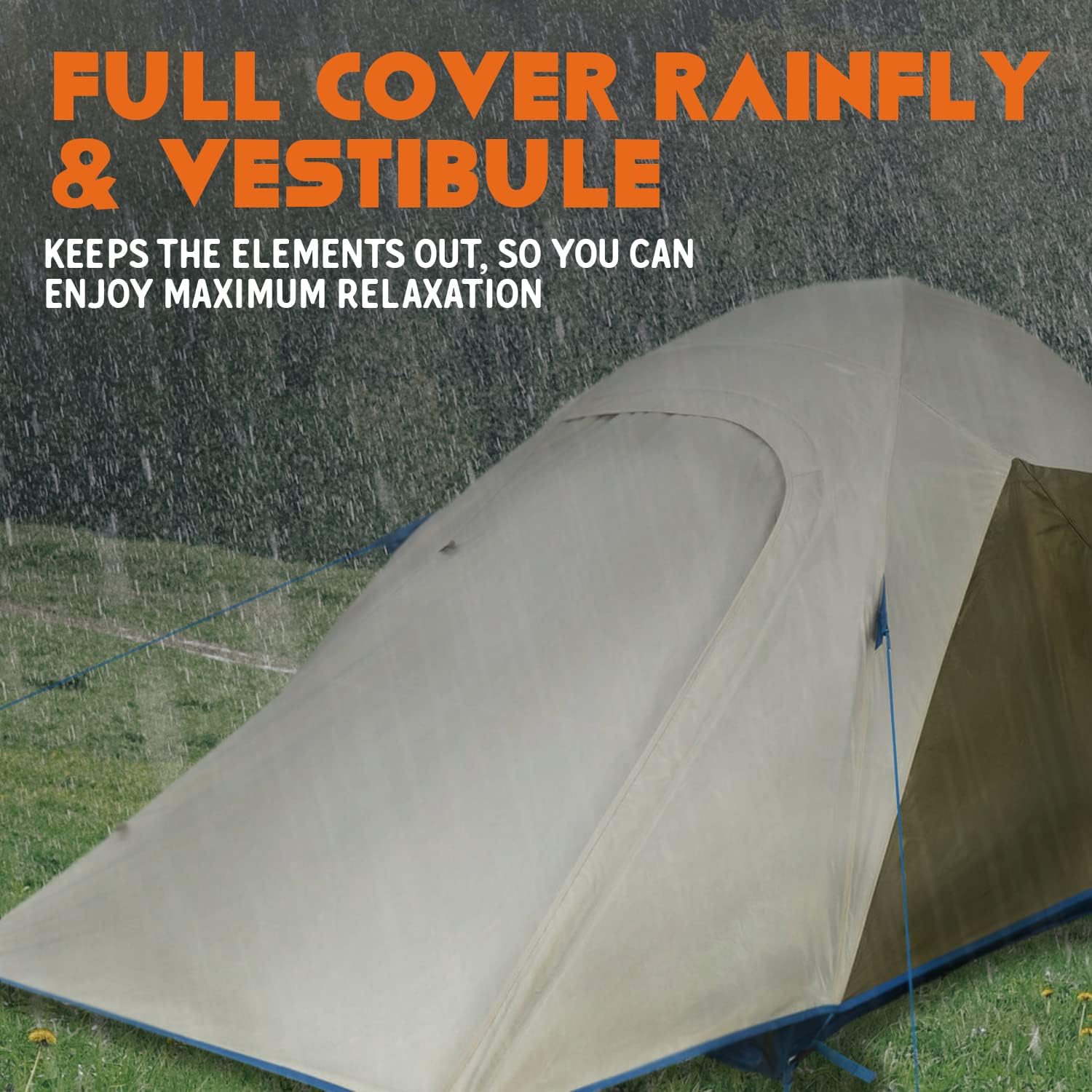
Image: The tent with its full coverage rainfly, demonstrating protection from elements.
Operating Instructions
Entry and Exit
The tent features a large D-door for easy access. Use the zipper to open and close the door. For optimal ventilation, you can roll back the door fabric and secure it with the attached toggles.
Ventilation
Proper ventilation is crucial to minimize condensation. Ensure the rainfly is staked out correctly to allow airflow between the tent body and the rainfly. Keep the tent door mesh open when weather permits.
Gear Storage
Utilize the double stake-point vestibule for storing gear outside the main tent body, protecting it from the elements while maximizing interior space. The tent also includes two internal storage pockets for organizing smaller essentials.

Image: View of the internal mesh storage pockets, useful for organizing small items.
Maintenance
Cleaning
After each use, gently clean your tent. Hand wash with mild soap and water. Avoid harsh detergents, bleach, or machine washing, as these can damage the fabric and waterproof coatings. Rinse thoroughly.
Drying
Always ensure the tent body and rainfly are completely dry before packing away. Drying in a shaded, well-ventilated area is ideal. Never store a wet or damp tent, as this can lead to mildew and material degradation.
Storage
Store the clean, dry tent loosely in its stuff sack in a cool, dry place away from direct sunlight and extreme temperatures. Avoid compressing the tent for extended periods, as this can affect the longevity of the waterproof coatings and fabric.

Image: The Kelty Tanglewood tent neatly packed into its Shark Mouth carry bag.
Troubleshooting
Condensation Inside Tent
- Cause: Lack of ventilation, high humidity, temperature difference between inside and outside.
- Solution: Increase ventilation by opening vents or partially unzipping doors (mesh only) when conditions allow. Ensure the rainfly is properly tensioned and spaced from the tent body.
Tent Instability in Wind
- Cause: Improper staking, loose guylines, or insufficient tension.
- Solution: Ensure all stakes are firmly driven into the ground. Adjust guylines to be taut and evenly distributed. Consider using additional stakes or heavier objects to anchor the tent in very windy conditions.
Leaking
- Cause: Damaged fabric, worn seam tape, or improper rainfly setup.
- Solution: Check for tears or holes in the fabric and repair with a tent repair kit. Inspect seam tape for peeling and re-seal if necessary. Ensure the rainfly is fully covering the tent and properly tensioned.
Specifications
| Feature | Detail |
|---|---|
| Brand | Kelty |
| Model Name | Tanglewood |
| Occupancy | 2 Person |
| Seasons | 3 Season (Spring, Summer, Fall) |
| Minimum Trail Weight | 5 Pounds |
| Floor Area | 30 Square Feet |
| Vestibule Area | 15 Square Feet |
| Product Dimensions (L x W x H) | 82"L x 52"W x 46"H |
| Maximum Height | 46 Inches (115.6 Centimeters) |
| Material Type | 100% Polyester |
| Pole Material Type | Fiberglass |
| Water Resistance Level | Waterproof (1200 mm) |
| Number of Doors | 1 |
| Included Components | Tent Body, Fiberglass poles, Stakes, Rainfly, Stuff Sack |

Image: Packed dimensions of the Kelty Tanglewood tent in its stuff sack.
Warranty and Support
Warranty Information
The Kelty Tanglewood 2 Person Tent is covered by a Limited Lifetime Manufacturer Warranty. This warranty covers defects in materials and workmanship for the reasonable lifetime of the product. For specific details regarding warranty claims, please refer to the official Kelty website or contact their customer service.
Customer Support
For further assistance, questions, or to report any issues with your Kelty Tanglewood tent, please visit the official Kelty website or contact their customer support department. Contact information can typically be found on the brand's official website under a 'Support' or 'Contact Us' section.