
1. Introduction
This manual provides essential information for the proper installation, operation, and maintenance of your Jemay Wireless Interconnected Smoke Detectors (Model AW111-B). Please read these instructions thoroughly before installation and retain them for future reference. These smoke detectors are designed to provide early warning of smoke and fire hazards within residential environments.
2. Product Overview
2.1 Key Features
- Wireless Interconnection: Allows multiple detectors to communicate, ensuring all alarms sound when one detects smoke. Supports interconnection of up to 24 units.
- 10-Year Sealed Battery: Equipped with a non-replaceable lithium battery designed to provide continuous power for up to 10 years.
- Photoelectric Sensor: Utilizes photoelectric sensing technology for reliable smoke detection and reduced false alarms.
- Easy Installation: Offers flexible installation options using either magnetic mounts or screws.
- Loud Alarm: Produces an 85dB alarm sound at 3 meters to alert occupants effectively.
- Wide Coverage: Effective coverage area of 20-40 square meters per unit.
2.2 Components
Each Jemay Wireless Interconnected Smoke Detector unit includes the following:
- Smoke Detector Unit (with integrated 10-year lithium battery)
- Mounting Bracket
- Mounting Screws and Wall Plugs
- Magnetic Mounting Pads (optional installation method)

Figure 1: Internal components of the smoke detector, showing the photoelectric sensor, 10-year battery, and test button.
3. Setup and Installation
3.1 Choosing Installation Location
For optimal protection, install smoke detectors in every sleeping room and on every level of your home, including the basement. Place detectors in hallways that lead to sleeping areas. Avoid installing detectors in kitchens, bathrooms, or garages where cooking fumes, steam, or exhaust can cause false alarms. Keep detectors at least 10 feet (3 meters) away from cooking appliances.
3.2 Installation Methods
Your Jemay smoke detector offers two installation methods: magnetic mounting or screw mounting.

Figure 2: Illustration of the two installation methods: magnetic pads (left) and screws with wall plugs (right).
3.2.1 Magnetic Mounting (Recommended for smooth, clean surfaces)
- Ensure the ceiling or wall surface is clean, dry, and smooth.
- Peel the protective film from one side of the magnetic pad.
- Attach the exposed side of the magnetic pad firmly to the back of the smoke detector's mounting bracket.
- Peel the protective film from the other side of the magnetic pad.
- Press the smoke detector (with the attached magnetic pad) firmly against the desired installation surface for at least 30 seconds.
3.2.2 Screw Mounting (Recommended for uneven or textured surfaces)
- Use the mounting bracket as a template to mark the two screw holes on the ceiling or wall.
- Drill two holes at the marked positions. Insert the wall plugs into the drilled holes.
- Align the mounting bracket with the holes and secure it with the provided screws.
- Attach the smoke detector unit to the mounting bracket by twisting it clockwise until it locks securely into place.
3.3 Interconnection Process
To enable the wireless interconnection feature, follow these steps for each detector:
- Activate the First Detector: Press and hold the test button on the first detector until it chirps once and the LED flashes rapidly. Release the button. This detector is now in pairing mode.
- Activate Subsequent Detectors: For each additional detector, press and hold its test button until it chirps once and the LED flashes rapidly. Release the button. It will automatically attempt to connect to the first activated detector.
- Confirm Interconnection: Once all detectors are activated and within range, press the test button on any one detector. All interconnected detectors should sound their alarms simultaneously. If not, repeat the pairing process.
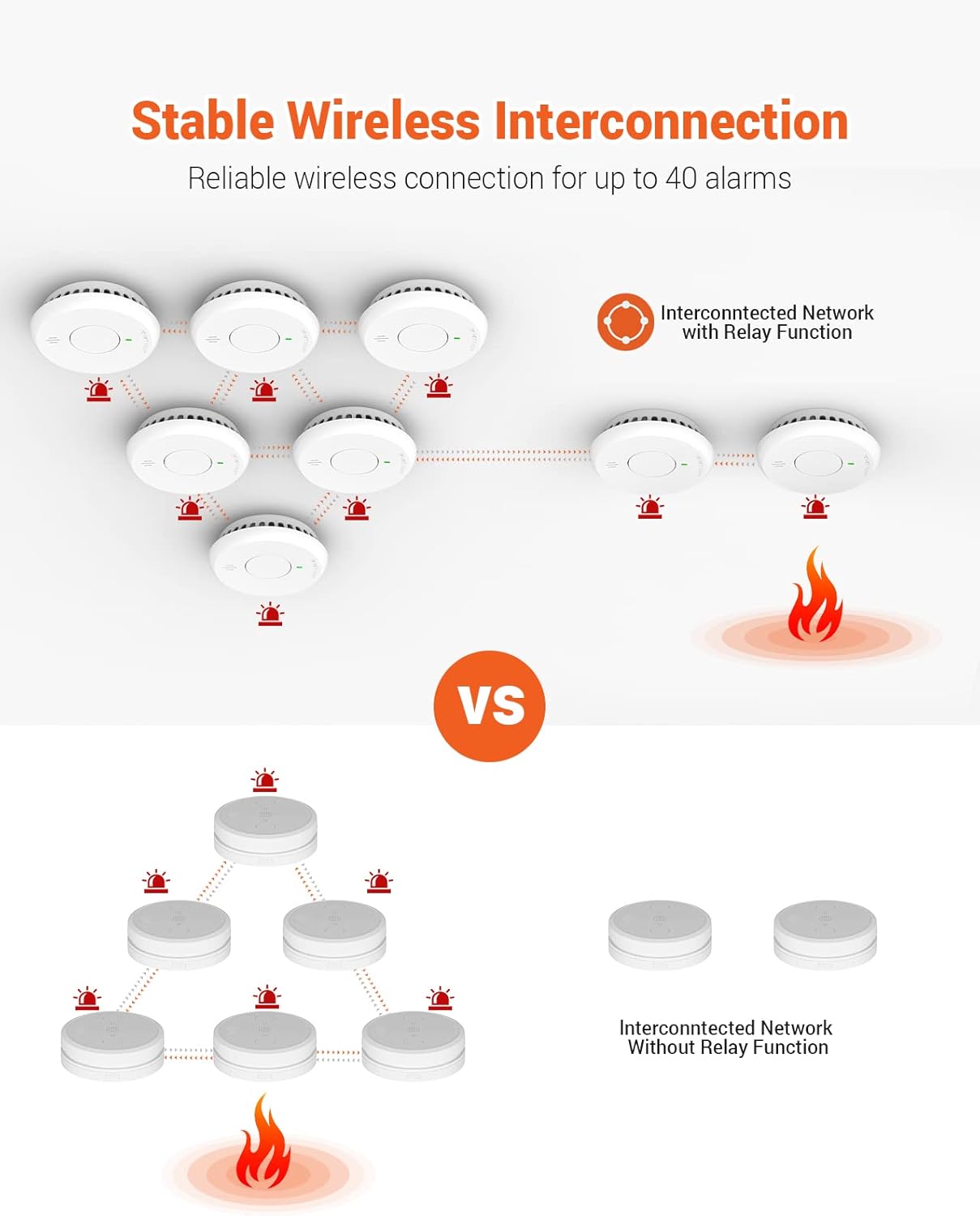
Figure 3: Visual representation of multiple smoke detectors forming an interconnected network with relay function.

Figure 4: Example of interconnected smoke detectors providing comprehensive coverage throughout a multi-level home.
4. Operating Instructions
4.1 Testing the Smoke Detector
It is crucial to test your smoke detectors weekly to ensure they are functioning correctly. To test:
- Press and hold the test button on the front of the detector for a few seconds.
- The detector will emit a loud alarm sound and the LED indicator will flash.
- If interconnected, all other paired detectors should also sound their alarms.
- Release the button. The alarm will stop.
If the detector does not alarm during the test, refer to the Troubleshooting section.
4.2 Understanding Alarm Signals
- Smoke Alarm: A loud, continuous siren sound accompanied by a rapidly flashing red LED. This indicates the presence of smoke.
- Low Battery Warning: A short chirp every 40-60 seconds, accompanied by a brief flash of the red LED. This indicates the battery is nearing the end of its 10-year life and the unit should be replaced.
- Malfunction Warning: A short chirp every 40-60 seconds without an LED flash, or an irregular chirp pattern. This indicates a fault with the detector. The unit should be replaced immediately.
4.3 Silence/Hush Feature
In case of a nuisance alarm (e.g., from cooking fumes), you can temporarily silence the alarm:
- Press the test/silence button on the alarming detector.
- The alarm will silence for approximately 10 minutes. The red LED will continue to flash every 10 seconds to indicate it is in hush mode.
- After 10 minutes, if smoke is still present, the alarm will reactivate.
Do not use the silence feature for actual fire emergencies. Always evacuate immediately if you suspect a real fire.
5. Maintenance
5.1 Regular Testing
Test your smoke detectors weekly as described in Section 4.1. This is the most important step to ensure your detectors are working.
5.2 Cleaning
Dust and debris can accumulate on the smoke detector and affect its performance. Clean your detector at least once a month:
- Gently vacuum the exterior of the detector, especially around the sensing chamber openings, using a soft brush attachment.
- Wipe the exterior with a clean, damp cloth. Do not use cleaning solvents or chemicals.
5.3 Battery Information
The Jemay AW111-B smoke detector is equipped with a sealed, non-replaceable 10-year lithium battery. This battery is designed to power the unit for its entire operational lifespan. When the detector emits a low battery chirp (see Section 4.2), the entire unit must be replaced. Do not attempt to replace the battery yourself, as this will void the warranty and may damage the unit.
6. Troubleshooting
If your smoke detector is not functioning as expected, consult the following table:
| Problem | Possible Cause | Solution |
|---|---|---|
| Detector does not alarm during test. | Unit not activated; battery depleted; malfunction. | Ensure unit is properly activated. If it's an older unit, the 10-year battery may be depleted; replace the unit. If new, contact support. |
| Detector chirps every 40-60 seconds. | Low battery warning. | The 10-year battery is at the end of its life. Replace the entire smoke detector unit. |
| False alarms occur frequently. | Improper placement; dust/debris in sensing chamber; high humidity/steam. | Relocate the detector away from kitchens, bathrooms, or areas with high steam. Clean the detector as per Section 5.2. |
| Interconnected detectors do not all alarm. | Interconnection not properly established; detectors out of range. | Repeat the interconnection process (Section 3.3). Ensure all detectors are within the specified wireless range (up to 820 feet in open air). |
| Detector emits irregular chirps or sounds. | Malfunction. | Replace the smoke detector unit immediately. |
7. Specifications
- Model Number: AW111-B (also referred to as GS528A)
- Power Source: Sealed 3V CR123A Lithium Battery (10-year life, non-replaceable)
- Sensor Type: Photoelectric
- Alarm Volume: >85dB at 3 meters
- Interconnection: Wireless, up to 24 units
- Wireless Range: Over 820 feet (open air)
- Operating Temperature: 40°F (4.4°C) to 100°F (37.8°C)
- Operating Humidity: 10% to 95% RH (non-condensing)
- Dimensions: Approximately 4.5 x 4.5 x 1.5 inches
- Weight: Approximately 13.1 ounces
- Material: Upgraded premium ABS (temperature resistant up to 212°F / 100°C)
8. Warranty and Support
Jemay Wireless Interconnected Smoke Detectors (Model AW111-B) are designed for a 10-year operational life, supported by their sealed lithium battery. For specific warranty details or technical assistance, please refer to the product packaging or contact Jemay customer support through their official channels. It is recommended to keep your purchase receipt as proof of purchase.


