
1. Introduction
This manual provides essential information for the safe operation, maintenance, and troubleshooting of your TEANDE 4200 Gas Pressure Washer. Please read this manual thoroughly before operating the unit to ensure proper use and to prevent injury or damage.
2. Safety Information
WARNING: Failure to follow these instructions may result in serious injury or property damage.
- Always wear appropriate personal protective equipment, including eye protection, hearing protection, and sturdy footwear, when operating the pressure washer.
- Never point the spray gun at people, pets, or electrical devices. The high-pressure spray can cause severe injury.
- Operate the pressure washer in a well-ventilated area to avoid carbon monoxide poisoning from engine exhaust.
- Handle fuel with extreme care. Store fuel in an approved container in a well-ventilated area away from ignition sources. Do not refuel a hot engine.
- Ensure all connections are secure before starting the unit.
- Keep children and pets away from the operating area.
- Do not operate the pressure washer if any parts are damaged or missing.
- Always release residual pressure in the system by squeezing the spray gun trigger after turning off the engine and before disconnecting hoses.
3. Product Overview and Components
The TEANDE 4200 Gas Pressure Washer is designed for heavy-duty cleaning tasks. It features a powerful engine, a robust pump, and various accessories for versatile cleaning applications.
Key Features:
- Maximum Pressure: 4000 PSI
- Maximum Flow Rate: 2.8 GPM
- Engine: 212cc 4-Stroke OHV Gas Engine
- Nozzles: 5 Quick-connect nozzles (0°, 15°, 25°, 40°, Soap)
- Hose: 25ft High-Pressure Hose
- Detergent Tank: 1L capacity with adjustable switch
- Mobility: Large, sturdy rubber wheels
Components:
- Gas Engine
- High-Pressure Pump
- Sturdy Frame with Wheels
- Spray Gun with Wand
- High-Pressure Hose
- Detergent Tank
- Quick-Connect Nozzles
- Water Inlet Connector
- Fuel Tank
- Oil Fill Cap/Dipstick

Figure 3.1: Main unit of the TEANDE 4200 Gas Pressure Washer, highlighting its 4000 PSI maximum pressure capability.

Figure 3.2: Close-up view of the 212cc 4-Stroke OHV engine and pump assembly, indicating 4000 PSI and 2.8 GPM performance.

Figure 3.3: All components included in the package, such as the spray gun, hose, detergent bottle, and various nozzles.
4. Setup Instructions
Follow these steps to prepare your pressure washer for operation.
Assembly:
Refer to the assembly video on the product page or the included user manual for detailed assembly steps. Ensure all parts are securely fastened before proceeding.
Fluid Filling:
- Fill Fuel: Open the fuel tank cap and carefully fill the tank with fresh, unleaded gasoline. The fuel tank capacity is approximately 1.5 liters. Do not overfill.
- Fill Oil: Locate the oil fill cap/dipstick. Remove it and, using a funnel, fill the engine with the recommended engine oil (refer to specifications for type). Ensure the oil level reaches at least the 'L' mark on the dipstick. Do not overfill.
Video 4.1: This video demonstrates the process of filling fuel and oil into the pressure washer engine, and connecting the water supply.
Water Connection:
- Connect Garden Hose: Attach a garden hose to the water inlet connector on the pressure washer. Ensure the connection is tight to prevent leaks.
- Open Water Source: Fully open the water faucet to allow water to flow to the pressure washer.
- Purge Air: Before starting the engine, squeeze the trigger on the spray gun until a steady stream of water flows out, indicating that all air has been purged from the pump and hose.
5. Operating Instructions
Starting the Engine:
- Ensure the pressure washer is on a level surface.
- Turn the engine switch to the "ON" position.
- Move the speed control rod to the left, to the "RABBIT" (fast) position.
- Turn the choke lever to the left, to the "CHOKE" position (for cold starts).
- Turn the fuel lever to the right, to the "ON" position.
- Pull the recoil starter handle slowly until resistance is felt, then pull briskly to start the engine.
- Once the engine starts, gradually move the choke lever to the right, to the "RUN" position.
Nozzle Selection and Application:
The pressure washer includes 5 quick-connect nozzles, each designed for specific cleaning tasks:
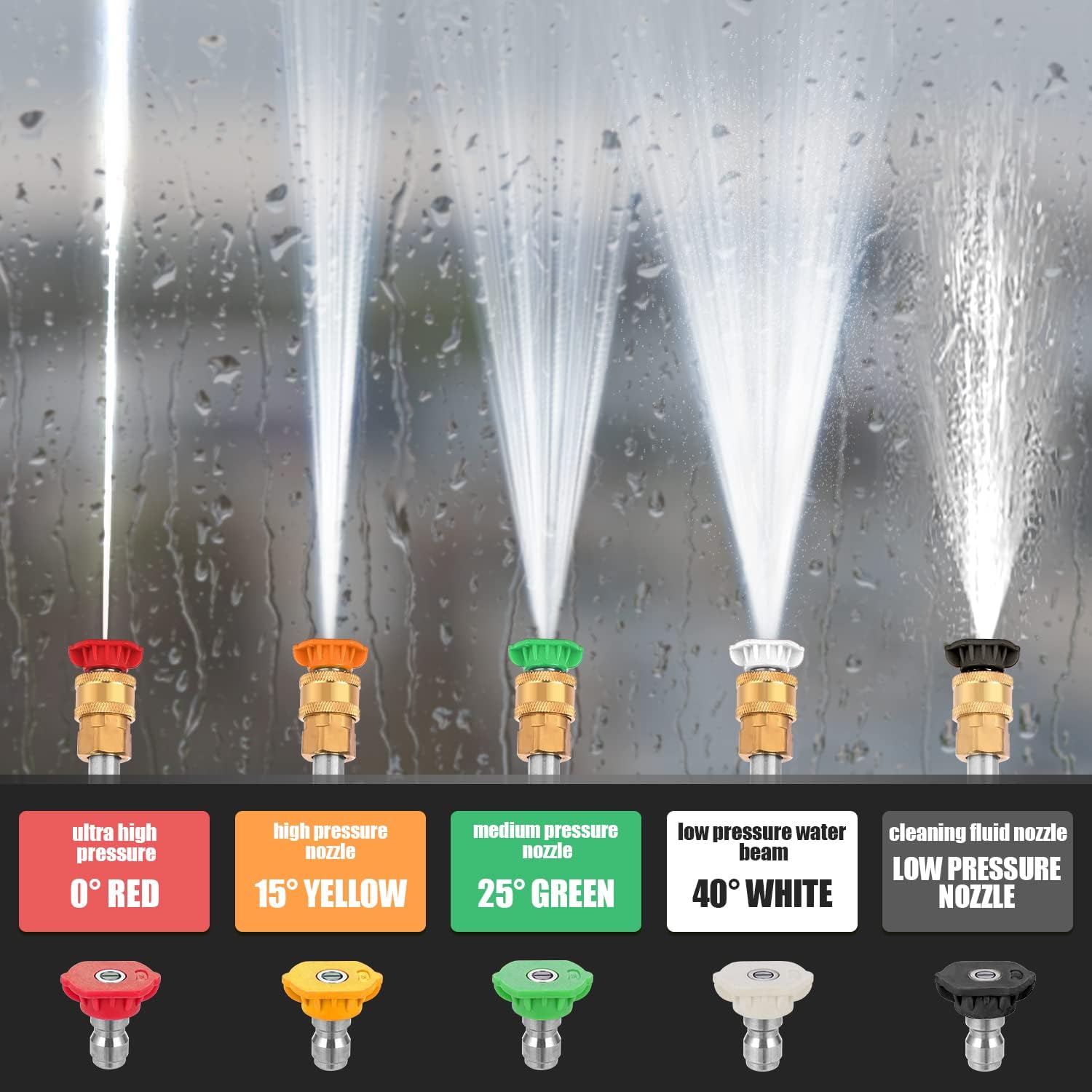
Figure 5.1: The five quick-connect nozzles, color-coded for different spray patterns and pressure levels.
- 0° Red Nozzle (Ultra High Pressure): Delivers a concentrated, powerful stream for tough, localized stains. Use with extreme caution.
- 15° Yellow Nozzle (High Pressure): Provides a powerful, narrow spray for intense cleaning of hard surfaces like concrete and metal.
- 25° Green Nozzle (Medium Pressure): Offers a versatile, wider spray for general cleaning of decks, patios, and vehicles.
- 40° White Nozzle (Low Pressure): Produces a wide, gentle spray for delicate surfaces or for applying detergent.
- Black Soap Nozzle (Low Pressure/Detergent): Designed for applying cleaning solutions at low pressure.
Detergent Application:
Fill the 1L detergent tank with an appropriate pressure washer-safe cleaning solution. Attach the black soap nozzle. The detergent will automatically mix with water. An adjustable switch allows you to control the detergent proportion.

Figure 5.2: Example of using the pressure washer to clean a driveway.

Figure 5.3: Example of using the pressure washer to clean a wooden deck.

Figure 5.4: Example of using the pressure washer for car cleaning, specifically a wheel.
Shutting Down:
- Turn off the engine switch.
- Turn off the water supply.
- Squeeze the spray gun trigger to release any remaining pressure in the system.
- Disconnect the garden hose and high-pressure hose.
6. Maintenance
Regular maintenance ensures the longevity and optimal performance of your pressure washer.
- Air Filter: Clean the air filter every 50 hours of use, or more frequently in dusty conditions. Refer to the engine manual for specific cleaning instructions.
- Engine Oil: Check engine oil level before each use. Change engine oil after the first 5 hours of use, then every 25-50 hours or seasonally.
- Spark Plug: Inspect the spark plug annually or every 100 hours. Clean or replace as needed.
- Water Inlet Filter: Regularly inspect and clean the water inlet filter to prevent debris from entering the pump.
- Nozzles: Clean clogged nozzles using the provided nozzle cleaning tool.
- Storage: For long-term storage, drain all fuel from the tank and carburetor. Drain water from the pump and hoses. Store in a dry, frost-free area.
7. Troubleshooting
If you encounter issues with your pressure washer, refer to the following common problems and solutions:
| Problem | Possible Cause | Solution |
|---|---|---|
| Engine will not start | No fuel; Low oil level; Engine switch OFF; Choke/fuel valve incorrect; Spark plug issue | Fill fuel tank; Add oil; Turn switch ON; Adjust choke/fuel valve; Inspect/replace spark plug |
| Low pressure | Clogged nozzle; Insufficient water supply; Air in pump; Worn pump seals | Clean nozzle; Ensure full water flow; Purge air from pump; Contact service for pump repair |
| No water flow | Water supply off; Kinked hose; Clogged inlet filter | Turn on water; Straighten hose; Clean inlet filter |
| Pulsating pressure | Air in pump; Clogged nozzle; Water supply restriction | Purge air; Clean nozzle; Check water supply for kinks or blockages |
8. Specifications
| Specification | Value |
|---|---|
| Brand | TEANDE |
| Model Number | MZD005298_1-1 |
| Power Source | Gas Powered |
| Maximum Pressure | 4200 PSI |
| Maximum Flow Rate | 2.6 Gallons Per Minute |
| Engine Displacement | 212cc |
| Hose Length | 25 Feet |
| Detergent Tank Capacity | 1 Liter |
| Item Weight | 65.4 Pounds |
| Product Dimensions (L x W x H) | 19.68" x 17.71" x 22.44" |
9. Warranty and Support
Warranty:
The product comes with a 1-year warranty for free replacement parts. For warranty claims, please contact customer support with details of the issue.
Customer Support:
If you have any problems with your TEANDE gas power washer, please feel free to reach out to us. To expedite support, find your order or the store name, then send us relevant photos and videos of the issue. We will respond as soon as possible on business days.
Alternatively, you may visit a local repair store for repair at our expense if preferred, to resolve the problem faster.

