
Introduction
This manual provides detailed instructions for the installation and maintenance of your Miwayer Bone Bridge Saddle and Nut. These components are designed to enhance the tone and playability of your acoustic guitar. Please read these instructions carefully before proceeding with installation.
Product Overview
The Miwayer Bone Bridge Saddle and Nut are crafted from real bone, a material known for its excellent tonal properties. Bone provides superior string vibration transfer compared to plastic, resulting in improved sustain, clarity, and harmonic richness. This set includes components suitable for both 6-string and 12-string acoustic guitars, depending on the specific variant purchased.
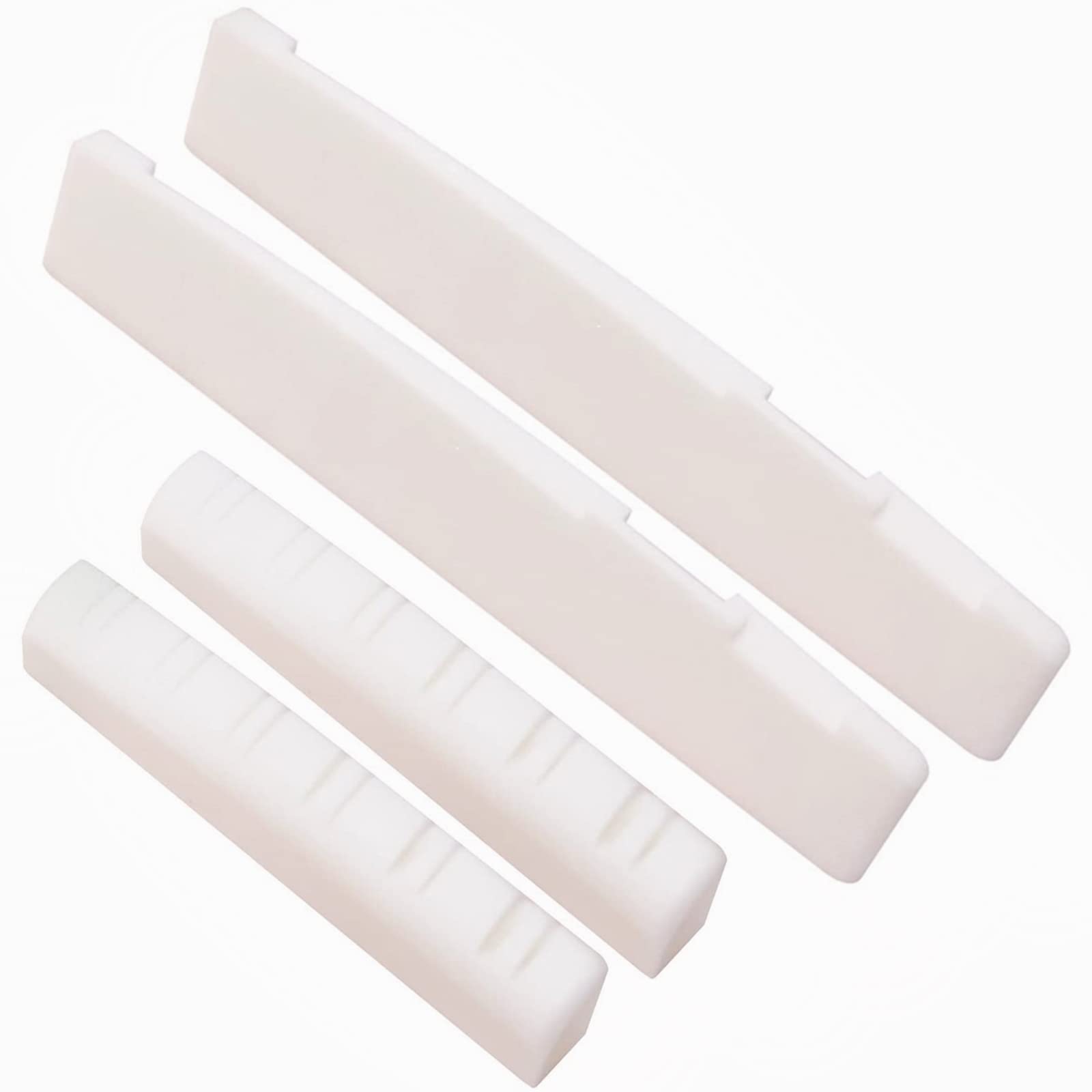
Image: The Miwayer bone bridge saddle and nut set, ready for installation.
Key Features:
- Material: Made from real bone for optimal sound transfer.
- Durability: Bone is a hard-wearing material, offering long-lasting performance.
- Tone Enhancement: Contributes to improved sustain, clarity, and harmonic content.
- Compatibility: Designed for various acoustic guitar types (6-string and 12-string variants available).
Specifications
| Item Weight | 0.317 ounces |
| Package Dimensions | 2.99 x 1.81 x 0.43 inches |
| Material Type | Bone |
| Item Model Number | JP bridge |
| First Available | November 17, 2021 |

Image: Detailed dimensions of the Miwayer bone saddle, showing length, width, and height.

Image: Detailed dimensions of the Miwayer bone nut, showing length, width, and height.
Installation Guide
Replacing a guitar saddle and nut requires careful attention to detail. If you are unsure about any step, it is recommended to seek assistance from a qualified guitar technician.
Tools Required:
- Fine-grit sandpaper (220-400 grit)
- Ruler or calipers for precise measurements
- Pencil
- Small file set (for nut slots, if needed)
- String winder
- New guitar strings
Saddle Installation:
- Remove Old Strings and Saddle: Loosen and remove all guitar strings. Carefully remove the old saddle from the bridge slot.
- Measure and Compare: Compare the new Miwayer bone saddle to the old saddle. Measure the length, width, and height. The new saddle may be slightly oversized to allow for custom fitting.
- Adjust Length (if necessary): If the new saddle is too long, carefully sand the ends using fine-grit sandpaper until it fits snugly into the bridge slot without being forced. Ensure the ends remain square.
- Adjust Height: The saddle height determines the string action. To lower the action, sand the bottom of the saddle. Mark the desired height with a pencil, then sand evenly across the bottom surface. Regularly check the fit and height in the bridge slot.
- Check Intonation: Once the saddle fits and the height is set, install new strings and tune the guitar. Check the intonation at the 12th fret. Minor adjustments to the saddle's top edge (compensation) might be needed for perfect intonation, which is best done by an experienced technician.
Image: A Miwayer bone saddle correctly installed in a 12-string acoustic guitar bridge.
Nut Installation:
- Remove Old Nut: After removing strings, gently tap the old nut sideways with a small hammer and a block of wood to loosen it. If glued, apply minimal heat with a hairdryer to soften the glue. Clean any old glue from the nut slot.
- Measure and Compare: Compare the new Miwayer bone nut to the old nut. Ensure the length and width are appropriate for your guitar's nut slot.
- Adjust Length and Width (if necessary): If the new nut is too long or wide, carefully sand the ends and sides until it fits snugly into the nut slot.
- Adjust Height and String Slots: The nut height affects the action at the first fret. The string slots should be deep enough to hold the strings securely but not so deep that they cause buzzing. Use specialized nut files to deepen slots if necessary. This step is crucial for playability and is often best performed by a professional.
- Secure the Nut: Apply a small amount of wood glue (or super glue) to the bottom of the nut slot. Place the new bone nut into the slot and press firmly. Wipe away any excess glue immediately.

Image: A Miwayer bone nut correctly installed on a 12-string acoustic guitar headstock.
Functionality and Operating Principles
The bridge saddle and nut are critical contact points for the guitar strings. The saddle transfers string vibrations to the guitar's soundboard via the bridge, contributing significantly to the instrument's volume and tone. The nut, located at the headstock, sets the spacing and height of the strings at the beginning of the fretboard. Both components must be precisely fitted to ensure proper string action, intonation, and optimal sound quality. Bone, being a dense and resonant material, enhances these properties by minimizing dampening and maximizing vibrational transfer.
Maintenance
Proper maintenance ensures the longevity and performance of your bone saddle and nut.
- Cleaning: Wipe the saddle and nut with a soft, dry cloth during string changes to remove any grime or string residue.
- Avoid Harsh Chemicals: Do not use abrasive cleaners or solvents, as these can damage the bone material.
- Inspect for Wear: Periodically check the string slots on both the saddle and nut for signs of wear or deepening, which can lead to string buzzing or breakage.
- Lubrication (Nut): A small amount of graphite (from a pencil) applied to the nut slots during string changes can help reduce friction and improve tuning stability.
Troubleshooting
- String Buzzing:
- Cause: Saddle too low, nut slots too deep, or uneven fretwork.
- Solution: Check saddle height and nut slot depth. If the saddle is too low, it may need to be replaced or shimmed. If nut slots are too deep, the nut may need replacement. Consult a technician for fret issues.
- Poor Intonation:
- Cause: Incorrect saddle placement or compensation.
- Solution: Ensure the saddle is seated correctly. Intonation adjustments often require specialized tools and expertise.
- Strings Sticking in Nut Slots:
- Cause: Nut slots are too tight or not properly lubricated.
- Solution: Apply graphite to the nut slots. If slots are too tight, they may need to be widened slightly with appropriate nut files.
Warranty Information
Miwayer products are manufactured to high-quality standards. Specific warranty details for this product are not provided in the available information. Please refer to the retailer's return policy or contact Miwayer customer support for warranty inquiries.
Customer Support
For further assistance or questions regarding your Miwayer Bone Bridge Saddle and Nut, please visit the official Miwayer store on Amazon or contact their customer service through the retailer's platform. You can find more information and products at the Miwayer Store.