
1. Introduction
This manual provides essential information for the proper use and handling of the MachineMid SMAZ15-13-F Zener Diode. Zener diodes are semiconductor devices designed to allow current to flow in the forward direction like a normal diode, but also to allow it to flow in the reverse direction once the voltage reaches a specific breakdown voltage, known as the Zener voltage. This characteristic makes them ideal for voltage regulation applications.
2. Product Overview
The MachineMid SMAZ15-13-F is a 15V Zener diode with a power dissipation rating of 1 Watt and a tolerance of ±5%. It is supplied in a compact SMA (DO-214AC) surface-mount package, suitable for various electronic circuit designs requiring precise voltage regulation. This product includes 10 individual Zener diodes.
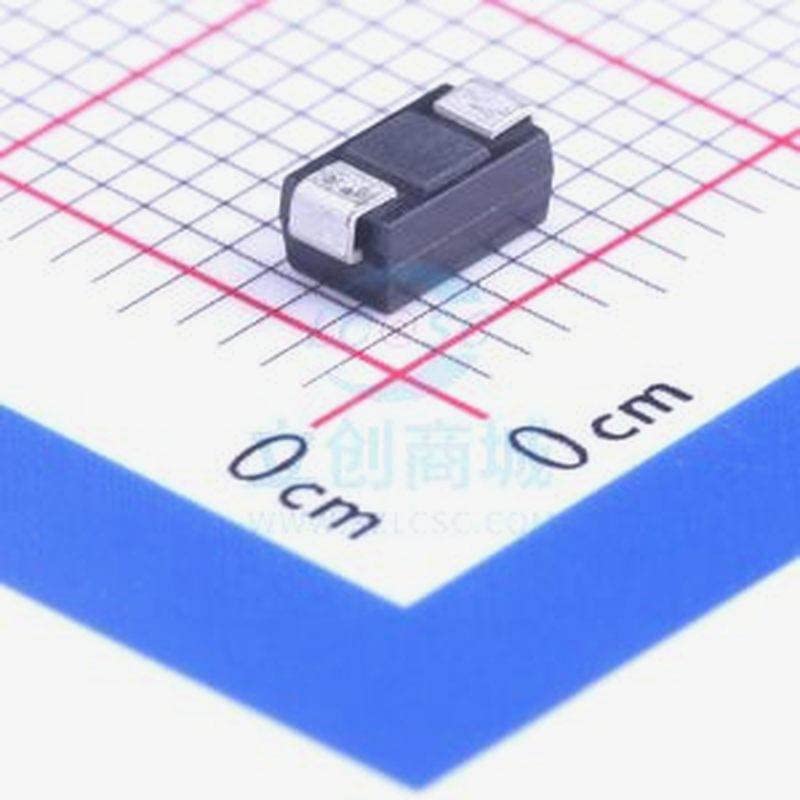
Top view of the MachineMid SMAZ15-13-F Zener diode, showing its compact SMA (DO-214AC) package. The image includes a grid background for scale, indicating the small size of the component.
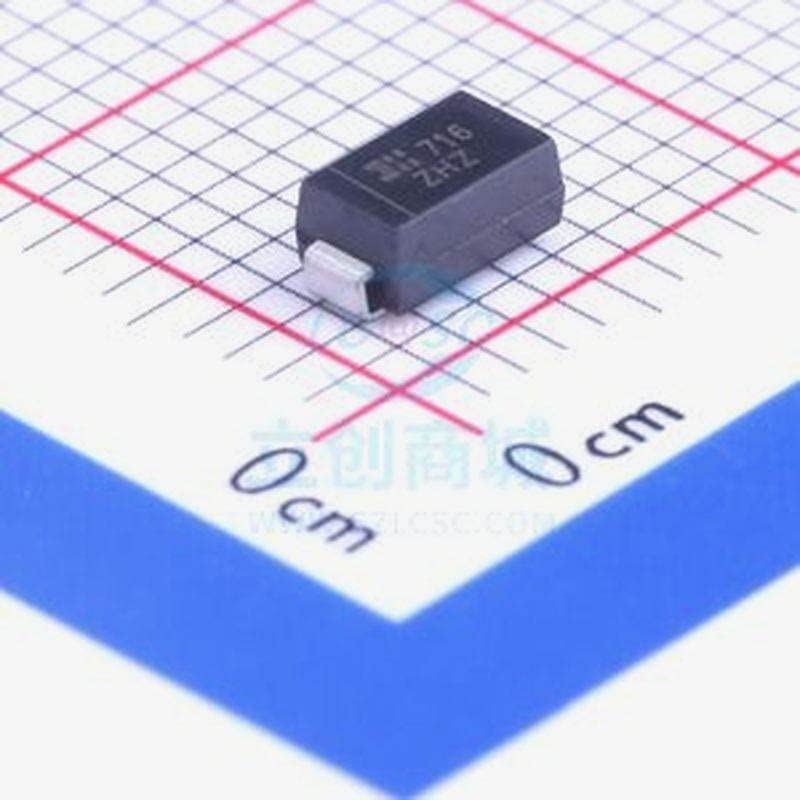
Side view of the MachineMid SMAZ15-13-F Zener diode, highlighting the cathode band (often marked with a line or specific code) and the overall dimensions. The grid background provides a visual reference for its physical size.
3. Setup and Installation
Correct installation is crucial for the proper function and longevity of the Zener diode.
3.1 Polarity
Zener diodes are polarized components. The cathode is typically marked with a band or line on the diode body. Ensure the cathode is connected to the more positive voltage side in a reverse-bias configuration for voltage regulation. Incorrect polarity will cause the diode to conduct in the forward direction like a standard rectifier diode, failing to regulate voltage at the Zener voltage.
3.2 Soldering Guidelines
The SMA package is a surface-mount device (SMD). Follow these guidelines for soldering:
- Temperature Control: Use a soldering iron with a temperature-controlled tip. Excessive heat can damage the diode. Recommended soldering temperature for lead-free solder is typically around 240-260°C.
- Soldering Time: Limit the soldering time to a few seconds (e.g., 3-5 seconds per joint) to prevent overheating.
- Pad Preparation: Ensure solder pads on the PCB are clean and properly tinned.
- Mechanical Stress: Avoid applying mechanical stress to the diode leads or body during heating and cooling cycles.
3.3 Circuit Integration
For voltage regulation, the Zener diode is typically connected in parallel with the load and in series with a current-limiting resistor. The resistor limits the current flowing through the diode to prevent damage and ensure operation within its power dissipation limits.
4. Operating Principles
The Zener diode operates based on its unique reverse breakdown characteristic.
4.1 Forward Bias
When forward biased (anode positive relative to cathode), the Zener diode behaves like a standard silicon diode, conducting current once the forward voltage drop (typically around 0.7V) is exceeded.
4.2 Reverse Bias and Voltage Regulation
When reverse biased (cathode positive relative to anode), the diode blocks current flow until the reverse voltage reaches its specified Zener voltage (Vz), which is 15V for the SMAZ15-13-F. At this point, the diode enters a controlled breakdown region, maintaining a nearly constant voltage across its terminals despite significant changes in current. This property is utilized for:
- Voltage Regulation: Stabilizing the output voltage across a load.
- Voltage Reference: Providing a stable reference voltage for other circuits.
- Overvoltage Protection: Clamping transient voltages.
4.3 Power Dissipation
The SMAZ15-13-F has a maximum power dissipation of 1 Watt. Ensure that the current flowing through the diode in the reverse breakdown region does not cause its power dissipation (P = Vz * Iz) to exceed this limit. Adequate heat sinking or proper current limiting is essential to prevent thermal damage.
5. Maintenance
Zener diodes are solid-state devices and generally require no maintenance under normal operating conditions.
- Storage: Store unused diodes in a dry, cool environment, away from direct sunlight and corrosive substances.
- Handling: Observe Electrostatic Discharge (ESD) precautions when handling these components to prevent damage from static electricity.
- Cleaning: If cleaning is necessary, use isopropyl alcohol and a soft brush. Avoid harsh chemicals.
6. Troubleshooting
If the Zener diode circuit is not functioning as expected, consider the following common issues:
- No Voltage Regulation:
- Incorrect Polarity: Verify the cathode band is oriented correctly in the circuit.
- Insufficient Current: The series resistor might be too large, not allowing enough current to flow through the diode to reach its Zener region.
- Faulty Component: The diode itself may be damaged. Test with a multimeter or replace.
- Overheating:
- Excessive Current: The current-limiting resistor may be too small, allowing too much current to flow through the diode, exceeding its 1W power rating.
- Inadequate Heat Dissipation: Ensure proper PCB layout and, if necessary, consider external heat sinking for high-power applications.
- Incorrect Regulated Voltage:
- Wrong Zener Diode: Confirm that the correct 15V Zener diode (SMAZ15-13-F) has been installed.
- Load Conditions: Ensure the load current is within the diode's operating range.
7. Specifications
| Parameter | Value |
|---|---|
| Zener Voltage (Vz) | 15 V |
| Voltage Tolerance | ±5% |
| Power Dissipation (Pd) | 1 W |
| Package Type | SMA (DO-214AC) |
| Part Number | SMAZ15-13-F |
| Quantity | 10 Pieces |
8. Safety Information
Always observe general safety precautions when working with electronic components and circuits:
- Electrical Safety: Ensure power is disconnected before making or breaking connections. Be aware of live circuits.
- Soldering Safety: Use appropriate ventilation to avoid inhaling solder fumes. Wear safety glasses to protect against solder splashes. Be cautious of hot soldering irons and molten solder.
- ESD Precautions: Use anti-static mats and wrist straps when handling sensitive electronic components to prevent damage from electrostatic discharge.
- Component Handling: Small components can be a choking hazard. Keep out of reach of children.
9. Warranty and Support
For warranty information, technical support, or any inquiries regarding the MachineMid SMAZ15-13-F Zener Diode, please contact MachineMid directly through their official support channels. Keep your purchase receipt or order details handy when contacting support.