
Introduction
This manual provides essential information for the safe and effective use of your Apache Fortitude R26 18-Speed Mountain Bike. Please read it thoroughly before assembly and operation to ensure proper function and longevity of your bicycle.
The Apache Fortitude R26 is a versatile mountain bike designed for various terrains. It features a robust alloy steel frame, dual suspension, and an 18-speed drivetrain, making it suitable for challenging rides while providing comfort and control.
Key Features:
- 18-Speed Drivetrain: Offers a wide range of gears for tackling diverse inclines and terrains with minimal effort.
- Dual Suspension System: Front and rear suspension absorb shocks, enhancing comfort and control on uneven surfaces.
- Advanced Braking System: Equipped with a front disc brake and a rear V-brake, combined with Keep-Track tires, for reliable stopping power and traction in all conditions.
- Durable Construction: Built with an alloy steel frame for strength and resilience.
Safety Information
Your safety is paramount. Always adhere to the following guidelines when operating your bicycle:
- Wear a Helmet: Always wear a properly fitted bicycle helmet that meets safety standards.
- Pre-Ride Check: Before each ride, inspect your brakes, tires (for pressure and condition), quick releases, and ensure all bolts are tight.
- Obey Traffic Laws: Follow all local traffic laws, signals, and signs. Use hand signals for turns and stops.
- Visibility: Use front and rear lights when riding in low light conditions. Wear bright clothing.
- Ride Within Your Limits: Do not attempt maneuvers beyond your skill level. Be aware of your surroundings and potential hazards.
- Proper Fit: Ensure the seat height and handlebar position are adjusted correctly for your body to maintain control and comfort.
Setup and Assembly
Your Apache Fortitude R26 mountain bike requires some assembly. Follow these steps carefully:
1. Unpacking
Carefully remove the bicycle and all components from the packaging. Retain packaging materials until assembly is complete and you are satisfied with the product.
2. Handlebar Installation
Insert the handlebar stem into the fork steerer tube. Ensure the handlebar is centered and aligned with the front wheel. Tighten the stem bolts securely.
3. Pedal Installation
Identify the left (L) and right (R) pedals. The left pedal threads counter-clockwise, and the right pedal threads clockwise. Apply a small amount of grease to the threads and carefully screw them into the crank arms. Tighten firmly with a pedal wrench.
4. Seat Post Adjustment
Insert the seat post into the frame's seat tube. Adjust the seat height so that your leg is slightly bent at the knee when the pedal is at its lowest point. Secure the quick-release lever or seat post clamp firmly.
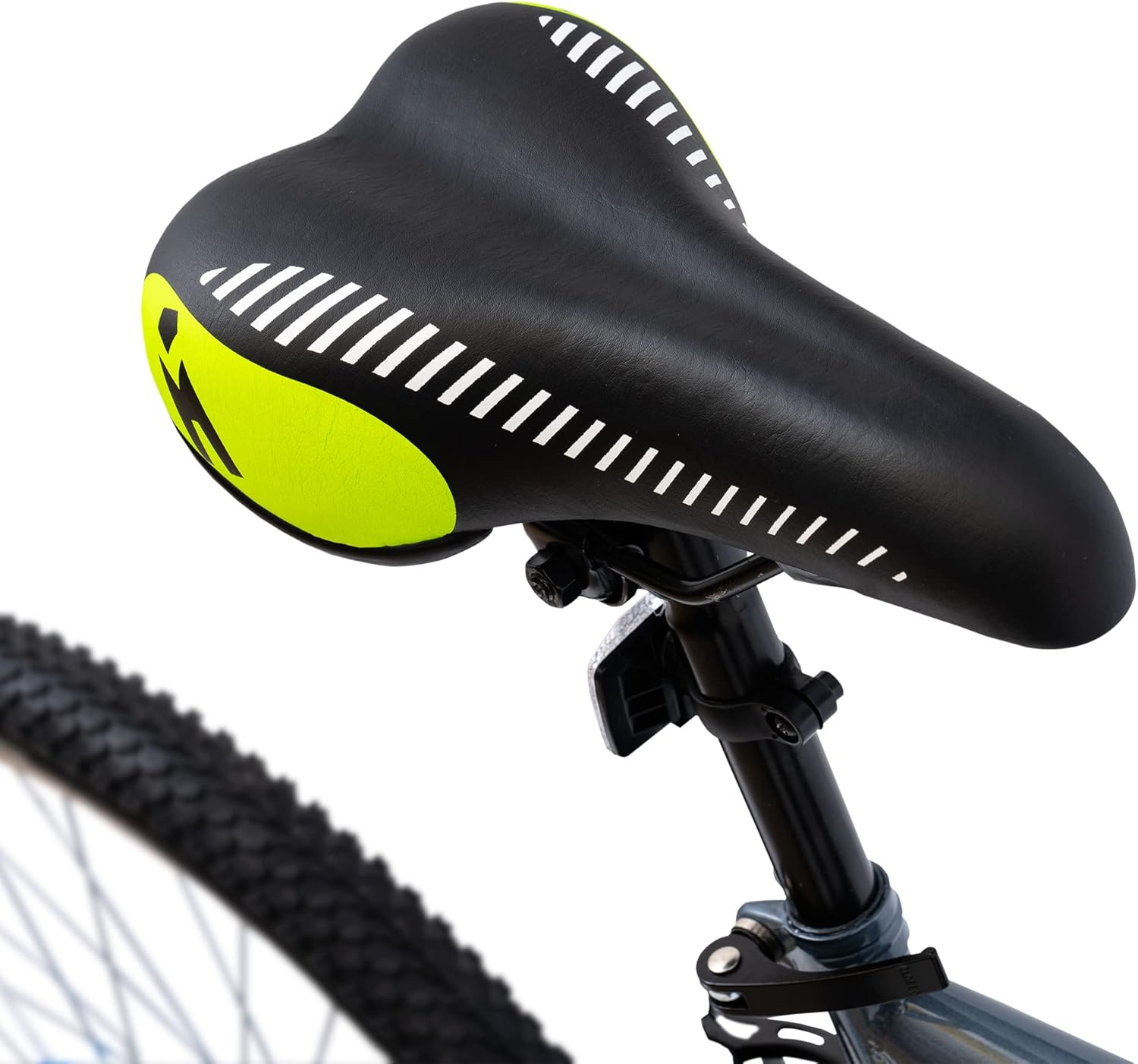
Close-up of the adjustable saddle on the Apache Fortitude R26 mountain bike, showing the quick-release mechanism for height adjustment.
5. Front Wheel Installation
Insert the front wheel into the fork dropouts. Ensure the wheel is centered and the quick-release skewer or axle nuts are tightened securely. Check that the disc brake rotor is correctly seated within the caliper.

Front fork and wheel assembly of the Apache Fortitude R26 mountain bike, highlighting the front suspension and wheel attachment point.
6. Brake and Gear Adjustment
After assembly, test both brakes to ensure they engage smoothly and stop the bike effectively. Check that the gear shifters operate correctly, allowing smooth transitions across all 18 speeds. Fine-tune as needed.

Diagram illustrating key components of the Apache Fortitude R26, including front and rear suspension, 26-inch wheels, and grip shifters.
Operating Your Bicycle
Gear Shifting (18 Speeds)
Your Fortitude R26 features an 18-speed drivetrain, consisting of 3 front gears and 6 rear gears. Use the shifters on the handlebars to change gears:
- Front Derailleur (Left Shifter): Controls the larger chainrings at the front. Use these for significant changes in resistance (e.g., flat ground to steep climb).
- Rear Derailleur (Right Shifter): Controls the smaller cogs at the rear. Use these for fine-tuning your pedaling cadence.
- Smooth Shifting: Always pedal lightly when shifting gears to avoid strain on the chain and derailleurs. Avoid shifting multiple gears at once.
- Avoid Cross-Chaining: Do not use the largest front gear with the largest rear gear, or the smallest front gear with the smallest rear gear. This puts excessive stress on the drivetrain.
Braking System
The bicycle is equipped with a front disc brake and a rear V-brake for optimal stopping power and control.
- Front Disc Brake: Located on the front wheel, operated by the left brake lever. Provides strong and consistent braking power, especially in wet conditions.
- Rear V-Brake: Located on the rear wheel, operated by the right brake lever. Offers reliable stopping power for controlled deceleration.
- Effective Braking: For maximum control and stability, apply both brakes simultaneously. Shift your weight slightly backward when braking hard.

Detailed view of the front disc brake system on the Apache Fortitude R26 mountain bike, showing the rotor and caliper.
Suspension System
The dual suspension system (front fork and rear shock) is designed to absorb impacts from rough terrain, providing a smoother and more comfortable ride. This also improves tire contact with the ground, enhancing control.

Close-up of the rear suspension coil spring on the Apache Fortitude R26 mountain bike, illustrating the shock absorption mechanism.
Maintenance
Regular maintenance ensures the longevity and safe operation of your bicycle.
- Cleaning: Regularly clean your bike, especially after riding in wet or muddy conditions. Use mild soap and water, then rinse thoroughly. Avoid high-pressure washers on bearings.
- Lubrication: Keep your chain clean and lubricated. Apply bicycle-specific chain lubricant every few rides, or after riding in wet conditions. Lubricate other moving parts like derailleur pivots and brake levers as needed.
- Tire Pressure: Check tire pressure before each ride. Maintain the pressure recommended on the tire sidewall. Proper inflation prevents flats and improves ride quality.
- Brake Inspection: Periodically inspect brake pads for wear and replace them if they are thin. Check brake cables for fraying or stiffness and replace if necessary. Ensure brake levers feel firm and responsive.
- Gear Inspection: Check that gears shift smoothly and precisely. If shifting is hesitant or noisy, the derailleur cables may need adjustment or replacement.
- Bolt Tightness: Regularly check all bolts, especially those on the stem, handlebars, seat post, and wheels, to ensure they are securely tightened.
Troubleshooting Common Issues
Here are solutions to some common bicycle problems:
- Squeaky Brakes: This can be caused by dirt on the brake pads or rims/rotors, or misaligned pads. Clean the braking surfaces and pads. If using disc brakes, ensure the rotor is clean and free of oil. Adjust pad alignment if needed.
- Skipping Gears: Often indicates that the derailleur cables need adjustment. Small adjustments to the barrel adjusters on the shifters or derailleurs can resolve this. If the chain is worn, it may need replacement.
- Flat Tire: Remove the wheel, carefully remove the tire, and inspect the inner tube for punctures. Repair or replace the inner tube. Before reassembling, check the inside of the tire for any sharp objects that caused the puncture.
- Loose Chain: If the chain is loose or falls off, check the tension of the derailleur spring. Ensure the chain is not overly stretched (a chain wear indicator tool can help).
- Creaking Noises: Creaks can come from various parts. Check pedal tightness, seat post clamp, bottom bracket, and headset for proper torque. Clean and grease components as necessary.
Specifications
| Feature | Specification |
|---|---|
| Bicycle Type | Mountain Bike |
| Model | Fortitude R26 |
| Brand | Apache |
| Number of Speeds | 18 |
| Wheel Size | 26 Inches |
| Frame Material | Alloy Steel |
| Suspension Type | Front |
| Brake Style | Linear Pull (Front Disc, Rear V-Brake) |
| Shifter Type | Trigger |
| Drive Type | Chain Drive |
| Color | Gray |
| Age Range Description | Youth |
| Supported Weight | 100 Kilograms |
| Assembly Required | Partial Assembly Required |
| UPC | 843384124425 |
Warranty Information
Your Apache Fortitude R26 mountain bike is covered by a 1-year warranty against manufacturing defects. This warranty covers defects in materials and workmanship under normal use. Please retain your proof of purchase for warranty claims. For specific terms and conditions, refer to the warranty card included with your product or contact Apache customer service.
Customer Support
If you encounter any issues, have questions about assembly, operation, or maintenance, or need to make a warranty claim, please contact Apache customer service. When contacting support, please provide the following information:
- Product Model: Fortitude R26
- UPC: 843384124425
- Date of Purchase
- Detailed description of the issue
Contact information for Apache customer service can typically be found on the product packaging or the official Apache website.