
Introduction
This manual provides detailed instructions for the installation, operation, and maintenance of your AXAGON ADSA-ST USB 3.0 Docking Station. This device is designed to connect 2.5" and 3.5" SATA SSDs and HDDs to your computer via a USB 3.0 interface, offering fast data transfer speeds.
Please read this manual thoroughly before using the product to ensure proper functionality and to prevent damage.
Package Contents
Verify that all components are present in the package:
- AXAGON ADSA-ST Docking Station
- USB 3.0 Type-A to Micro-B cable
- Power Adapter
- User Manual (this document)

Image: The AXAGON ADSA-ST Docking Station shown alongside its retail packaging, illustrating the product and its box.
Key Features
- Supports 2.5" and 3.5" SATA I/II/III SSDs and HDDs.
- USB 3.0 (USB 3.2 Gen 1) interface with up to 5 Gbps transfer speed.
- SATA 6G (SATA III) support.
- UASP (USB Attached SCSI Protocol) support for enhanced performance.
- TRIM support for SSDs.
- HDD Auto Spindown function.
- LED indication for power and activity.
- Compact design with aluminum body.

Image: A view of the AXAGON ADSA-ST Docking Station highlighting its 5 Gbps USB 3.2 Gen 1 speed and compact size.
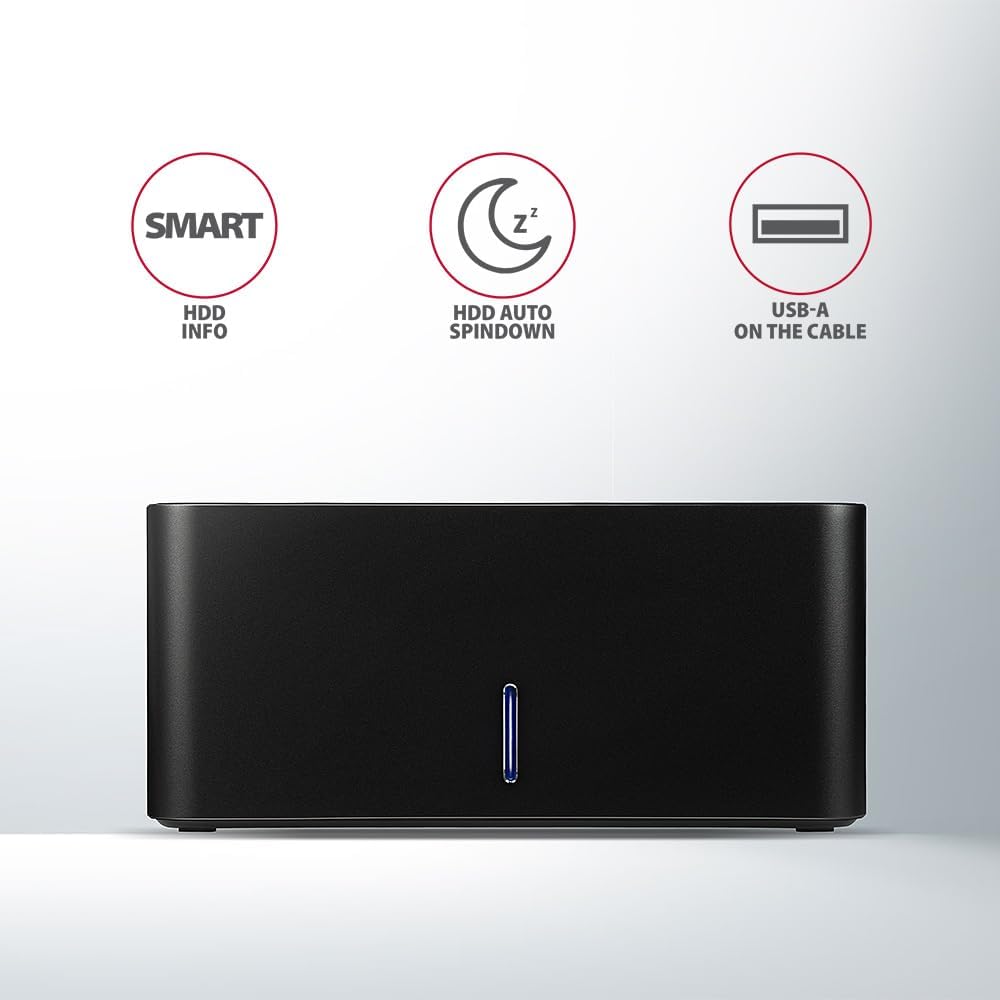
Image: The docking station from the front, indicating features like SMART HDD info, automatic HDD spindown, and USB-A connectivity.
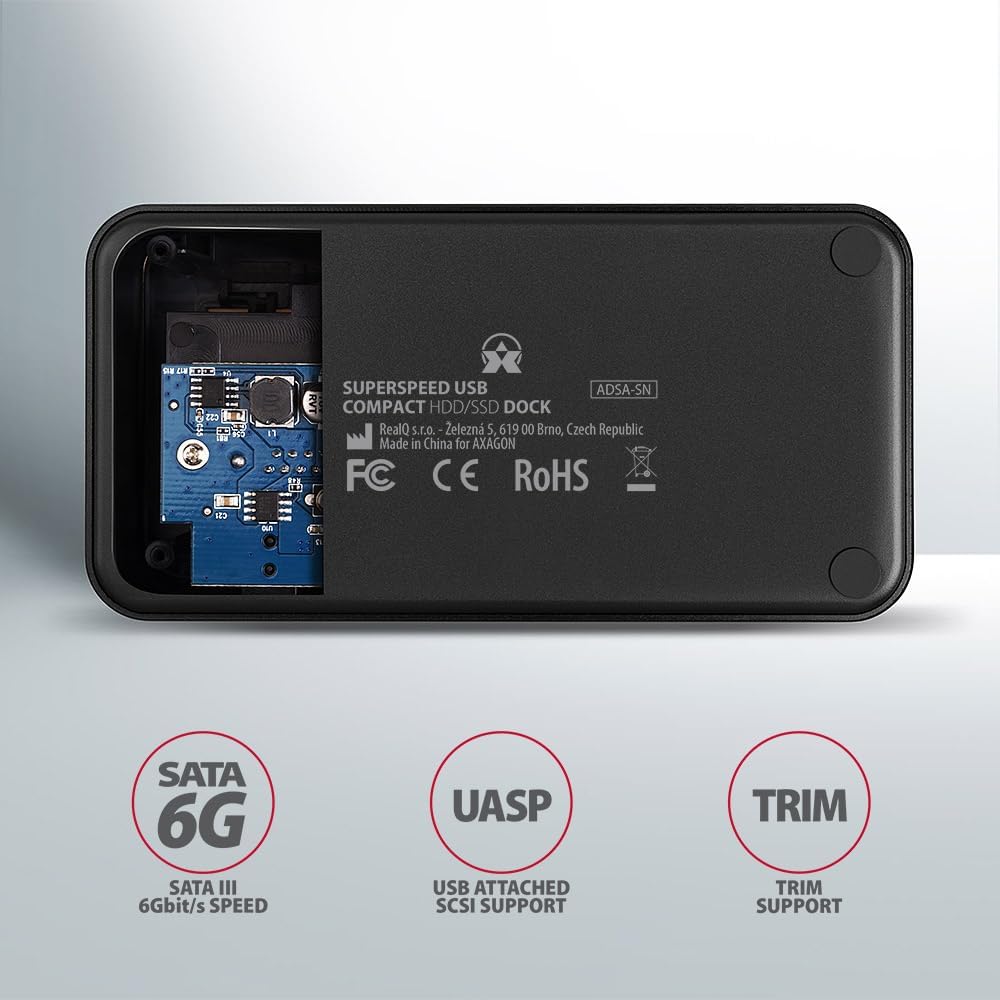
Image: The underside of the docking station, showing internal components and highlighting SATA 6G, UASP, and TRIM support.
Setup Instructions
- Connect Power Adapter: Plug the included power adapter into the DC IN port on the back of the docking station and then into a power outlet.
- Connect to Computer: Connect the USB 3.0 cable from the docking station's Micro-B port to an available USB 3.0 (or higher) port on your computer.
- Insert HDD/SSD:
- For 2.5" SSD/HDD: Gently slide the 2.5" drive into the slot until it connects firmly with the SATA connector.
- For 3.5" HDD: Gently slide the 3.5" drive into the slot until it connects firmly with the SATA connector.
Ensure the drive is inserted correctly with the SATA connector facing the correct direction. Do not force the drive.

Image: A 2.5-inch SSD being inserted into the docking station, demonstrating compatibility with smaller drives.
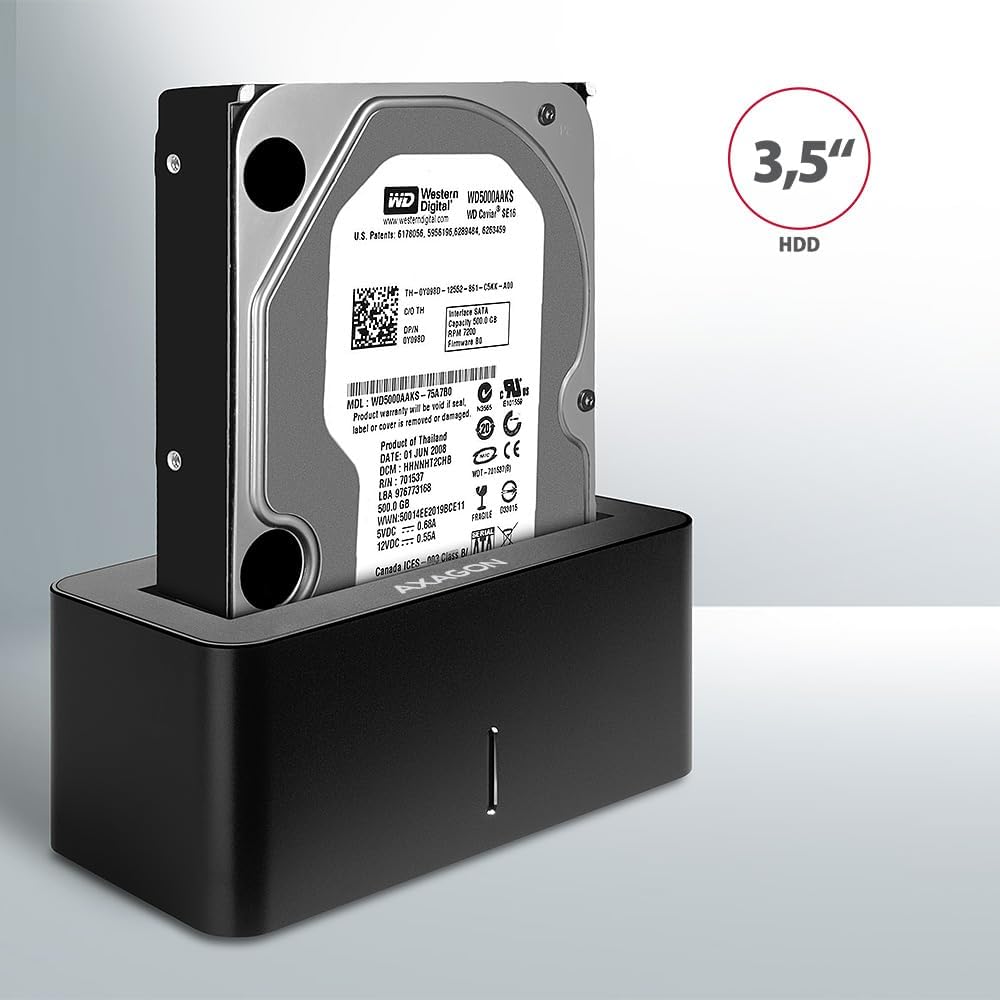
Image: A 3.5-inch HDD being inserted into the docking station, demonstrating compatibility with larger drives.
- Power On: Press the power button located on the back of the docking station. The LED indicator on the front will illuminate.
Image: The rear panel of the docking station, showing the power button, USB Micro-B port, and power input for connection.
Operating Instructions
Drive Recognition
Once powered on and connected, your operating system should automatically detect the inserted drive. If it's a new drive, you may need to initialize and format it through Disk Management (Windows) or Disk Utility (macOS) before it appears in File Explorer/Finder.
LED Indicator
The LED indicator on the front of the docking station provides status information:
- Solid Blue: Power on, drive idle.
- Flashing Blue: Drive activity (reading or writing data).
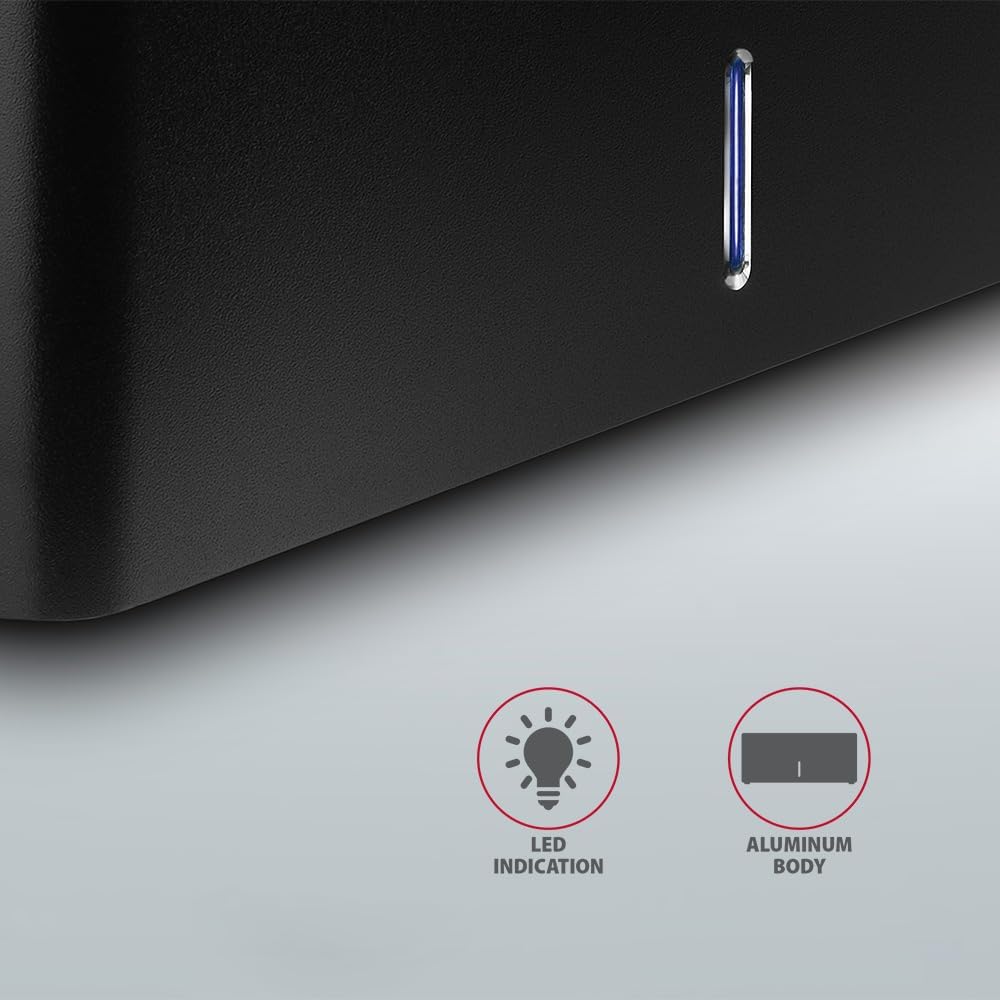
Image: A close-up view of the docking station's front panel, highlighting the LED indicator light.
Removing a Drive
Before removing a drive, always safely eject it from your operating system to prevent data corruption. After ejection, gently pull the drive straight out of the docking station slot.
HDD Auto Spindown
The docking station supports automatic spindown of the HDD when it is idle for a certain period, conserving power and extending drive lifespan. This feature is managed by the operating system or the drive itself.
Maintenance
- Keep the docking station clean and free from dust. Use a soft, dry cloth for cleaning.
- Avoid exposing the device to extreme temperatures, humidity, or direct sunlight.
- Do not attempt to disassemble or repair the device yourself. Refer to qualified service personnel.
- Ensure proper ventilation around the docking station during operation.
Troubleshooting
- Drive not detected:
- Ensure the power adapter is securely connected and the docking station is powered on.
- Verify the USB cable is properly connected to both the docking station and the computer.
- Try a different USB port on your computer.
- Ensure the HDD/SSD is fully seated in the docking station's slot.
- Check Disk Management (Windows) or Disk Utility (macOS) to see if the drive is recognized but uninitialized/unformatted.
- Test with a different HDD/SSD to rule out a drive issue.
- Slow transfer speeds:
- Ensure the docking station is connected to a USB 3.0 (or higher) port on your computer. USB 2.0 ports will limit speeds.
- Verify your operating system and drivers are up to date.
- The actual speed depends on the drive's performance and your computer's USB controller.
- Drive disconnects randomly:
- Check all cable connections.
- Ensure the power adapter is providing stable power.
- Disable USB power saving features in your computer's operating system settings.
Technical Specifications
| Feature | Detail |
|---|---|
| Brand | AXAGON |
| Model Number | ADSA-SN |
| Hardware Platform | PC |
| Compatible Devices | Laptop, Desktop PC |
| Drive Compatibility | 2.5" / 3.5" SATA I/II/III SSD/HDD |
| Interface | USB 3.0 (USB 3.2 Gen 1) |
| Data Transfer Rate | Up to 5 Gbps (USB 3.0), 6 Gbps (SATA III) |
| Total USB Ports | 1 (Micro-B) |
| Number of Drive Bays | 1 |
| Color | Black |
| Item Weight | 2.2 pounds (approx. 1 kg) |
| Package Dimensions | 3.94 x 0.79 x 0.39 inches (approx. 10 x 2 x 1 cm) |
| Date First Available | March 30, 2021 |
Warranty and Support
For warranty information and technical support, please refer to the official AXAGON website or contact your local distributor. Keep your proof of purchase for warranty claims.


