
Introduction
The Platinum Tools TPS200C is a compact, easy-to-use tester designed for Power over Ethernet (PoE) systems. It accurately measures PoE parameters up to 56 volts and 280 watts. This device operates without internal batteries, drawing power directly from the PoE circuit. It can be used in-line to monitor current flow to an active PoE device or in Powered Device (PD) Simulation mode to determine the maximum power available from a PoE source.
Key Features:
- Bright, scrolling OLED display for clear readings.
- Tests PoE on active data cables without interrupting data transmission.
- Automatic mode and polarity detection.
Safety Information
Always handle the device with care. Do not expose the tester to extreme temperatures or moisture. Ensure proper connections to avoid damage to the tester or connected equipment. This device is intended for testing Power over Ethernet circuits and should not be used for other electrical measurements unless specified.
Package Contents
- Platinum Tools PoE++ Tester TPS200C
- Instruction Manual (this document)
- Note: Additional accessories such as patch cords or DC test cords may be included depending on the specific product package.
Device Overview
The TPS200C features an OLED display, PoE input and output ports, and a DC input/output port. A switch allows for toggling between active testing and PD simulation modes.
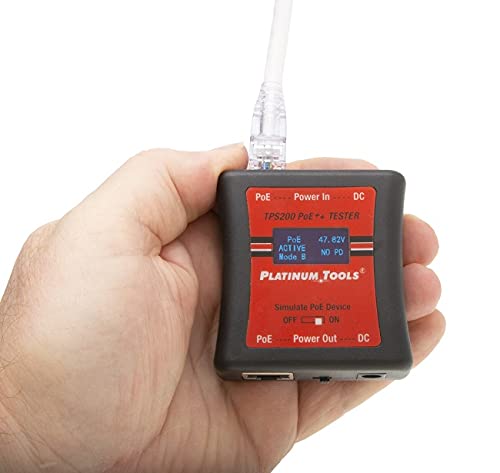
Image: The Platinum Tools TPS200C PoE++ Tester in use, displaying active PoE measurements. The compact size is evident as it fits comfortably in one hand.
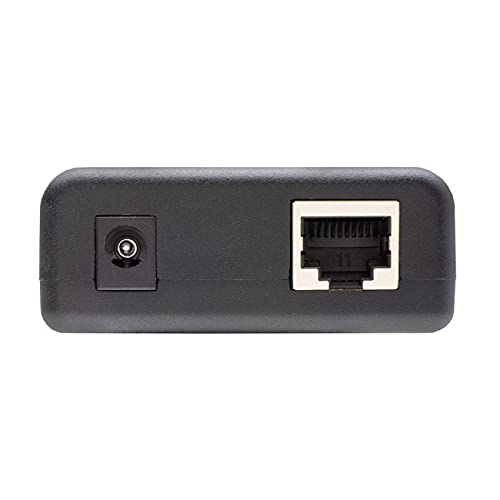
Image: Top end of the TPS200C tester, featuring the DC power input and the RJ45 Ethernet port for PoE connection.
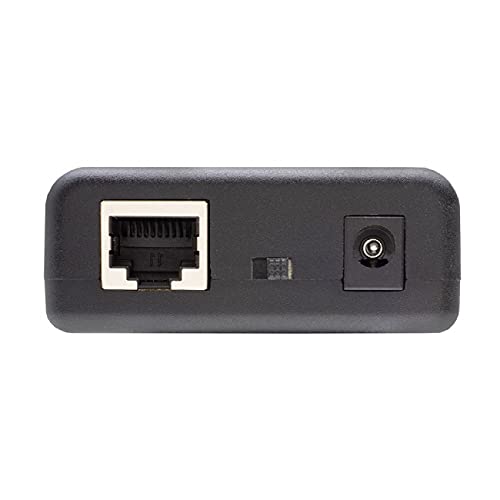
Image: Bottom end of the TPS200C tester, showing the RJ45 Ethernet port, DC power output, and the "Simulate PoE Device" toggle switch.
Setup and Connection
- Power Source: The TPS200C is powered by the PoE circuit it is testing. No external batteries are required.
- In-line Testing:
- Connect the PoE source (e.g., PoE switch or injector) to the "PoE Power In" RJ45 port on the tester.
- Connect the PoE powered device (e.g., IP camera, access point) to the "PoE Power Out" RJ45 port on the tester.
- Ensure the "Simulate PoE Device" switch is set to OFF.
- The tester will automatically detect the PoE type and display voltage, current, and wattage.
- PD Simulation Mode:
- Connect the PoE source to the "PoE Power In" RJ45 port on the tester.
- Set the "Simulate PoE Device" switch to ON.
- The tester will simulate a Powered Device (PD) and display the maximum power available from the PoE source.
- DC Power Testing:
- The DC input/output ports can be used with an optional DC test cord (not included) to test DC power sources or devices.
Operating Instructions
Once connected, the bright OLED display will show real-time measurements. The display scrolls through various parameters, including:
- PoE Status: Indicates if PoE is Active or Passive.
- Voltage (V): The detected PoE voltage.
- Current (A): The current being drawn by the connected device or simulated load.
- Wattage (W): The power consumption in watts.
- Mode: Indicates the PoE mode (e.g., Mode A, Mode B).
The tester automatically detects the PoE mode and polarity. Allow a few seconds for the display to stabilize after connecting to a PoE port.
Important Note on "Simulate PoE Device" Switch: When switching this toggle from ON to OFF (or vice-versa) during an active connection, the device under test may reboot as the power negotiation changes.
Maintenance
- Cleaning: Use a soft, dry cloth to clean the exterior of the tester. Do not use abrasive cleaners or solvents.
- Storage: Store the tester in a cool, dry place away from direct sunlight and extreme temperatures.
- Protection: To prevent scratches to the display, especially when stored in a toolbox, consider using a protective pouch or ensuring the display faces upwards.
Troubleshooting
| Problem | Possible Cause | Solution |
|---|---|---|
| Display does not turn on. | No PoE power detected or insufficient power. | Verify the PoE source is active and providing power. Check cable connections. Allow a few seconds for the display to initialize. |
| Incorrect readings. | Loose connections, faulty cable, or incorrect mode selection. | Ensure all cables are securely connected. Test with a known good cable. Verify the "Simulate PoE Device" switch is in the correct position for your test. |
| Device under test reboots when changing modes. | Expected behavior when switching "Simulate PoE Device" toggle. | This is normal. Plan mode changes accordingly to avoid interrupting critical operations. |
Specifications
- Model: TPS200C
- Power Source: PoE Powered
- Measurement Type: Voltmeter, Wattmeter
- Maximum Voltage: Up to 56 Volts
- Maximum Power: Up to 280 Watts
- Minimum Operating Voltage: 3.5 Volts
- Upper Temperature Rating: 160 Degrees Fahrenheit
- Dimensions (L x W x H): 8 x 15 x 1 inches (Product Dimensions)
- Item Weight: 3.2 ounces
- Thickness: 5.5 mm (as per feature bullets)
- Display: Easy-to-read, bright, scrolling OLED
- Features: Automatic mode and polarity detection, tests on active data cables without interrupting data flow.
Warranty and Support
For warranty information and technical support, please contact Platinum Tools directly or refer to their official website. Keep your purchase receipt for warranty claims.
Manufacturer: Platinum Tools