
1. Product Overview
The Kidde KN-COPP-3 Carbon Monoxide (CO) Detector is designed to provide continuous monitoring for poisonous carbon monoxide gas in your home. Utilizing advanced electrochemical sensor technology, this device detects CO levels and alerts you with an 85-decibel alarm. It features a digital LED display for real-time CO concentration readings and includes a 9-volt battery backup to ensure protection during power outages.
Key Features:
- Easy Installation: Plugs directly into a standard 120V AC power outlet.
- 9-Volt Battery Backup: Provides continuous operation during power failures.
- Digital LED Display: Shows current CO levels in parts per million (PPM) and updates every 15 seconds.
- 85-Decibel Alarm: Loud audible alert when carbon monoxide is detected.
- Peak Level Memory: Records the highest CO level detected since the last reset or test.
- Smart-Hush Button: Temporarily silences nuisance alarms for approximately 8 minutes.
- Extension Cord Included: Allows for flexible placement on a table or shelf.
2. Important Safety Information
Carbon monoxide is an invisible, odorless, and tasteless gas that can be fatal. This detector is designed to alert you to the presence of CO gas. It is crucial to understand that this device is not a substitute for a smoke alarm. Install both smoke and carbon monoxide alarms for comprehensive home safety.
Understanding Carbon Monoxide:
CO is produced by the incomplete combustion of fuels such as natural gas, propane, heating oil, kerosene, coal, charcoal, gasoline, or wood. Sources can include malfunctioning furnaces, gas ranges, water heaters, fireplaces, and vehicle exhaust.
Recommended Placement:
For optimal protection, install a carbon monoxide detector on every level of your home, especially near sleeping areas. Avoid placing the detector within 6 feet of fuel-burning appliances to prevent nuisance alarms from normal operation. Refer to the diagram below for general placement guidelines.

This product is UL Certified and meets the requirements of UL 2034, UL217, NFPA72 (chapter 11 2002 edition), The State of California Fire Marshal, NFPA101 (One and two family dwellings), and Federal Housing Authority (FHA), Housing and Urban Development (HUD).
3. Setup and Installation
The Kidde KN-COPP-3 Carbon Monoxide Detector offers flexible installation options: direct plug-in, wall mount, or tabletop placement using the included extension cord.
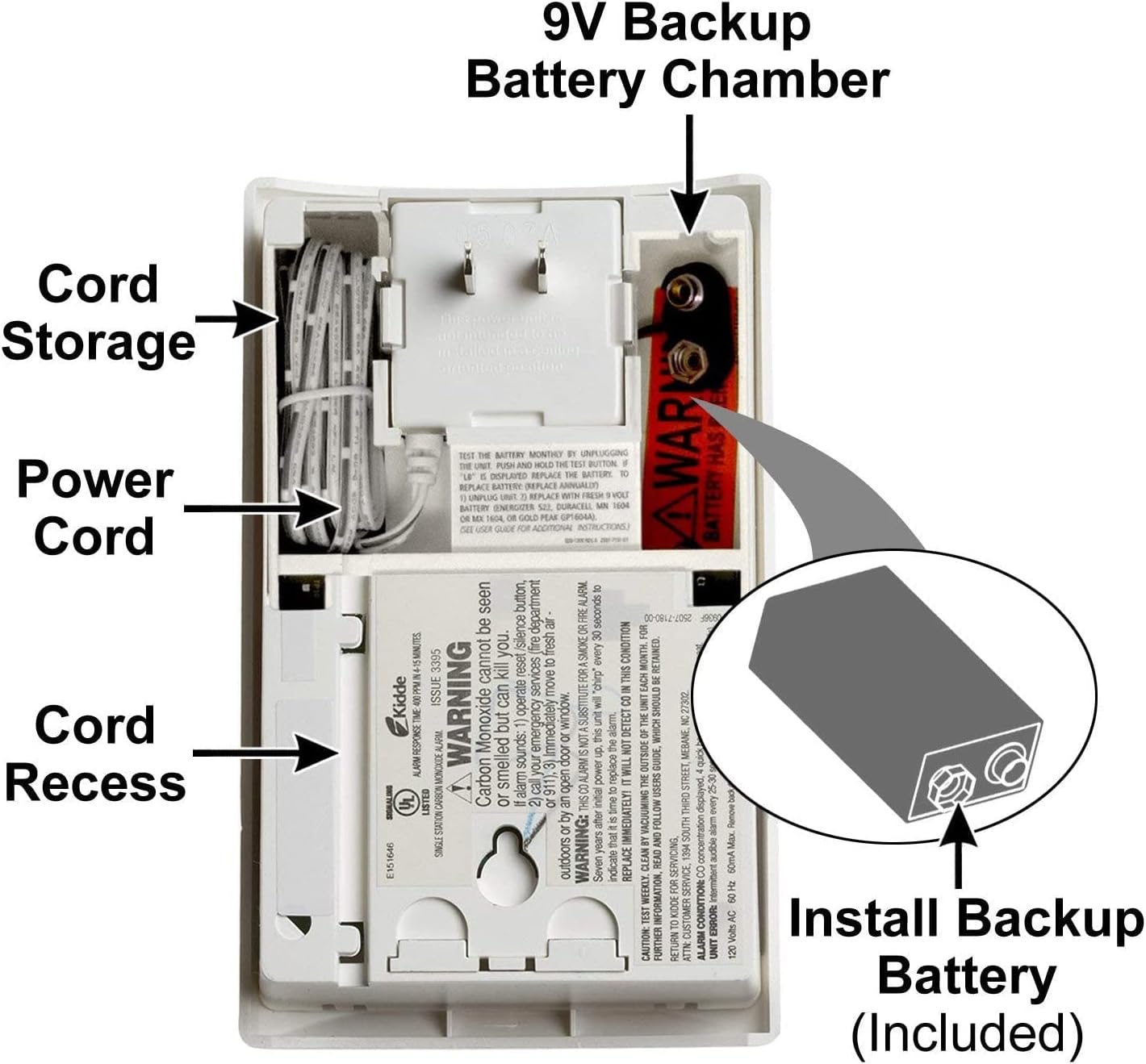
Battery Installation:
- Open the battery compartment cover on the back of the unit.
- Connect the 9-volt alkaline battery (included) to the battery connector.
- Place the battery into the compartment and close the cover securely.
Power Connection:
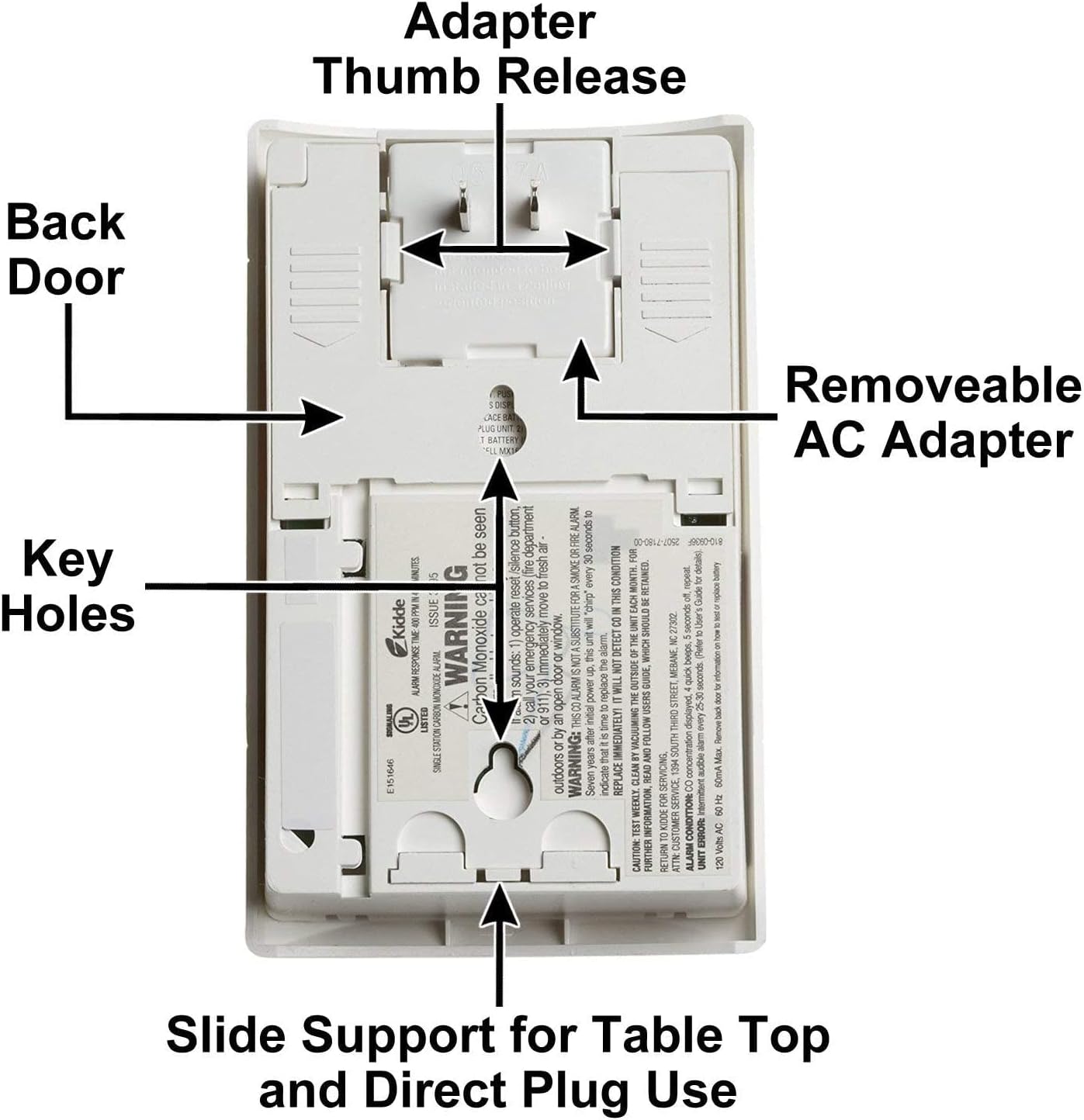
- Direct Plug-in: Ensure the AC plug is securely attached to the back of the unit. Plug the detector into a standard 120V AC wall outlet. The plug can be rotated to accommodate vertical or horizontal outlets.
- Tabletop/Shelf Placement: Detach the AC plug from the unit by pressing the adapter thumb release. Connect the included extension cord to the unit and plug the other end into a 120V AC outlet. Place the detector on a flat surface.
- Wall Mount: Use the keyholes on the back of the unit to mount it to a wall. Ensure the unit is powered either directly via the AC plug or using the extension cord.
Initial Power-Up:
Upon initial power-up, the unit will perform a self-test. The digital display will show '888' and then '0' (or the current CO level if present). A blinking dot in the lower right corner of the display indicates normal operation.
4. Operating Instructions
Digital LED Display:
The red LED display shows the current carbon monoxide concentration in parts per million (PPM). It updates every 15 seconds. If no CO is detected, it will typically display '0'.
Test/Reset Button:
Press and hold this button to test the unit's electronic circuitry and horn. The alarm will sound, and the display will show '888' during the test. This button also resets the unit during an alarm condition or silences nuisance alarms.

Peak Level Button:
Press this button to view the highest CO level recorded by the alarm since it was last reset or unplugged. This feature helps monitor potential intermittent CO exposure.
Alarm Conditions:
If carbon monoxide is detected at dangerous levels, the alarm will emit four quick audible beats every five seconds. The digital display will show the detected CO level. In an alarm condition, immediately move to fresh air and call emergency services.
Smart-Hush Feature:
If the alarm sounds due to non-emergency conditions (e.g., routine cooking fumes), press the Test/Reset button to temporarily silence the alarm for approximately 8 minutes. The unit will automatically re-enter monitoring mode after the hush period.
5. Maintenance
Regular Testing:
Test your CO detector weekly by pressing the Test/Reset button. Ensure the alarm sounds and the display functions correctly. If the alarm does not sound, refer to the Troubleshooting section.
Battery Replacement:
The 9-volt backup battery should be replaced annually, or immediately if the unit indicates a low battery warning (e.g., 'Lb' on the display or a chirp every 30 seconds). Use a fresh 9-volt alkaline battery.
Unit Replacement:
The Kidde KN-COPP-3 Carbon Monoxide Detector has a 10-year operational life. After 10 years, the unit will display 'End' to indicate it needs to be replaced. Replace the unit immediately to ensure continued protection.
6. Troubleshooting
If your Kidde Carbon Monoxide Detector is not functioning as expected, refer to the following common issues and solutions:
- Alarm Sounds: If the alarm sounds and the display shows a CO level, immediately move to fresh air and call emergency services. Do not re-enter the premises until it has been deemed safe by professionals.
- 'Lb' on Display or Chirping: Indicates a low 9-volt backup battery. Replace the battery immediately.
- 'Err' on Display: Indicates a malfunction in the unit. The detector needs to be replaced.
- 'End' on Display: The unit has reached the end of its 10-year operational life. Replace the detector immediately.
- Nuisance Alarms: If the alarm sounds without a detectable CO level, it may be due to cooking fumes, high humidity, or other environmental factors. Press the Smart-Hush button to temporarily silence the alarm. If nuisance alarms persist, ensure proper ventilation and check detector placement.
7. Specifications
| Feature | Specification |
|---|---|
| Brand | Kidde |
| Model Number | KN-COPP-3 |
| Power Source | Plug In (120 Volts AC) with 9-Volt Battery Backup |
| Sensor Type | Electrochemical |
| Alarm Loudness | 85 Decibels |
| Product Dimensions | 1.75"D x 3.75"W x 6.06"H |
| Item Weight | 16 ounces (1 pound) |
| Operating Humidity | 5% to 95% relative humidity, non-condensing |
| Upper Temperature Rating | 100 Degrees Fahrenheit |
| Certifications | UL Certified (UL 2034, UL217, NFPA72, NFPA101, FHA, HUD) |
| Unit Life | 10 Years |
8. Warranty and Support
Warranty Information:
The Kidde KN-COPP-3 Carbon Monoxide Detector comes with a 10-year limited manufacturer's warranty. Please retain your proof of purchase for warranty claims.
Customer Support:
For technical assistance, troubleshooting, or warranty inquiries, please contact Kidde customer support. Refer to the product packaging or the official Kidde website for the most current contact information.


