Introduction
Thank you for choosing DNLK Urethane Band Saw Tires. These high-grade, friction-resistant, and ultra-durable urethane tires are specifically designed to provide superior performance and longevity for your band saw. They are engineered for precise blade tracking, noise reduction, and shock absorption, ensuring a smoother and more efficient operation. This manual provides essential information for the proper installation, operation, and maintenance of your new band saw tires.
Product Features
- Everlasting Durability: Made from high-grade urethane, offering superior load-bearing capacity and thermostability for dependable performance in various environments.
- Made in the USA: Exclusively designed and produced in the USA under rigorous quality control.
- Outstanding Performance: Features an embossed Acutrack™ finish for precise blade tracking, superior noise reduction, and shock absorption.
- No Adhesive Needed: Designed for quick and easy replacement without the need for adhesives or soaking.
- Enhanced Efficiency: Ensures smooth and safe functioning of your band saw, leading to increased production speed and efficiency.
Setup and Installation
Proper installation of your DNLK Urethane Band Saw Tires is crucial for optimal performance and safety. These tires are designed for a snug fit without the need for adhesive, utilizing their inherent elasticity.
- Safety First: Before beginning, ensure your band saw is unplugged from the power source to prevent accidental startup.
- Remove Old Tires: Carefully remove the old, worn-out tires from your band saw wheels. This may involve prying them off with a flat-head screwdriver or similar tool. Clean any debris or residue from the wheel surface.
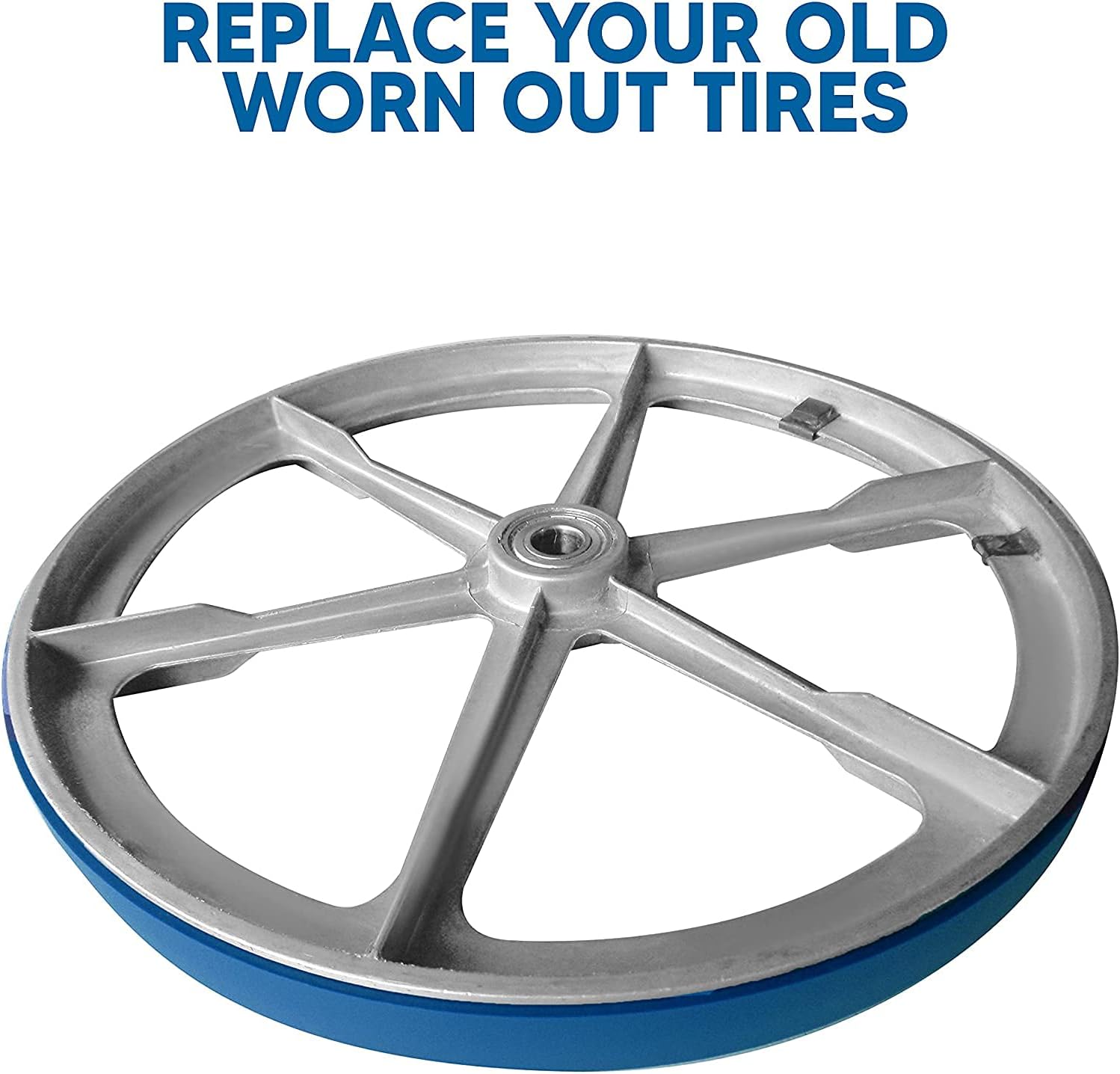
Image: A band saw wheel with an old, worn-out tire, illustrating the need for replacement.
- Prepare New Tire: DNLK urethane tires are designed to stretch. It is not necessary to soak them in hot water.
- Install New Tire:
- Place one edge of the urethane tire onto the rim of the band saw wheel.
- Using your hands, or a blunt, non-marring tool, gradually work the rest of the tire around the wheel's circumference. Apply even pressure as you stretch the tire into place.
- Once the tire is fully seated on the wheel, ensure it is centered and evenly distributed around the rim.

Image: Two new blue urethane band saw tires alongside a band saw wheel with a tire already installed, demonstrating the product and its application.
- Repeat for Second Wheel: If your band saw has two wheels, repeat the process for the second wheel.
- Reassemble and Test: Reassemble any band saw guards or covers that were removed. Before operating with a blade, manually spin the wheels to ensure the tires are seated correctly and there is no wobble.
Operating Considerations
Once installed, your DNLK Urethane Band Saw Tires contribute significantly to the smooth operation of your band saw. While the tires themselves do not require specific operational steps, consider the following:
- Blade Tracking: The Acutrack™ finish on these tires is designed for precise blade tracking. After installing a new blade, always adjust your band saw's blade guides and tension according to the manufacturer's instructions to ensure the blade tracks correctly on the center of the tires.
- Reduced Vibration and Noise: These urethane tires are engineered to absorb shock and reduce operational noise. If you notice excessive vibration or noise, check blade tension, guide settings, and ensure the tires are still properly seated.
- Consistent Performance: The durable urethane material maintains its integrity under various temperatures, ensuring consistent performance during prolonged use.
Maintenance
DNLK Urethane Band Saw Tires are designed for durability and require minimal maintenance. However, periodic inspection can extend their lifespan and ensure continued optimal performance.
- Regular Inspection: Periodically inspect the tires for signs of wear, cracking, or damage. While urethane is highly durable, extreme conditions or prolonged heavy use can eventually lead to wear.
- Cleaning: If sawdust or debris accumulates on the tires, gently wipe them clean with a dry cloth. Avoid using harsh chemicals or solvents, as these could degrade the urethane material.
- Storage: If removing tires for storage, store them in a cool, dry place away from direct sunlight and extreme temperatures.
Troubleshooting
Most issues related to band saw tires can be resolved with simple checks and adjustments.
| Problem | Possible Cause | Solution |
|---|---|---|
| Blade not tracking correctly | Improper blade tension or guide adjustment; tire not seated properly. | Adjust blade tension and guides according to your band saw's manual. Ensure the urethane tire is fully and evenly seated on the wheel. |
| Excessive vibration or noise | Blade tension too high/low; worn blade; tire not seated correctly. | Check and adjust blade tension. Replace dull or damaged blades. Verify tire seating. |
| Tire appears loose or slipping | Incorrect tire size; improper installation. | Ensure you have the correct tire size for your Metabo BAS 317. Re-install the tire, ensuring it is stretched snugly and evenly onto the wheel. DNLK tires are designed for a tight fit without adhesive. |
Specifications
| Attribute | Detail |
|---|---|
| Manufacturer | DNLK |
| Part Number | 274575160564GMN |
| Item Weight | 6 ounces |
| Package Dimensions | 9 x 6 x 1 inches |
| Item Model Number | BAS 317 |
| Color | Blue |
| Material | Urethane |
| Shape | Circular |
| Special Features | Wheels |
| ASIN | B0951SWWCD |
| Date First Available | May 16, 2021 |
Warranty and Support
DNLK stands behind the quality of its products. For any questions regarding installation, operation, or if you encounter any issues with your urethane band saw tires, please contact DNLK customer support. Refer to the product packaging or the DNLK brand store on Amazon for contact information.


