
Introduction
This user manual provides comprehensive instructions for the safe and efficient operation, maintenance, and troubleshooting of the Tuttnauer 1730 Valueklave Autoclave and the Basic Medical Blue Nitrile Exam Gloves. These products are designed to meet the sterilization and protection needs of small medical offices and various other applications.

Figure 1: The Tuttnauer 1730 Valueklave Autoclave alongside a box of Basic Medical Nitrile Exam Gloves.
Tuttnauer 1730 Valueklave Autoclave
Product Overview
The Tuttnauer 1730 Valueklave is a compact and user-friendly autoclave designed for efficient sterilization. Its 7-inch chamber makes it suitable for small offices or as a supplementary unit in larger practices. It features a fast cycle time and heated drying, ensuring quick turnaround for both wrapped and unwrapped instruments. The unit is built for high speed and reliability, incorporating simple controls and an easy-to-operate door mechanism.
Key Features
- Compact Design: Ideal for spaces with limited room, featuring a 7-inch chamber.
- Fast Cycle Time: Achieves sterilization in as little as 11 minutes from a hot start.
- Heated Drying: Ensures instruments are dry and ready for use or storage.
- User-Friendly Operation: Simple controls and an easy-closing door for hassle-free use.
- Automatic Shut-off: Unit automatically powers down at the completion of both sterilization and dry cycles.
- Front Drain Valve: Conveniently located for quick and easy draining of the water reservoir.
- Dual Safety Features: Equipped with mechanisms to protect against overheating.
- Included Accessories: Comes with three sterilization trays.
Setup
- Unpacking: Carefully remove the autoclave from its packaging. Inspect for any shipping damage.
- Placement: Position the autoclave on a stable, level surface in a well-ventilated area. Ensure adequate clearance around the unit for air circulation and maintenance.
- Leveling: Adjust the feet of the unit to ensure it is perfectly level. This is crucial for proper water distribution and pressure regulation during operation.
- Power Connection: Connect the power cord to a grounded electrical outlet (120V/50-60Hz).
- Water Fill: Open the water reservoir cap on top of the unit. Pour distilled water into the reservoir through the opening until it reaches the bottom of the safety valves. Only use distilled water to prevent mineral buildup and ensure proper operation.
Operating Instructions
- Loading Instruments: Place instruments to be sterilized into the provided trays. Ensure instruments are properly cleaned and packaged (if applicable) according to standard sterilization protocols. Do not overload the chamber.
- Closing the Door: Securely close the chamber door. Ensure the locking mechanism is fully engaged.
- Setting Controls:
- Timer: Set the sterilization time according to the type of load and instrument manufacturer's guidelines.
- Temperature: Select the appropriate sterilization temperature (e.g., 250°F/121°C or 273°F/134°C).
- Starting the Cycle: Turn the power switch to the "ON" position. The unit will begin the heating and sterilization process. Indicator lights will show the current status (e.g., HEAT, DRY).
- Cycle Completion: The autoclave will automatically shut off once the sterilization and drying cycles are complete. Allow the unit to cool down slightly before opening the door.
- Unloading: Carefully open the door and use the provided tray handle to remove the sterilized instruments. Be cautious of residual heat and steam.
Maintenance
- Daily Cleaning: Wipe down the exterior of the unit with a damp cloth.
- Chamber Cleaning: Regularly clean the interior of the chamber and trays to prevent mineral buildup. Use a non-abrasive cleaner specifically designed for autoclaves.
- Water Reservoir: Drain and refill the water reservoir with fresh distilled water daily or as needed. The front drain valve facilitates this process.
- Gasket Inspection: Periodically inspect the door gasket for any signs of wear, cracks, or damage. Replace if necessary to ensure a proper seal.
- Spore Testing: Perform biological spore tests regularly as per local regulations and best practices to verify sterilization efficacy.
Specifications

Figure 2: Detailed specifications for the Tuttnauer 1730 Valueklave Autoclave.
The Tuttnauer 1730 Valueklave features a chamber with dimensions of 7 inches x 13 inches (170 x 340 mm) and a volume of 2 gallons (7.5 liters). Its overall dimensions are approximately 17.9" D x 17.4" W x 12" H (455 x 440 x 305 mm). It accommodates 2 half standard cassettes and includes 3 trays, each measuring 11.6" D x 4.7" W x 0.8" H (295 x 120 x 20 mm). The unit operates on 120V/50-60Hz power, with a power consumption of 1350W and a current of 11A. The standard unwrapped cycle time is 16 minutes from a cold start and 11 minutes from a hot start. The shipping weight is 55 lbs (25 kg).
Troubleshooting
| Problem | Possible Cause | Solution |
|---|---|---|
| Unit not heating | Power supply issue, heating element failure, or thermostat malfunction. | Check power connection. Ensure unit is plugged into a working outlet. If problem persists, contact authorized service personnel. |
| Steam leaking from door | Door not properly sealed, worn or damaged door gasket. | Ensure door is fully closed and locked. Inspect and replace door gasket if necessary. |
| Incomplete sterilization cycle | Insufficient water, incorrect temperature/time settings, or overloaded chamber. | Verify distilled water level. Check and adjust temperature/time settings. Reduce load size. |
| Excessive mineral buildup | Use of tap water or infrequent cleaning. | Always use distilled water. Clean chamber and trays regularly with appropriate cleaner. |
Basic Medical Blue Nitrile Exam Gloves
Product Overview
The Basic Medical Blue Nitrile Exam Gloves (NGPF-7002) are high-quality, disposable gloves designed for various applications requiring hand protection. They are latex-free and powder-free, making them a safe choice for individuals with latex allergies or sensitivities. These gloves offer excellent tactile feedback and durability for a wide range of tasks.
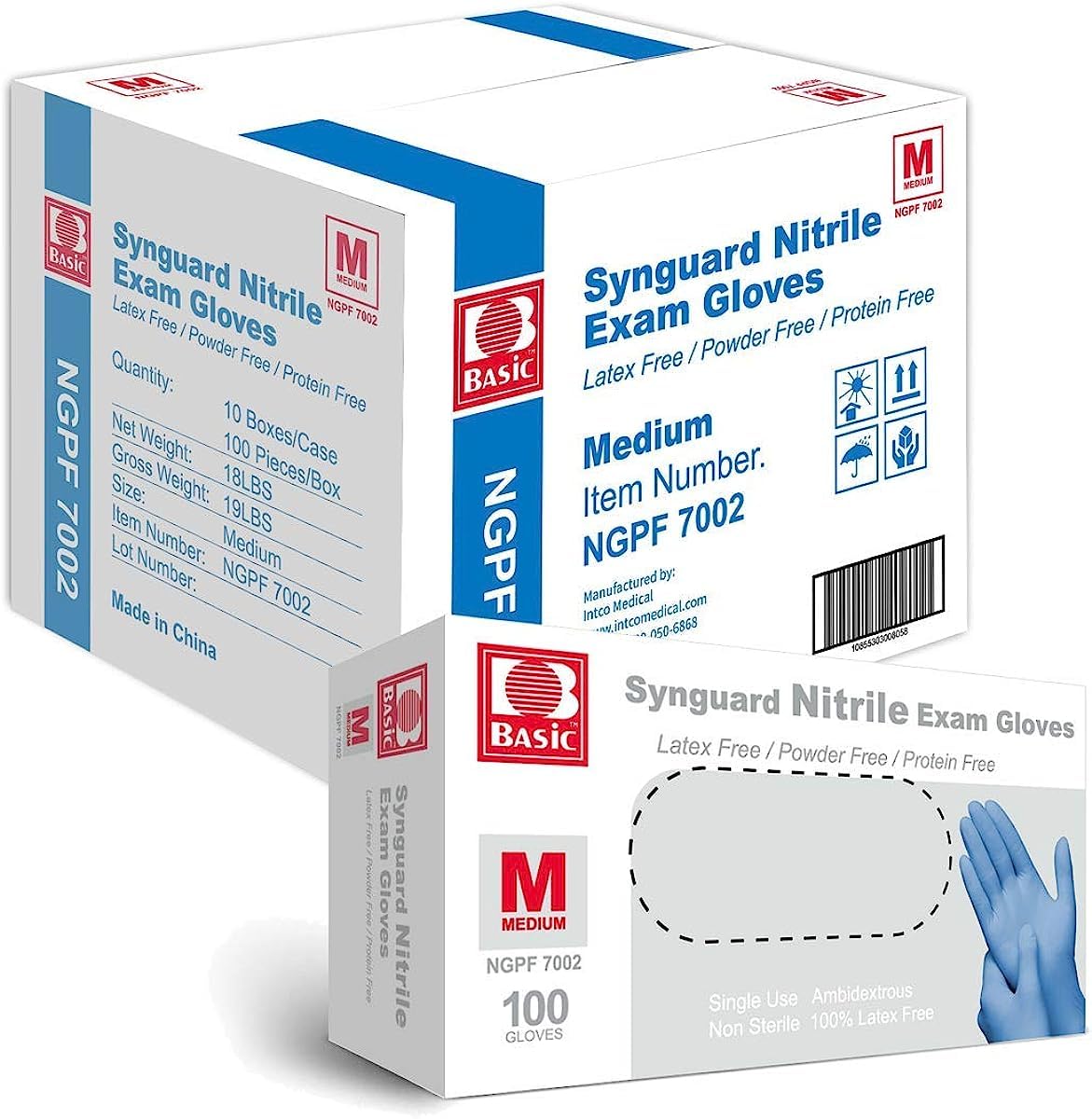
Figure 3: Packaging for Basic Medical Blue Nitrile Exam Gloves (NGPF-7002).
Key Features
- Latex-Free & Powder-Free: Eliminates risks associated with latex allergies and reduces skin irritation from powder.
- Material: Made from durable blue nitrile, offering a smooth finish for enhanced tactile sensitivity.
- Optimal Thickness: Fingers are 0.12mm thick and palms are 0.08mm thick, providing a balance of protection and dexterity.
- Bulk Quantity: Available in cases of 1,000 gloves (10 boxes of 100 gloves each), ensuring a consistent supply.
- Ambidextrous Design: Can be worn on either hand for convenience.
Usage
These gloves are suitable for a wide array of applications, including medical examinations, laboratory work, food handling, cleaning tasks, and general household use. They provide a protective barrier, maintain hygiene, and offer a secure grip.

Figure 4: Gloves providing protection during medical examination.

Figure 5: Gloves used for general cleaning tasks.
Storage
Store gloves in their original packaging in a cool, dry place, away from direct sunlight, heat, and fluorescent lighting. Avoid exposure to ozone, as this can degrade the material.
Warranty and Support
For warranty information, technical support, or service inquiries regarding your Tuttnauer 1730 Valueklave Autoclave or Basic Medical Blue Nitrile Exam Gloves, please refer to the documentation included with your purchase or visit the official Tuttnauer website. Keep your purchase receipt as proof of purchase for warranty claims.


