
1. Introduction
This manual provides essential information for the safe and efficient operation, maintenance, and troubleshooting of your TFCFL 3-inch Gasoline Powered Water Pump, Model WP30. This powerful 7.5HP 4-stroke gas engine water pump is designed for various water transfer applications, including farmland irrigation, garden watering, ground cleaning, fishpond aquaculture, fast drainage, water collection, swimming pool water exchange, water extraction from deep wells, and firefighting.
The pump features a durable cast iron impeller and volute for extended life, a multi-directional discharge, and a robust steel roll cage for protection and stability. Its compact design and portable metal rod make it convenient for storage and use in various locations without power supply limitations.
2. Safety Information
Always prioritize safety when operating this equipment. Failure to follow safety instructions can result in serious injury or death.
- Read the Entire Manual: Understand all operating procedures and safety warnings before use.
- Fuel Safety: Gasoline is highly flammable. Refuel in a well-ventilated area with the engine off and cool. Avoid spills and open flames.
- Exhaust Fumes: Engine exhaust contains carbon monoxide, a colorless, odorless, poisonous gas. Operate only in well-ventilated outdoor areas.
- Hot Surfaces: The engine and pump components become hot during operation. Avoid contact to prevent burns.
- Moving Parts: Keep hands, feet, and clothing away from moving parts to prevent entanglement.
- Electrical Safety: Do not operate the pump in wet conditions or near standing water unless specifically designed for such use. Ensure all electrical connections are secure.
- Stable Placement: Always operate the pump on a stable, level surface to prevent tipping.
- Children and Pets: Keep children and pets away from the operating area.
3. Components and Package Contents
Verify that all items are present upon unpacking:
- 1 x Water Transfer Pump (Model WP30)
- 1 x English Manual
- All Accessories Required for Installation (e.g., hose clamps, gaskets, filter screen, pipe joints)

Image: TFCFL Water Pump with various accessories including hose clamps, gaskets, and pipe joints.
4. Specifications
| Feature | Specification |
|---|---|
| Brand | TFCFL |
| Model | WP30 |
| Engine Type | 170F, Single Cylinder, Air-cooled, Four Stroke |
| Power Source | Gasoline |
| Power | 7.5 HP, 5.5 kW |
| Displacement | 210cc |
| Speed | 3600 rpm |
| Connection Diameter | 80mm / 3 inches |
| Max. Water Pumping Capacity | 1000 L/min (264 gal/min) |
| Maximum Flow Rate | 60 m³/h (2118.88 ft³/h) |
| Total Head (Max. Lifting Height) | 28 m (91.86 ft) |
| Maximum Suction Lift | 7 m (22.96 ft) |
| Oil Pot Capacity | 3.6 L (0.95 gal) |
| Start Method | Recoil Start |
| Product Dimensions (L*W*H) | 47*37*39 cm (18.5*14.57*15.3 inches) |
| Net Weight | 21 kg (46.3 lb) |
| Material | Aluminum Alloy and Iron |
5. Setup Instructions
Follow these steps for proper assembly and preparation of your water pump.
- Unpack and Inspect: Carefully remove all components from the packaging. Inspect for any damage during shipping. Ensure all listed accessories are present.
- Connect Inlet Pipe Joint: Install the inlet pipe joint to the pump. Ensure the gasket is properly seated to prevent leaks. Tighten firmly.
- Attach Water Inlet Pipe: Before attaching the water inlet pipe, wrap raw material tape (thread seal tape) around the joint threads to ensure a watertight seal. Then, securely connect the water inlet pipe to the inlet pipe joint.
- Install Filter Screen: Securely install the filter screen to the end of the water inlet pipe. This prevents debris from entering and damaging the pump.
- Position the Pump: Place the pump on a firm, level surface near the water source. Ensure the pump is stable and cannot tip over during operation.
- Prime the Pump (Fill with Water): Before starting, the pump must be filled with water through the water injection port. This is crucial for creating suction.
Video: Demonstrates the installation of the threaded inlet pipe joint, ensuring proper gasket placement and tightening.
Video: Shows how to install the water inlet pipe, including wrapping raw material tape around the joint and tightening the clamp.

Image: The TFCFL water pump is shown in a natural environment, ready for operation near a water body.
Video: Demonstrates the process of filling the pump with water through the designated port before starting the engine.
6. Operating Instructions
Follow these steps to safely start and operate your TFCFL water pump.
- Add Engine Oil: Ensure the engine has the correct amount of four-stroke special engine oil. Check the oil level before each use.
- Add Pure Gasoline: Fill the fuel tank with pure gasoline. Do not overfill.
- Turn Ignition Switch ON: Locate the ignition switch and turn it to the 'ON' position.
- Turn Oil Circuit Switch ON: Turn on the oil circuit switch.
- Close the Damper (Choke): Move the damper (choke) lever to the closed position for cold starts.
- Push Accelerator to Maximum: Push the accelerator lever to its maximum position.
- Press Oil Bubble: Press the oil bubble several times until it is filled with oil.
- Pull Starter: Gently pull out the pull rope until you feel resistance, then pull with force to start the engine.
- Open the Damper: Once the engine starts, gradually push down the air door (damper) to open it.
- Monitor Water Absorption: Observe the water inlet pipe to ensure it begins to absorb water. If not, check for leaks or blockages.
- Adjust Engine Speed: Adjust the engine speed as needed for your pumping requirements.
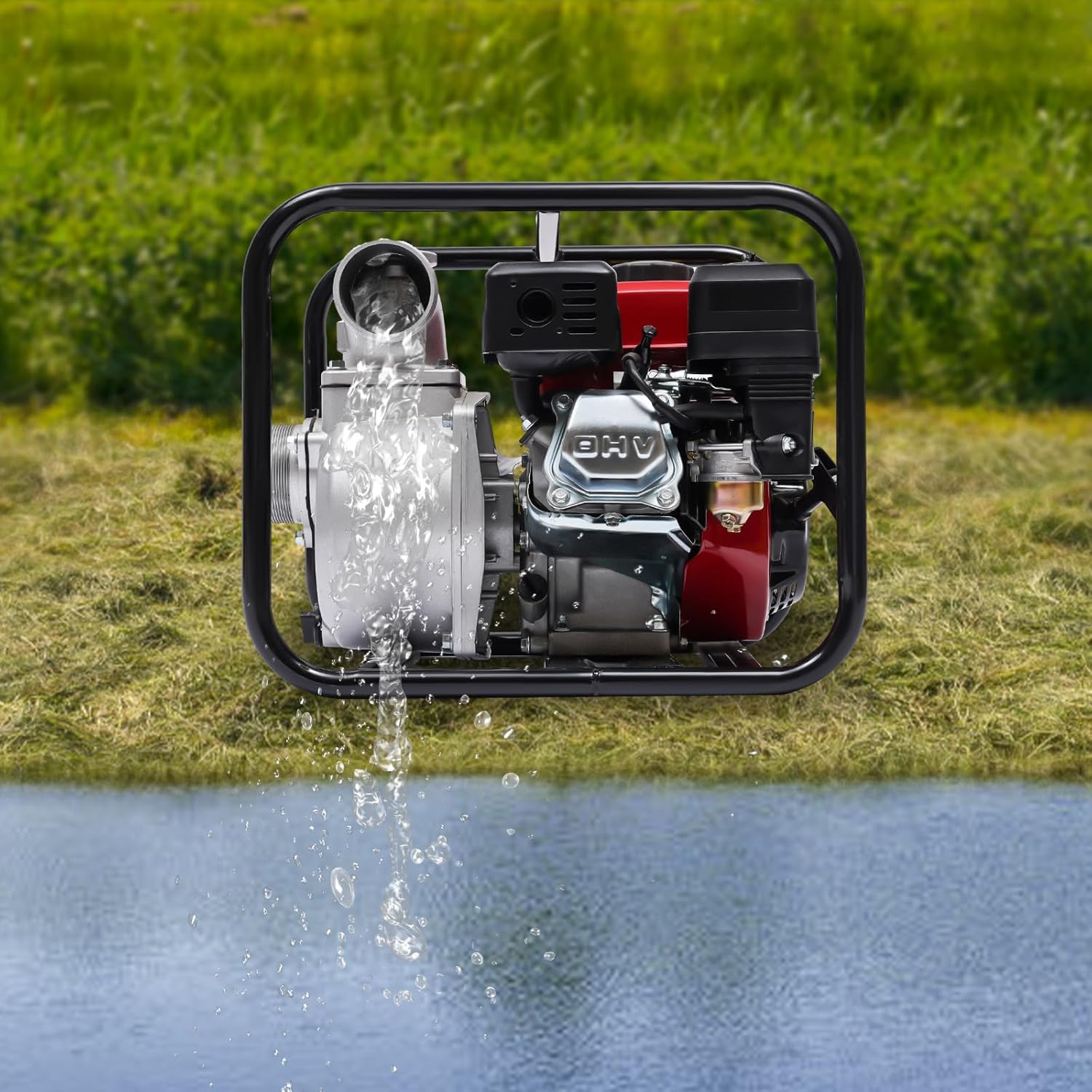
Image: The water pump in operation, effectively transferring water from a pond.
7. Maintenance
Regular maintenance ensures optimal performance and extends the life of your water pump.
- Engine Oil: Check oil level before each use. Change engine oil after the first 20 hours of operation, then every 50 hours or annually, whichever comes first.
- Air Filter: Clean the air filter element regularly, especially in dusty conditions. Replace if damaged.
- Spark Plug: Inspect the spark plug annually. Clean or replace as necessary.
- Fuel Filter: Inspect and clean the fuel filter periodically.
- Pump Housing: After each use, flush the pump with clean water to remove any sediment or debris.
- Storage: For long-term storage, drain all fuel from the tank and carburetor. Remove the spark plug and pour a small amount of engine oil into the cylinder, then pull the starter rope a few times to distribute the oil.
8. Troubleshooting
Here are some common issues and their potential solutions:
| Problem | Possible Cause | Solution |
|---|---|---|
| Engine does not start | No fuel; Ignition switch OFF; Damper closed incorrectly; Low oil level; Fouled spark plug | Add fuel; Turn ignition ON; Adjust damper; Add oil; Clean/replace spark plug |
| Pump does not prime (no water flow) | Pump not filled with water; Air leak in suction line; Clogged suction line/filter; Suction lift too high | Fill pump with water; Check all connections for leaks; Clean suction line/filter; Reduce suction lift |
| Low water flow/pressure | Partially clogged suction/discharge line; Worn impeller; Engine running at low speed | Check and clear lines; Inspect/replace impeller; Increase engine speed |
| Excessive vibration | Loose mounting bolts; Unbalanced impeller; Debris in pump | Tighten bolts; Inspect impeller for damage/debris |
9. Warranty and Support
For specific warranty information, please refer to the warranty card or documentation included with your product. If you encounter any issues not covered in this manual or require further assistance, please contact the seller or manufacturer directly. The manufacturer for this product is WilkenUS.
You can also visit the TFCFL Store on Amazon for additional product information and support resources.