
SVBONY SV503 102mm (FCAF9359D)
SVBONY SV503 102mm Refractor Telescope User Manual
Model: SV503 102mm (FCAF9359D)
1. Introduction
This manual provides detailed instructions for the setup, operation, and maintenance of your SVBONY SV503 102mm Refractor Telescope. Please read this manual thoroughly before using your telescope to ensure proper handling and optimal performance.
Product Overview
The SVBONY SV503 102mm Refractor Telescope is an advanced optical tube assembly (OTA) designed for both visual observation and astrophotography. It features a 102mm objective lens with an f/7 focal ratio, providing bright and clear images. The telescope incorporates S-FPL51 Extra-Low Dispersion (ED) glass to minimize chromatic aberration, ensuring high-contrast and true-color views of celestial objects.
Key features include:
- 102mm objective lens diameter and f/7 focal ratio for excellent light gathering.
- Doublet air-spaced achromatic design with S-FPL51 ED glass for reduced chromatic aberration.
- Ultra-wide band multi-layer coating technology for crisp and bright images.
- Dual-speed rack and pinion focuser with 1:10 micro-reduction for precise focusing.
- 90mm back focus, eliminating the need for additional extension tubes for many setups.
- Durable, CNC-machined construction with a fine-grained paint finish.
2. Package Contents
Upon unpacking, please verify that all components listed below are present and in good condition. If any items are missing or damaged, contact SVBONY customer support immediately.
- SVBONY SV503 102mm Refractor Optical Tube Assembly (OTA)
- 2-inch to 1.25-inch Adapter
- Metal Hoop (Mounting Rings)
- Dovetail Bar
- Objective Focuser Wheel Cover
- Die-cut Foam Insert Packaging

Figure 2.1: Main components included in the SVBONY SV503 package.
3. Setup and Assembly
Follow these steps to assemble your SVBONY SV503 telescope. Ensure you are in a clean, stable environment during assembly.
3.1 Attaching Mounting Rings and Dovetail Bar
- Carefully place the optical tube into the metal mounting rings. Ensure the tube is securely seated.
- Attach the dovetail bar to the bottom of the mounting rings using the provided screws. This bar will connect the OTA to your telescope mount.

Figure 3.1: Assembled SVBONY SV503 OTA with mounting rings and dovetail bar.
3.2 Mounting the OTA
Slide the dovetail bar into the saddle of your equatorial or alt-azimuth mount. Secure it firmly using the mount's locking mechanism. Ensure the telescope is balanced on the mount for stable operation.
3.3 Attaching Eyepieces and Accessories
- Remove the dust cap from the focuser.
- If using a 1.25-inch eyepiece or accessory, insert the 2-inch to 1.25-inch adapter into the 2-inch focuser drawtube. Secure it with the thumbscrew.
- Insert your desired eyepiece or accessory into the focuser (or adapter). Secure it with the thumbscrew.
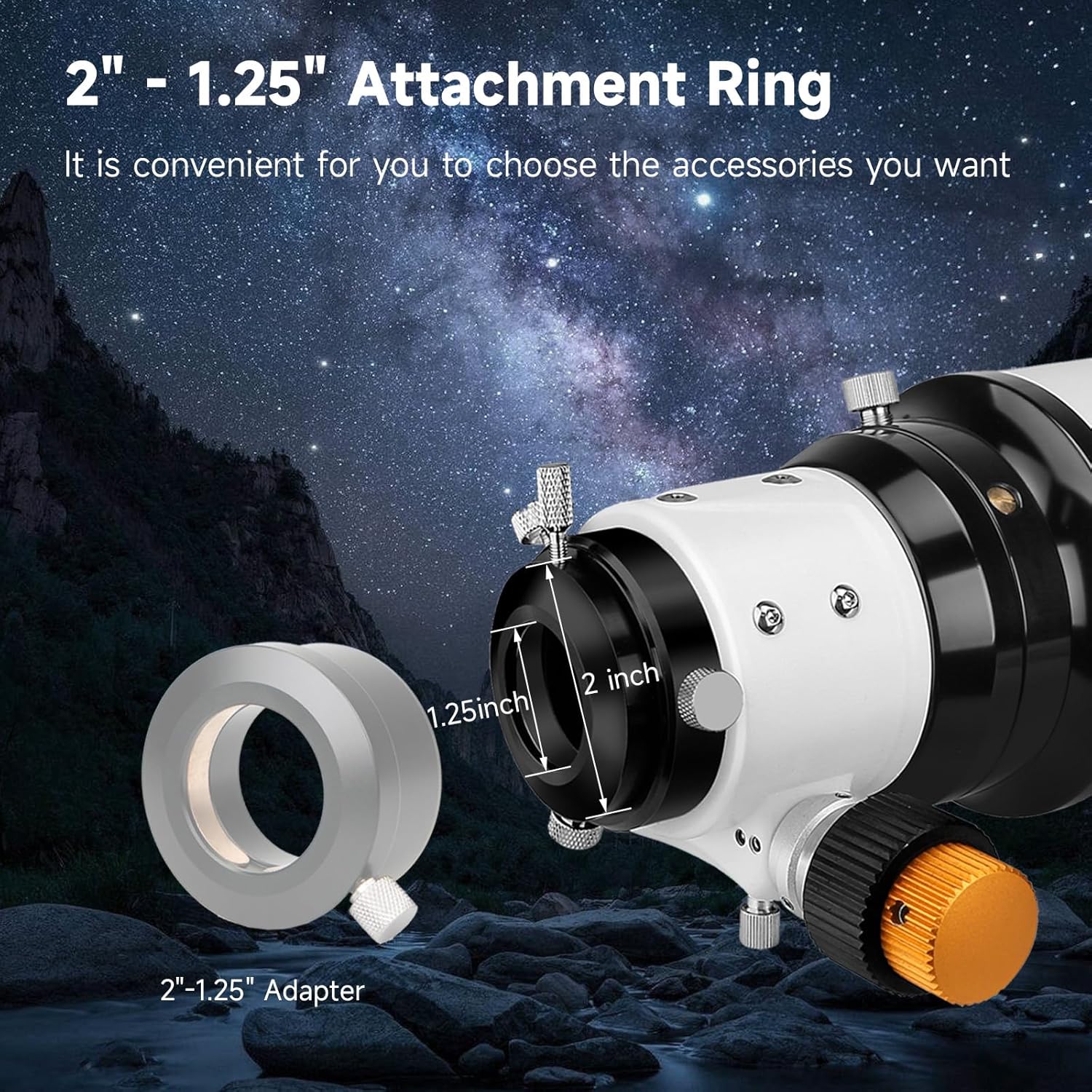
Figure 3.2: The included 2-inch to 1.25-inch adapter for eyepiece compatibility.
4. Operating the Telescope
Once assembled, your SVBONY SV503 telescope is ready for use. This section covers basic operation for visual observation and preparing for astrophotography.
4.1 Focusing
The SV503 features a dual-speed rack and pinion focuser, allowing for precise adjustments.
- Use the larger knob for coarse focusing to quickly bring objects into approximate focus.
- Use the smaller, 1:10 micro-reduction knob for fine focusing to achieve critical sharpness. This is especially important for high-magnification observations and astrophotography.

Figure 4.1: Dual-speed focuser with coarse and fine adjustment knobs.

Figure 4.2: The focuser can be rotated 360 degrees for comfortable viewing or camera positioning.
4.2 Visual Observation
For visual observation, attach a diagonal and an eyepiece to the focuser. Start with a low-power eyepiece (higher focal length) for a wider field of view to locate objects, then switch to higher-power eyepieces for more detailed views.

Figure 4.3: The 102mm aperture provides excellent light gathering for bright observations.
4.3 Astrophotography
The SV503 is well-suited for astrophotography, especially deep-sky objects, due to its ED glass and fast focal ratio. You will need a compatible astronomical camera and appropriate accessories (e.g., field flattener, filters, guide scope) for optimal results. The 90mm back focus provides ample space for various imaging trains without requiring additional extension tubes.

Figure 4.4: Examples of observation and photographic combinations with the SV503.
4.4 Optical Performance
The S-FPL51 ED glass in the SV503 significantly reduces chromatic aberration, which is common in achromatic refractors. This results in sharper images with truer color rendition, particularly noticeable on bright objects like planets and stars.

Figure 4.5: Comparison of image quality with ED glass versus ordinary lenses.
5. Maintenance and Care
Proper maintenance will extend the life and performance of your telescope.
5.1 Cleaning the Optics
The objective lens is a delicate optical component. Avoid touching it with bare hands. Dust can be removed with a soft brush or a can of compressed air (use short bursts). For smudges or fingerprints, use a specialized optical cleaning solution and a microfiber cloth designed for optics. Apply the solution to the cloth, not directly to the lens, and wipe gently in a circular motion from the center outwards.
5.2 General Care and Storage
- Always replace the dust caps on both ends of the optical tube when not in use.
- Store the telescope in a dry, dust-free environment, preferably in its original packaging or a padded case.
- Avoid exposing the telescope to extreme temperatures or sudden temperature changes, which can cause condensation.
- The telescope's body is made from high-quality, CNC-machined aluminum with a durable paint finish. Clean the exterior with a soft, damp cloth if necessary.

Figure 5.1: The robust construction of the SV503 OTA.
6. Troubleshooting
This section addresses common issues you might encounter and their potential solutions.
| Problem | Possible Cause | Solution |
|---|---|---|
| Image is blurry or out of focus. | Incorrect focuser position; atmospheric conditions; eyepiece not fully inserted. | Adjust the focuser using both coarse and fine knobs. Wait for stable atmospheric conditions. Ensure eyepiece is fully seated and secured. |
| No image visible. | Dust caps still on; wrong target; very high magnification. | Remove all dust caps. Ensure the telescope is pointed at a celestial object. Start with a low-power eyepiece. |
| Image shows colored fringes (chromatic aberration). | Normal for refractors, though minimized by ED glass; very bright objects. | While the SV503 uses ED glass to reduce this, some minor fringing may still be visible on extremely bright objects. This is inherent to refractor design. |
| Telescope shakes excessively. | Unstable mount; loose connections; wind. | Ensure your mount is stable and all connections (dovetail, rings) are tightened. Observe on calm nights or use a windbreak. |
7. Specifications
Detailed technical specifications for the SVBONY SV503 102mm Refractor Telescope:
- Optical Design: Doublet Air-Spaced Achromatic Refractor
- Objective Lens Diameter: 102mm
- Focal Length: 714mm
- Focal Ratio: f/7
- Optical Glass: S-FPL51 ED Glass
- Focuser: 2-inch Dual-Speed Rack and Pinion (1:10 Micro-reduction)
- Back Focus: 90mm
- Optical Tube Length: 630mm (24.80 inches)
- Product Dimensions: 2.13 x 0.03 x 0.05 inches (OTA only)
- Item Weight: 8.69 pounds (OTA only)
- Mounting: Dovetail Bar (compatible with Vixen-style saddles)
- Model Number: FCAF9359D
8. Warranty and Support
SVBONY provides quality products and customer support. For specific warranty terms and conditions, please refer to the documentation included with your purchase or visit the official SVBONY website.
For technical assistance, troubleshooting, or warranty claims, please contact SVBONY customer support through their official channels. You can also visit the SVBONY Store on Amazon for more information and product resources.
Ask a question about this manual
Ask about setup, troubleshooting, compatibility, parts, safety, or missing instructions. Manuals+ will review the question and use this page’s manual context to help answer it.