
Introduction
This manual provides detailed instructions for assembling, operating, and maintaining your Thames & Kosmos Roller Coaster Engineering STEM Kit. This kit allows you to design and build various roller coaster models, offering a practical introduction to physics principles such as gravitation, potential energy, kinetic energy, free fall, projectile motion, friction, centripetal force, velocity, and acceleration. The modular building system facilitates experimentation with different track designs and car weights.
Safety Information
Warning! Not suitable for children under 3 years. Small parts – Choking hazard. Keep the packaging and instructions as they contain important information.
What's in the Box
The Thames & Kosmos Roller Coaster Engineering STEM Kit includes the following components:
- Plastic building pieces
- Roller coaster car
- 32-page, full-color manual with step-by-step assembly instructions and scientific explanations

Image: Overview of all included plastic building pieces and the roller coaster car.
Setup and Assembly
Follow the detailed, step-by-step illustrated instructions provided in the included 32-page full-color manual for proper assembly. The building system is modular, allowing for various configurations.
- Unpack Components: Carefully remove all plastic building pieces and the roller coaster car from the packaging. Verify all parts are present against the manual's component list.
- Construct the Frame: Begin by assembling the sturdy frame structures using the provided plastic pieces. Ensure all connections are secure.
- Attach the Track: Once the frame is stable, attach the flexible track pieces to create your desired roller coaster design. The track can be configured to include curves, hills, drops, and loops.
- Place the Car: Position the roller coaster car on the track at the starting point.
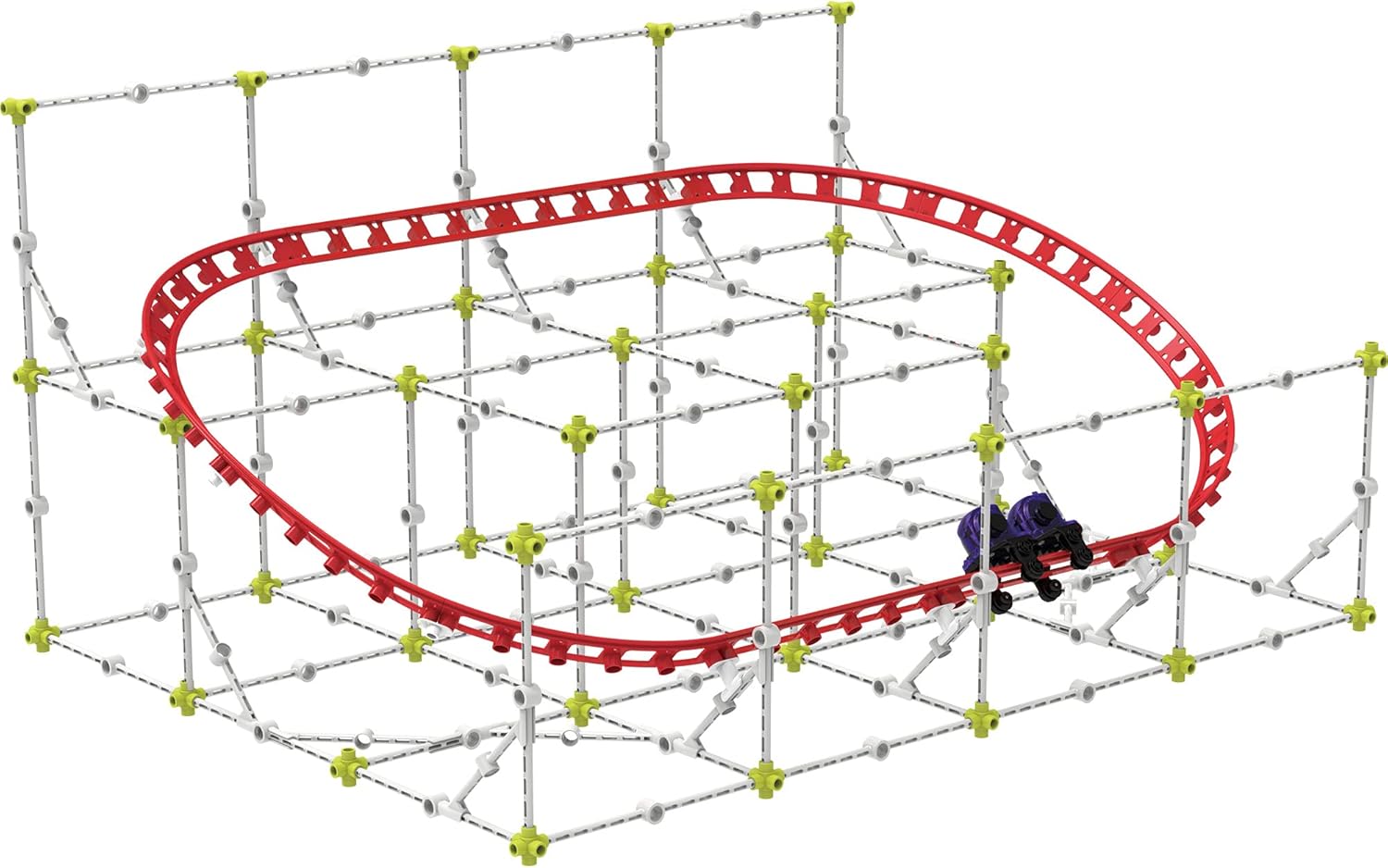
Image: An example of a roller coaster model featuring a large loop, demonstrating track flexibility.

Image: An example of a roller coaster model with a prominent hill and subsequent drop, illustrating elevation changes.
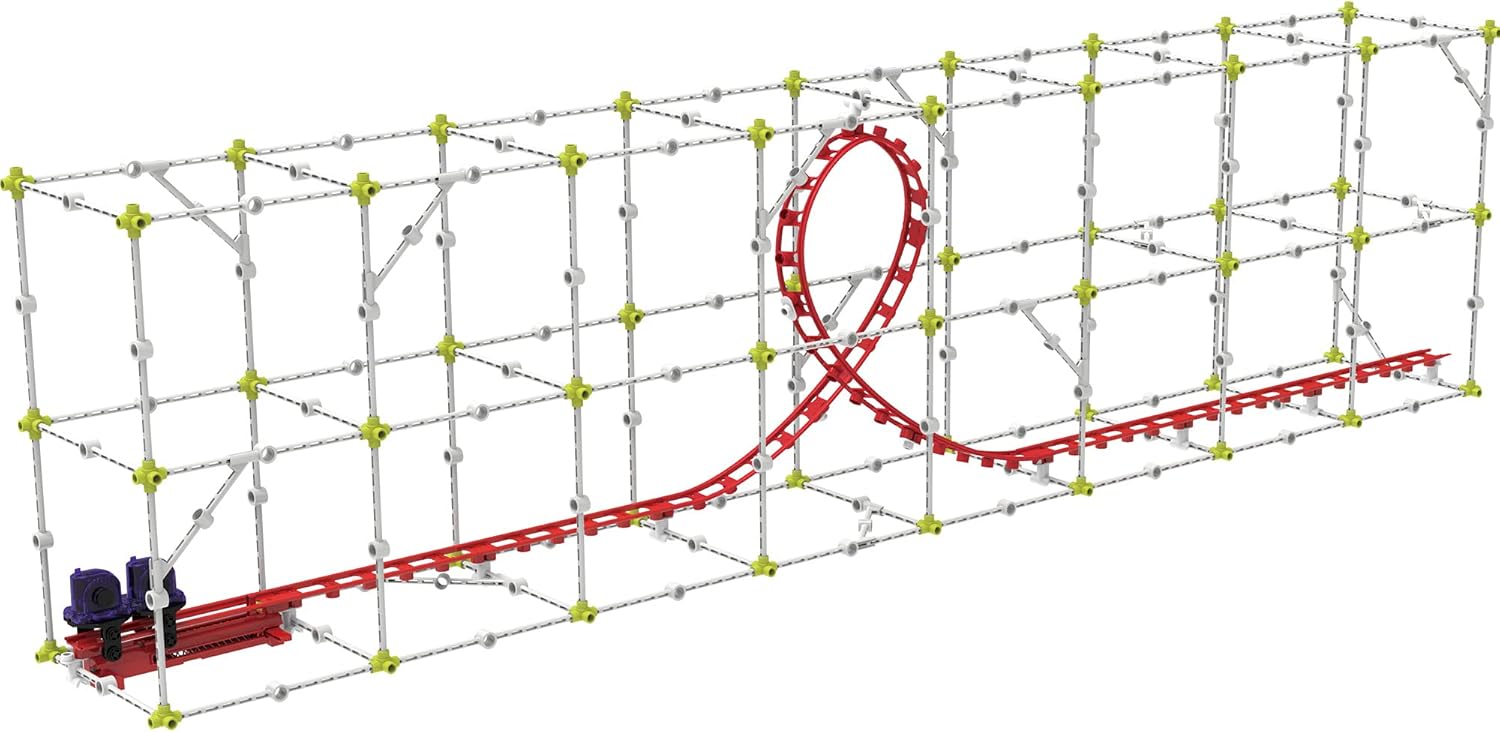
Image: An example of a roller coaster model featuring a tight spiral loop, showcasing complex track design.
Operating Instructions
Once your roller coaster model is assembled, you can begin experimenting with the principles of physics.
- Launch the Car: Gently place the roller coaster car at the highest point of your track or use the designated launcher mechanism if your design includes one.
- Observe Motion: Release the car and observe its movement along the track. Pay attention to how it gains speed on descents and slows on ascents.
- Experiment with Variables:
- Car Weight: Vary the weight of the car by adding or removing small, safe objects (e.g., small coins) to see how it affects speed and momentum.
- Track Design: Modify the slope, length, and direction of the track to explore different outcomes.
- Starting Height: Change the initial height from which the car is released to understand potential energy.
- Analyze Results: Use the scientific explanations in the manual to understand the physics behind your observations.
Video: Official product video demonstrating the Thames & Kosmos Roller Coaster Engineering kit in action, highlighting various track designs and the car's movement.
Maintenance
Proper care and maintenance will ensure the longevity of your Roller Coaster Engineering STEM Kit.
- Cleaning: Wipe plastic components with a soft, dry cloth. For stubborn dirt, use a slightly damp cloth and mild soap, then dry thoroughly. Avoid harsh chemicals.
- Storage: Store all components in their original packaging or a suitable container in a cool, dry place away from direct sunlight. This prevents warping or damage to plastic parts.
- Inspection: Periodically inspect all pieces for any signs of wear or damage. Replace any broken or severely worn parts to ensure safe and effective operation.
Troubleshooting
If you encounter issues while building or operating your roller coaster, consider the following troubleshooting steps:
- Car Not Completing the Track:
- Ensure the starting height is sufficient to provide enough potential energy.
- Check for any friction points or misaligned track sections that might impede the car's movement.
- Verify that all track connections are secure and smooth.
- Experiment with adding a small amount of weight to the car.
- Parts Not Fitting Together:
- Refer to the instruction manual to ensure you are using the correct pieces for each step.
- Apply firm, even pressure when connecting pieces. Avoid forcing them, as this can cause damage.
- Structure Instability:
- Double-check all frame connections to ensure they are fully engaged.
- Ensure the base of your structure is wide and stable.
Specifications
| Feature | Detail |
|---|---|
| Brand Name | Thames & Kosmos |
| Model Number | 625417 |
| Set Name | Roller Coaster Engineering |
| Age Range Description | Kid (6 - 18 years recommended) |
| Educational Objective | STEM |
| Material Type | Plastic |
| Included Components | Plastic building pieces, roller coaster car |
| Item Dimensions | 14.6 x 2.3 x 11.5 inches |
| Item Weight | 2 pounds |
| Battery Requirement | No Battery required |
| UPC | 814743015845 |
Warranty Information
Specific warranty details for the Thames & Kosmos Roller Coaster Engineering STEM Kit are not provided in the available product data. Please refer to the manufacturer's official website or contact their customer service for warranty information.
Support
For additional support, missing parts, or questions regarding experiments, please contact Thames & Kosmos directly. Their team of in-house product experts is available to assist you.
- Manufacturer Website: Visit the official Thames & Kosmos website for FAQs, additional resources, and contact information.
- Customer Service: Refer to the contact details provided in the product packaging or on the manufacturer's website for direct assistance.