
YTKavq 603465
YTKavq 3.7V 1300mAh Lithium Polymer Battery (Model 603465) User Manual
Model: 603465
1. Introduction
This manual provides essential information for the safe and effective use of your YTKavq 3.7V 1300mAh Lithium Polymer (Li-Po) rechargeable battery, model 603465. Please read this manual thoroughly before use and retain it for future reference.

Image 1: Front view of the YTKavq 3.7V 1300mAh Lithium Polymer Battery with its connector cable.
2. Product Features
- Voltage: 3.7V nominal
- Capacity: 1300mAh
- Maximum Charge Voltage/Current: DC4.25V/650mAh
- Material: Lithium Polymer
- Net Weight: Approximately 26g
- Dimensions: 65mm x 34mm x 6mm (2.54" x 1.33" x 0.23")
- Connector Type: PH 2.0mm Pitch 2-pin connector
- Cable Length: 5cm / 2"
- Integrated protection circuit for safety.

Image 2: Visual representation of the battery's dimensions (65mm length, 34mm width, 6mm thickness) and integrated protection features including overcharge, overdischarge, temperature, short circuit, overvoltage, and overcurrent protection.
3. Specifications
| Specification | Value |
|---|---|
| Product Size | 6mm x 34mm x 67mm |
| Nominal Voltage | 3.7V |
| Nominal Capacity | 1300mAh |
| Charging Voltage | 4.2V |
| Discharge Voltage | 2.75V |
| Recharging Current | Standard 0.65 A, Max 1.3 A |
| Charging Temperature | 0°C–45°C |
| Discharge Current | Standard 0.65 A, Max 1.3 A |
| Storage Temperature | -20°C–60°C |
| Connector Type | PH 2.0mm Pitch |
| Battery Cell Composition | Lithium Polymer |
| Item Weight | 0.88 ounces (approx. 26g) |
| Model Number | 603465 |

Image 3: Detailed specifications and an internal diagram illustrating the components of the PL603465 battery, including positive/negative electrodes and the insulating sheet.
4. Setup and Connection
The battery comes with a 2P PH 2.0mm Pitch connector. Ensure that the connector orientation matches the polarity of your device before connecting. Incorrect connection can cause damage to both the battery and the device.
- The RED wire of the connector is the positive electrode ("+").
- The BLACK wire of the connector is the negative electrode ("-").
The positive electrode of the connector should be connected to the positive electrode of the device. The negative electrode of the connector should be connected to the negative electrode of the device.

Image 4: The battery featuring its JST-PH2.0 connector, also known as Powerwhoop mCPX connector.

Image 5: Visual guide demonstrating the correct (left) and incorrect (right) ways to connect the battery based on polarity. The red wire connects to positive, and the black wire to negative. Incorrect connection can damage the device or battery.
5. Operating Instructions
5.1. Charging
Charge the battery using a compatible charger that provides a maximum charge voltage of DC4.25V and a maximum charge current of 650mAh. Charging should only occur within the temperature range of 0°C to 45°C. Using an incompatible charger or exceeding these limits can damage the battery and pose safety risks.
5.2. Discharge
The battery is designed to discharge down to 2.75V. The standard discharge current is 0.65A, with a maximum of 1.3A. Avoid discharging the battery below 2.75V, as this can permanently damage the battery and reduce its lifespan.
5.3. General Usage
This battery is suitable for various applications including portable DVD players, Bluetooth wireless headsets, GPS navigators, baby monitors, doorbells, smartwatches, monitoring units, POS machines, dashcams, VR glasses, and pet trackers. Always ensure the battery specifications match the requirements of your device.
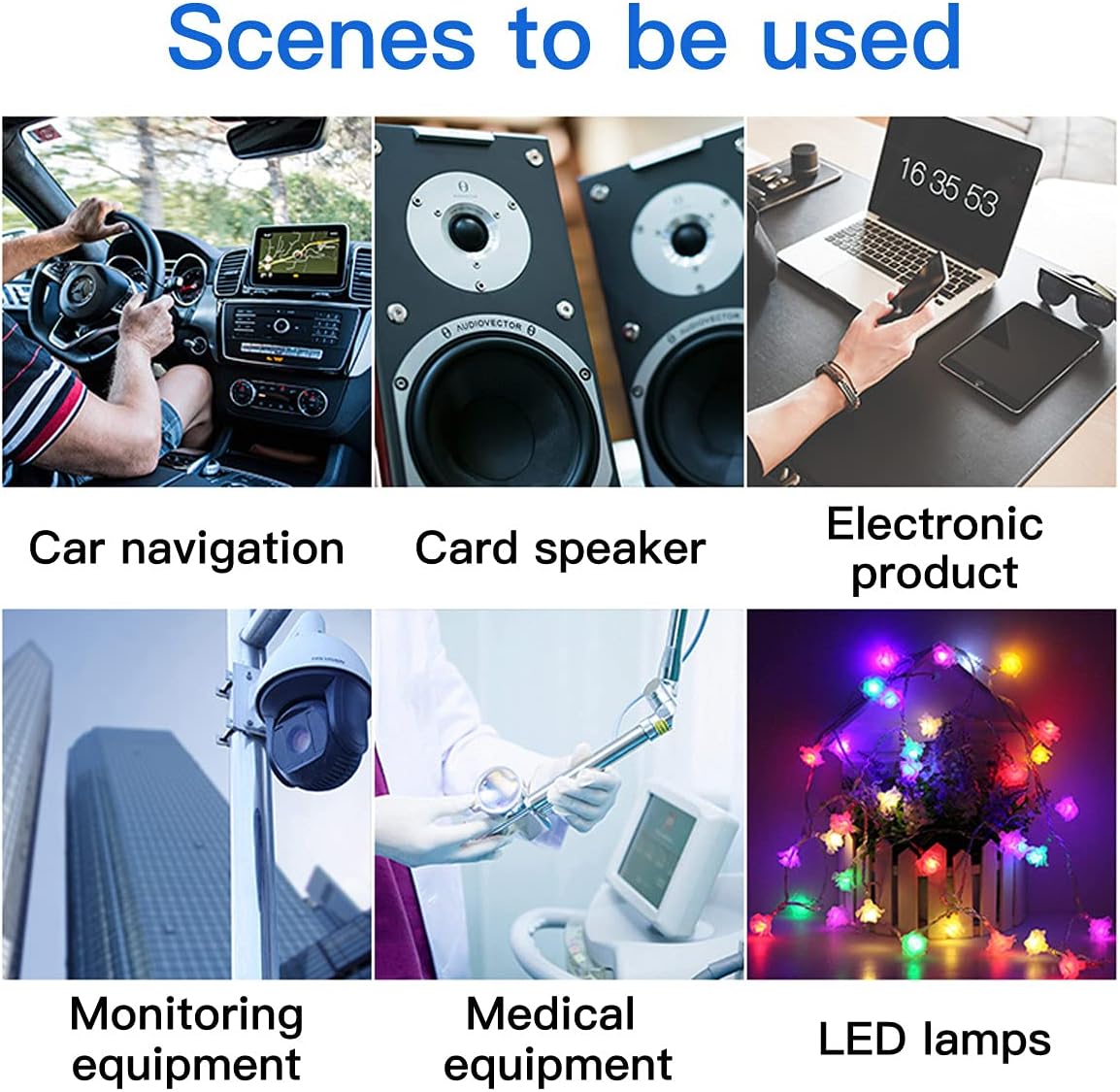
Image 6: Examples of common applications for this battery, including car navigation systems, card speakers, electronic products, monitoring equipment, medical equipment, and LED lamps.
6. Maintenance and Storage
To ensure optimal performance and longevity of your battery:
- Store the battery in a cool, dry place away from direct sunlight and extreme temperatures.
- The recommended storage temperature range is -20°C to 60°C.
- Avoid storing the battery fully charged or fully discharged for extended periods. A storage charge of around 3.8V-3.9V per cell is ideal for long-term storage.
- Do not expose the battery to water or moisture.
- Keep the battery away from metallic objects to prevent short circuits.
7. Safety Information and Precautions
Lithium Polymer batteries are powerful and require careful handling. This battery includes an integrated protection circuit to enhance safety, offering:
- Overcharge Protection: Prevents the battery from being charged beyond its safe voltage limit.
- Overdischarge Protection: Prevents the battery from being discharged below its safe voltage limit.
- Temperature Protection: Monitors and regulates the battery's temperature during operation and charging.
- Short Circuit Protection: Automatically cuts off power in case of a short circuit.
- Overvoltage Protection: Safeguards against excessive voltage input.
- Overcurrent Protection: Prevents damage from excessive current draw.
General Safety Guidelines:
- Do not disassemble, puncture, or modify the battery.
- Do not expose the battery to fire or extreme heat.
- Do not use the battery if it shows signs of swelling, leakage, or damage.
- Keep out of reach of children.
- Dispose of batteries according to local regulations. Do not dispose of in household waste.
8. Troubleshooting
If you experience issues with your battery, consider the following:
- Battery not charging: Ensure the charger is compatible and properly connected. Check the charging temperature is within 0°C–45°C.
- Battery not powering device: Verify the connector polarity is correct. Ensure the battery is sufficiently charged. Check if the device itself is functioning correctly.
- Short runtime: The battery may not be fully charged, or its capacity might have degraded over time. Ensure proper charging cycles.
- Battery swelling: Immediately discontinue use and safely dispose of the battery. Swelling indicates internal damage and a potential safety hazard.
9. Warranty and Support
Specific warranty information for this product is not provided in this manual. For warranty claims, technical support, or further inquiries, please refer to the product packaging or contact the retailer or manufacturer directly. Always provide your product model number (603465) when seeking support.
Ask a question about this manual
Ask about setup, troubleshooting, compatibility, parts, safety, or missing instructions. Manuals+ will review the question and use this page’s manual context to help answer it.