
Introduction
This manual provides essential information for the proper installation, operation, and maintenance of your AHL RFBP-05 Rear Brake Master Cylinder Pump Kit. Please read these instructions thoroughly before proceeding with installation or use to ensure safety and optimal performance.
Compatibility
This brake master cylinder kit is designed for a wide range of ATV, UTV, go-kart, and dune buggy models. Verify compatibility with your specific vehicle before installation.
- Carter Brothers GTR300, Talon DLX 150 IIR, FX 150 IIR
- Manco Talon 150
- Carbide 150, Helix 150
- Ace MAXXAM 150
- NST 90cc-250cc
- Coolster 110cc-250cc
- Kandi KD 110, KD150, KD250
- Baja BR150, BN150, BR250, DN250
- Sunl SGLK90, SGLK110, SGLK150, SGLK250
- Roketa GK-01, GK-06, GK-13, GK-19, GK-28, GK-39, GK-43
- American Sportswork 150 LM200, Zircon 150, Vector150, GX 150 IIR, GSR 150 R2, GSX 150 R2 (552-3005, 509-3005)
- Hammerhead Twister 150 & 250 models (later than 2005)
- BMS King Cobra 150, Power Kart 150, Power Buggy 250
- Kinroad Mighty Max 90, Magnum Tarzan 110
- Jet Explorer, Raptor, Mojave, Sahara, Phoenix 150
- Joyner 650 Sand Spider (may require adjustment for replica 150)
- SSR, Eagle, Taotao, JCL, Hensim, BMX, Hammerhead ATV, UTV, go kart, dune buggy (90cc, 110cc, 125cc, 150cc, 200cc, 250cc)
- Go Buggy, Sunl, BMS, Kandi, Roketa, Kazuma, Kinroad ATV
Important Note: Detailed specifications and instructions specific to your vehicle's brake system are not included. If you are uncertain about the installation process, it is strongly recommended to seek assistance from a qualified professional.
Product Overview
The AHL RFBP-05 Rear Brake Master Cylinder Pump Kit is a replacement component designed to restore or upgrade the braking performance of compatible vehicles. It features a durable aluminum construction and includes necessary mounting hardware.
Key Components
- Master Cylinder Body: Main housing for the piston and fluid reservoir.
- Fluid Reservoir: Transparent container for brake fluid, with MAX/MIN level indicators.
- Reservoir Cap: Seals the fluid reservoir.
- Mounting Bracket: Secures the master cylinder to the vehicle frame.
- Push Rod Assembly: Connects to the brake pedal/lever.
- Brake Line Ports: Connections for brake lines.
- Pressure Switch (if equipped): For brake light activation.
Features
- Durable Construction: Manufactured from high-quality aluminum material for longevity and reliable performance.
- Excellent Braking Performance: Engineered to provide effective and consistent braking.
- Direct Replacement: Designed for straightforward installation on compatible models.

Figure 1: Front view of the AHL RFBP-05 Rear Brake Master Cylinder Pump Kit, showing the fluid reservoir and mounting bracket.
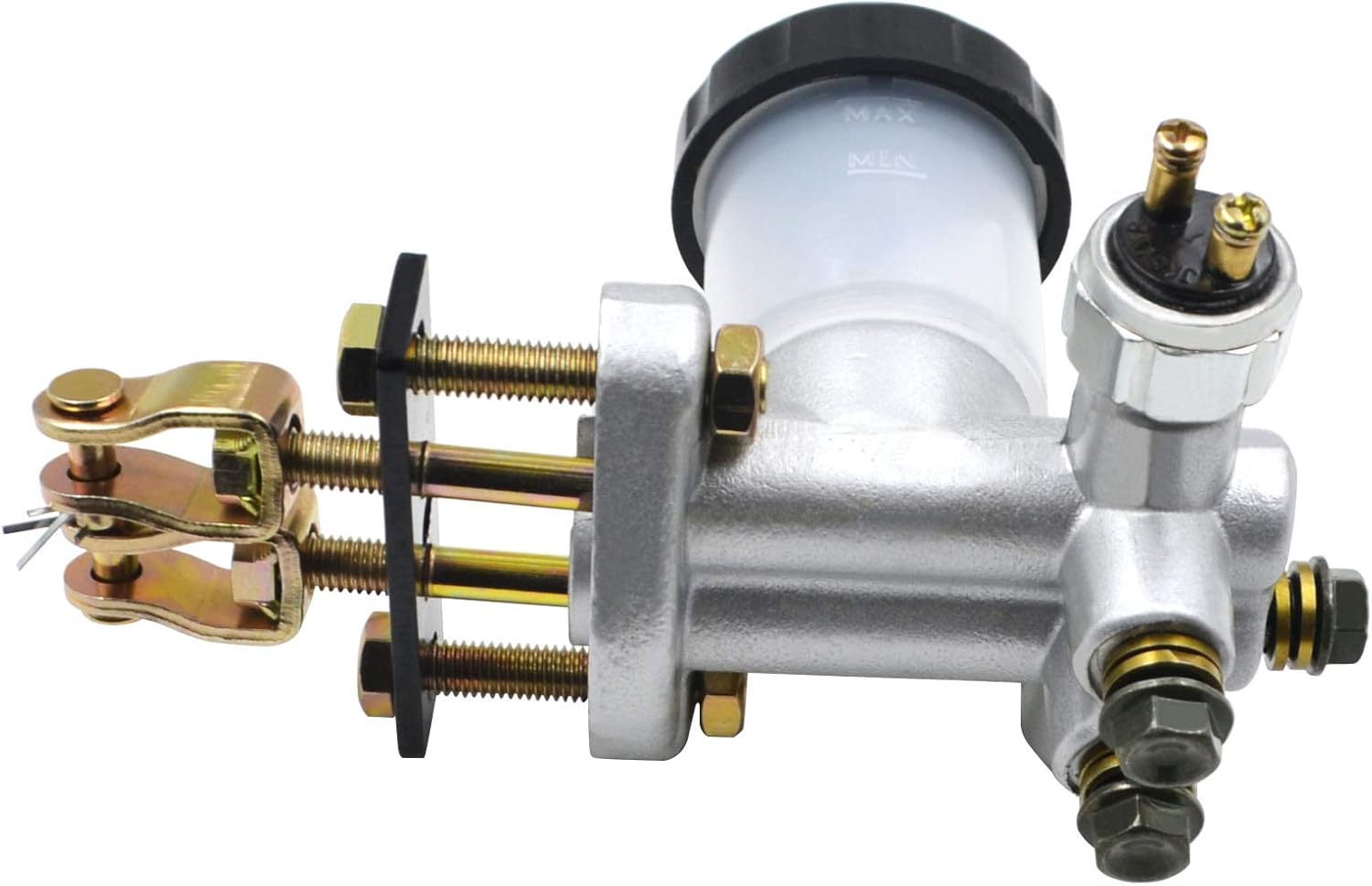
Figure 2: Side view of the master cylinder, highlighting the fluid reservoir with MAX/MIN markings and brake line connections.

Figure 3: Diagram showing key dimensions of the master cylinder, including overall length (180mm) and reservoir base diameter (57.5mm).

Figure 4: Exploded view of the master cylinder components, including the main body, reservoir, cap, and push rod assembly with clevis pins.
Setup and Installation
Proper installation is crucial for the safe and effective operation of your vehicle's braking system. If you are not experienced with brake system maintenance, it is highly recommended to have this component installed by a certified mechanic.
Required Tools and Materials (Not Included)
- Wrenches/Sockets (appropriate sizes for mounting bolts and brake lines)
- Brake Fluid (DOT 3 or DOT 4, as specified by your vehicle manufacturer)
- Bleeder Kit or Vacuum Pump
- Clean Rags
- Safety Glasses and Gloves
Installation Steps
- Preparation: Park the vehicle on a level surface and engage the parking brake. Ensure the engine is off and cool.
- Drain Old Fluid: If replacing an existing master cylinder, carefully drain the old brake fluid from the system. Place a drip pan beneath the master cylinder and brake calipers/wheel cylinders.
- Remove Old Master Cylinder: Disconnect the brake lines from the old master cylinder. Be prepared for residual fluid leakage. Remove the mounting bolts and detach the old unit.
- Install New Master Cylinder: Position the AHL RFBP-05 master cylinder in the mounting location. Secure it with the appropriate mounting bolts, ensuring a snug fit without overtightening.
- Connect Brake Lines: Carefully connect the brake lines to the new master cylinder's ports. Ensure all connections are tight to prevent leaks.
- Fill Reservoir: Fill the master cylinder reservoir with new, clean brake fluid (DOT 3 or DOT 4, as recommended by your vehicle's manufacturer) up to the MAX line. Do not overfill.
- Bleed the Brake System: This is a critical step. Air in the brake lines will result in a spongy pedal and ineffective braking. Follow your vehicle's specific procedure for bleeding the rear brake system. This typically involves:
- Having an assistant pump the brake pedal several times and hold it down.
- Opening the bleeder screw on the caliper/wheel cylinder to release air and fluid.
- Closing the bleeder screw before the pedal is released.
- Repeating this process until no air bubbles are visible in the fluid exiting the bleeder screw.
- Check for Leaks: After bleeding, thoroughly inspect all brake line connections and the master cylinder for any signs of fluid leaks.
- Test Brake Function: With the vehicle stationary, pump the brake pedal several times to ensure a firm pedal feel. Slowly test the brakes at low speed in a safe, open area before operating the vehicle normally.
Warning: Never operate a vehicle with a compromised braking system. Ensure all air is purged from the system and there are no leaks before driving.
Operating Instructions
Once installed and properly bled, the AHL RFBP-05 master cylinder operates as part of your vehicle's hydraulic braking system. Its function is to convert mechanical force from the brake pedal into hydraulic pressure, which then actuates the brake calipers or wheel cylinders.
Normal Operation
- Apply the brake pedal smoothly and progressively to achieve desired braking force.
- The brake pedal should feel firm and consistent throughout its travel.
- Avoid sudden or aggressive braking unless in an emergency.
Brake Fluid Level Check
Regularly check the brake fluid level in the master cylinder reservoir. It should always be between the MAX and MIN lines. A low fluid level can indicate a leak in the system or worn brake pads/shoes. Address any low fluid levels promptly.
Maintenance
Routine maintenance of your braking system, including the master cylinder, is essential for safety and longevity.
Recommended Maintenance Schedule
- Monthly: Check brake fluid level. Inspect the master cylinder and brake lines for any visible leaks or damage.
- Annually or Every 12,000 Miles (whichever comes first): Inspect the entire brake system, including brake pads, rotors/drums, calipers/wheel cylinders, and brake lines. Consider flushing and replacing the brake fluid according to your vehicle manufacturer's recommendations. Brake fluid can absorb moisture over time, reducing its effectiveness.
General Tips
- Use only the type of brake fluid specified by your vehicle manufacturer (e.g., DOT 3, DOT 4). Mixing different types of fluid or using incorrect fluid can damage the system.
- Keep the brake fluid reservoir cap clean and securely fastened to prevent contamination.
- Never allow brake fluid to come into contact with painted surfaces, as it can damage the finish.
Troubleshooting
If you experience issues with your braking system after installing the AHL RFBP-05 master cylinder, consult the following common troubleshooting steps. For complex issues, professional diagnosis is recommended.
| Symptom | Possible Cause | Solution |
|---|---|---|
| Spongy Brake Pedal | Air in the brake lines. | Re-bleed the entire brake system thoroughly. Ensure the master cylinder reservoir does not run dry during bleeding. |
| Low Brake Pedal | Low brake fluid level, worn brake pads/shoes, or air in the system. | Check fluid level and top off if necessary. Inspect brake pads/shoes for wear. Bleed the brake system. |
| Brake Fluid Leakage | Loose connections, damaged brake lines, or faulty master cylinder seals. | Inspect all connections for tightness. Check brake lines for cracks or damage. If the master cylinder itself is leaking, it may need replacement. |
| Brakes Dragging/Not Releasing | Incorrect pedal adjustment, seized caliper/wheel cylinder, or master cylinder not returning fully. | Check brake pedal free play. Inspect calipers/wheel cylinders for proper function. Ensure the master cylinder push rod is not binding. |
Note: If troubleshooting steps do not resolve the issue, or if you are unsure about any repair, consult a professional mechanic. Brake system integrity is paramount for safety.
Specifications
| Attribute | Detail |
|---|---|
| Brand | AHL |
| Model Number | RFBP-05 |
| Item Weight | 1.53 pounds (approx. 0.69 kg) |
| Material | High-quality Aluminum |
| Application | Rear Brake Master Cylinder for various Motorcycles, ATVs, UTVs, Go Karts, Dune Buggies (90cc-250cc) |
Warranty and Support
AHL stands by the quality of its products. If you encounter any issues or are not satisfied with your purchase, please contact the seller or AHL customer support directly. They are committed to providing solutions, including returns, replacements, or refunds, as per their quality assurance policy.
For support, please refer to the contact information provided with your purchase or visit the official AHL store page on Amazon: AHL Store.