
Important Safety Information
Please read this manual carefully before installing, operating, or performing maintenance on your appliance. Keep this manual for future reference. Failure to follow these instructions may result in electric shock, fire, or damage to the appliance.
- Ensure the appliance is unplugged before cleaning or performing any maintenance.
- Do not damage the refrigerant circuit.
- Do not use electrical appliances inside the food storage compartments unless they are of the type recommended by the manufacturer.
- This appliance is intended for household use only.
- Keep ventilation openings clear of obstruction.
- Do not store explosive substances such as aerosol cans with a flammable propellant in this appliance.
Product Overview
The Candy CVDS5162WN is a freestanding top-freezer refrigerator designed for efficient food storage. It features a total net volume of 243 liters, with 201 liters for the refrigerator compartment and 42 liters for the freezer compartment. The appliance uses static cooling and mechanical temperature regulation.
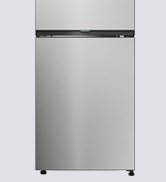
Exterior view of the Candy CVDS5162WN refrigerator. This image shows the overall design of the freestanding unit, featuring a clean white finish and a top-freezer configuration.

Interior view of the Candy CVDS5162WN refrigerator. The image displays the glass shelves, door bins, and vegetable crisper drawer in the main refrigerator compartment, along with the smaller freezer compartment at the top.
Setup and Installation
Unpacking
Carefully remove all packaging materials. Inspect the appliance for any damage. Report any damage to your retailer immediately. Keep packaging materials out of reach of children.
Placement
- Place the refrigerator on a firm, level surface.
- Ensure adequate ventilation around the appliance. Maintain a minimum clearance of 10 cm (4 inches) from the back and sides to allow for proper air circulation and heat dissipation.
- Avoid placing the appliance in direct sunlight or near heat sources such as ovens, radiators, or heaters, as this will increase energy consumption.
- The climate class is N-ST, meaning it is suitable for ambient temperatures between +16°C and +38°C.
Electrical Connection
- Before plugging in, ensure the voltage indicated on the rating plate matches your household electricity supply (230 Volts).
- The appliance must be properly earthed. Do not use extension cords or multiple sockets.
- Allow the appliance to stand upright for at least 2-4 hours before plugging it in to allow the refrigerant to settle.
Operating Instructions
Initial Start-up
After connecting the appliance to the power supply, allow it to run for several hours (e.g., 4-6 hours) before placing food inside. This ensures the interior reaches the correct temperature.
Temperature Control
The refrigerator features mechanical temperature regulation. The thermostat dial is typically located inside the refrigerator compartment. Turn the dial to adjust the temperature setting:
- "Min" or "1" setting: Warmer temperature.
- "Max" or "5" setting: Colder temperature.
- Adjust the setting based on ambient temperature and the amount of food stored. A medium setting is usually sufficient for general use.
Food Storage Guidelines
- Store raw meat and fish in sealed containers on the lowest shelf to prevent dripping onto other foods.
- Wrap foods properly to prevent drying out and odor transfer.
- Do not place hot food directly into the refrigerator; allow it to cool to room temperature first.
- The freezer compartment has a freezing capacity of 3.5 kg per 24 hours. Do not exceed this capacity when freezing fresh food.
- In case of power failure, the appliance has an autonomy of 21 hours, meaning food will remain frozen for approximately this duration if the door remains closed.
Maintenance and Cleaning
Defrosting
This appliance features a manual defrosting system for both the refrigerator and freezer compartments. Frost buildup can reduce efficiency.
- Refrigerator: The refrigerator compartment defrosts automatically. Water from defrosting collects in a tray at the back of the appliance and evaporates. Ensure the drain hole is not blocked.
- Freezer: The freezer compartment requires manual defrosting when the frost layer reaches about 3-5 mm thick.
- Unplug the appliance from the power supply.
- Remove all food items and store them in a cool place or another freezer.
- Leave the freezer door open to allow the frost to melt naturally. Place towels or a shallow tray to collect water.
- Do not use sharp objects or heating devices to speed up defrosting, as this can damage the appliance.
- Once defrosted, clean and dry the interior thoroughly before plugging the appliance back in and returning food.
Cleaning
- Always unplug the appliance before cleaning.
- Clean the interior with a solution of mild detergent and warm water. Wipe dry with a soft cloth.
- The glass shelves and door bins can be removed for easier cleaning.
- Clean the exterior with a damp cloth and mild detergent. Avoid abrasive cleaners.
- Periodically clean the condenser coils at the back of the appliance with a soft brush or vacuum cleaner to maintain efficiency.
Troubleshooting
Before contacting service, check the following common issues:
| Problem | Possible Cause | Solution |
|---|---|---|
| Appliance does not operate. | No power supply; plug not inserted correctly; fuse blown. | Check power connection; check household fuse. |
| Temperature is not cold enough. | Door not closed properly; frequent door opening; thermostat set too warm; large amount of warm food added; poor ventilation. | Ensure door is sealed; reduce door openings; adjust thermostat to a colder setting; allow food to cool before storing; ensure adequate clearance around appliance. |
| Excessive frost buildup in freezer. | Freezer door not sealed; frequent door opening; high humidity. | Check door seal; reduce door openings; manually defrost as per instructions. |
| Unusual noises. | Appliance not level; objects touching the back of the appliance; normal operating sounds (e.g., refrigerant flow, compressor). | Adjust leveling feet; ensure nothing is touching the appliance; familiarize yourself with normal operating sounds. |
Specifications
| Brand | CANDY |
| Model Number | 34004509 (CVDS5162WN) |
| Type | Freestanding Top Freezer Refrigerator |
| Total Net Capacity | 243 Liters |
| Refrigerator Net Capacity | 201 Liters |
| Freezer Net Capacity | 42 Liters |
| Cooling Type | Static |
| Defrosting System | Manual |
| Temperature Control | Mechanical, Adjustable |
| Freezing Capacity | 3.5 kg/24h |
| Autonomy (Power Failure) | 21 hours |
| Climate Class | N-ST (+16°C to +38°C) |
| Energy Efficiency Class | F |
| Annual Energy Consumption | 223 kWh/year |
| Voltage | 230 Volts |
| Dimensions (H x W x D) | 160 cm x 54 cm x 57 cm |
| Weight | 42 Kilograms |
| Number of Doors | 2 |
| Shelf Type | Glass |
| Water Dispenser | No |
Warranty and Support
Warranty Information
Specific warranty details for your Candy CVDS5162WN refrigerator are typically provided with your purchase documentation or can be found on the official Candy website. Please retain your proof of purchase for warranty claims.
Commonly, major appliances come with a manufacturer's warranty covering defects in materials and workmanship for a specified period (e.g., 1-2 years). Compressor warranties may be longer.
Customer Support
For technical assistance, spare parts, or service requests, please contact Candy customer support. Contact details can usually be found on the manufacturer's website or in your purchase documents.
When contacting support, please have your appliance model number (CVDS5162WN) and serial number ready. The serial number is typically located on a label inside the refrigerator compartment.


