
TOYANDONA B08MWKQTFF
TOYANDONA Jumping Toy Frogs User Manual
Model: B08MWKQTFF
Introduction
Thank you for choosing the TOYANDONA Jumping Toy Frogs. This set includes 100 plastic jumping toys in random colors and styles, designed for fun and entertainment. These mini jumping frogs are simple to operate and provide engaging play for children and adults alike. Please read this manual carefully to ensure proper use and safety.
Safety Information
WARNING: CHOKING HAZARD – Small Parts. Not for children under 3 years. Adult supervision is recommended during play, especially with younger children, due to the small size of the toys. Keep away from pets. Do not put toys in mouth.
Ensure play is conducted on a flat, stable surface to prevent accidental injury from jumping toys.
Product Overview
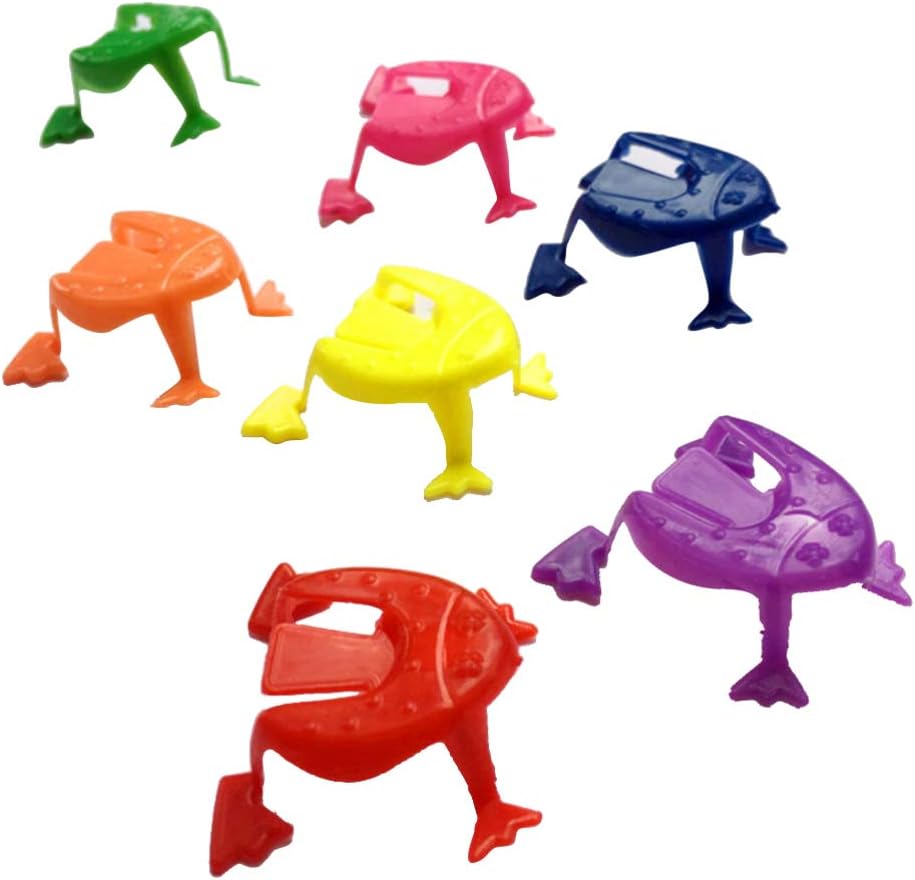
Image: Assortment of TOYANDONA jumping frogs in green, pink, blue, orange, yellow, purple, and red. These small plastic toys are designed to jump when pressed.
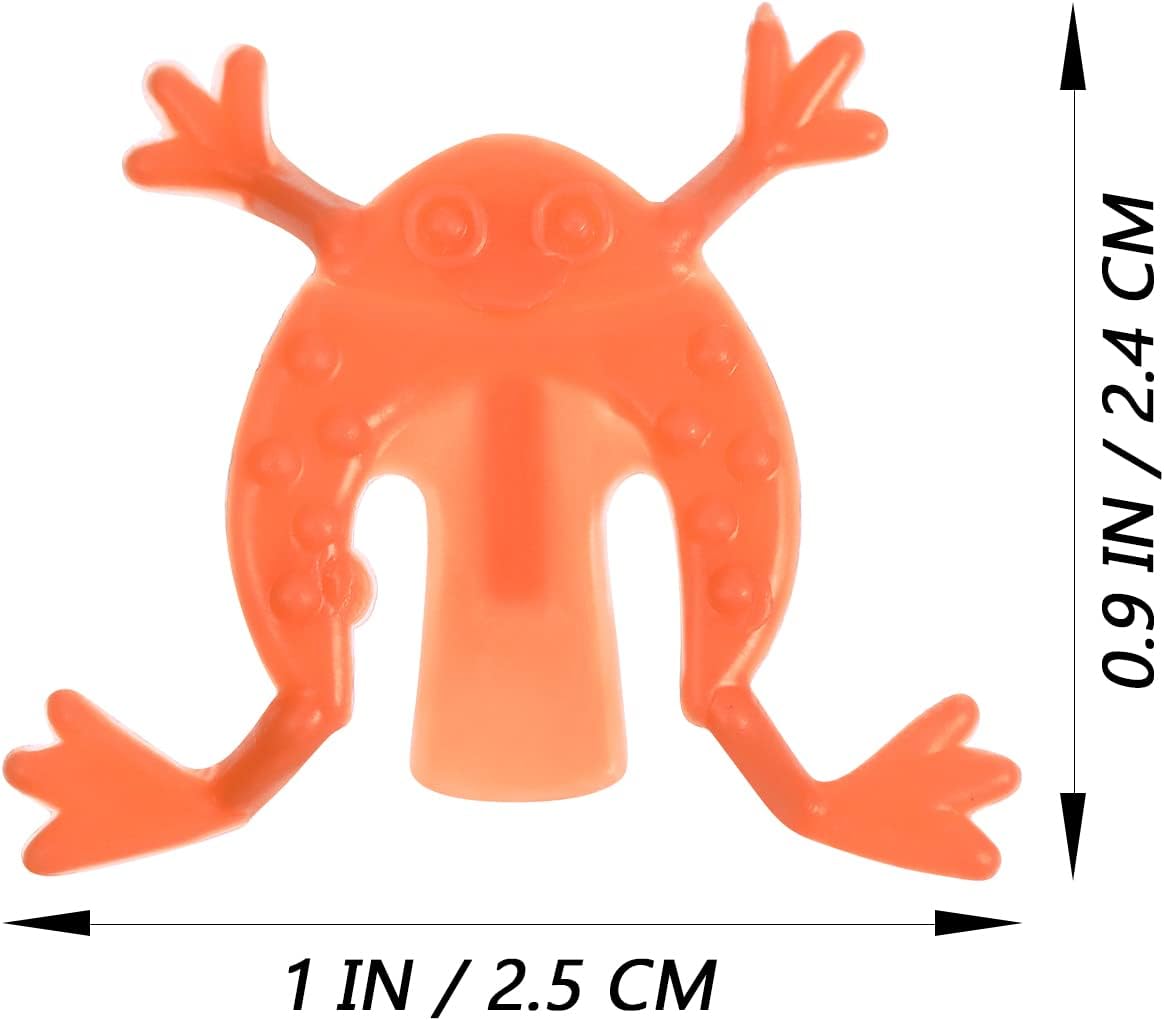
Image: Close-up of a single orange jumping frog, illustrating its compact size with measurements of approximately 1 inch in width and 0.9 inches in height.
The TOYANDONA Jumping Toy Frogs are small, lightweight plastic toys. Each frog features a simple design that allows it to jump when pressure is applied to its back. They come in a variety of bright, random colors and styles, making each set unique.
Setup
The TOYANDONA Jumping Toy Frogs require no assembly. They are ready for play directly out of the packaging.
- Carefully open the packaging.
- Remove the desired number of jumping frogs.
- Ensure the play area is clear of obstacles and is a flat, hard surface for optimal jumping performance.
Operating Instructions
Operating the jumping frogs is simple and intuitive.

Image: A hand pressing the back of a green jumping frog, illustrating the primary method of operation.
- Place a jumping frog on a flat, hard surface.
- Using your finger, gently press down on the tail end or back of the frog.
- Release your finger quickly. The frog will spring forward or upward due to the stored energy in its plastic design.
- Experiment with different amounts of pressure and release speeds to achieve varying jump heights and distances.
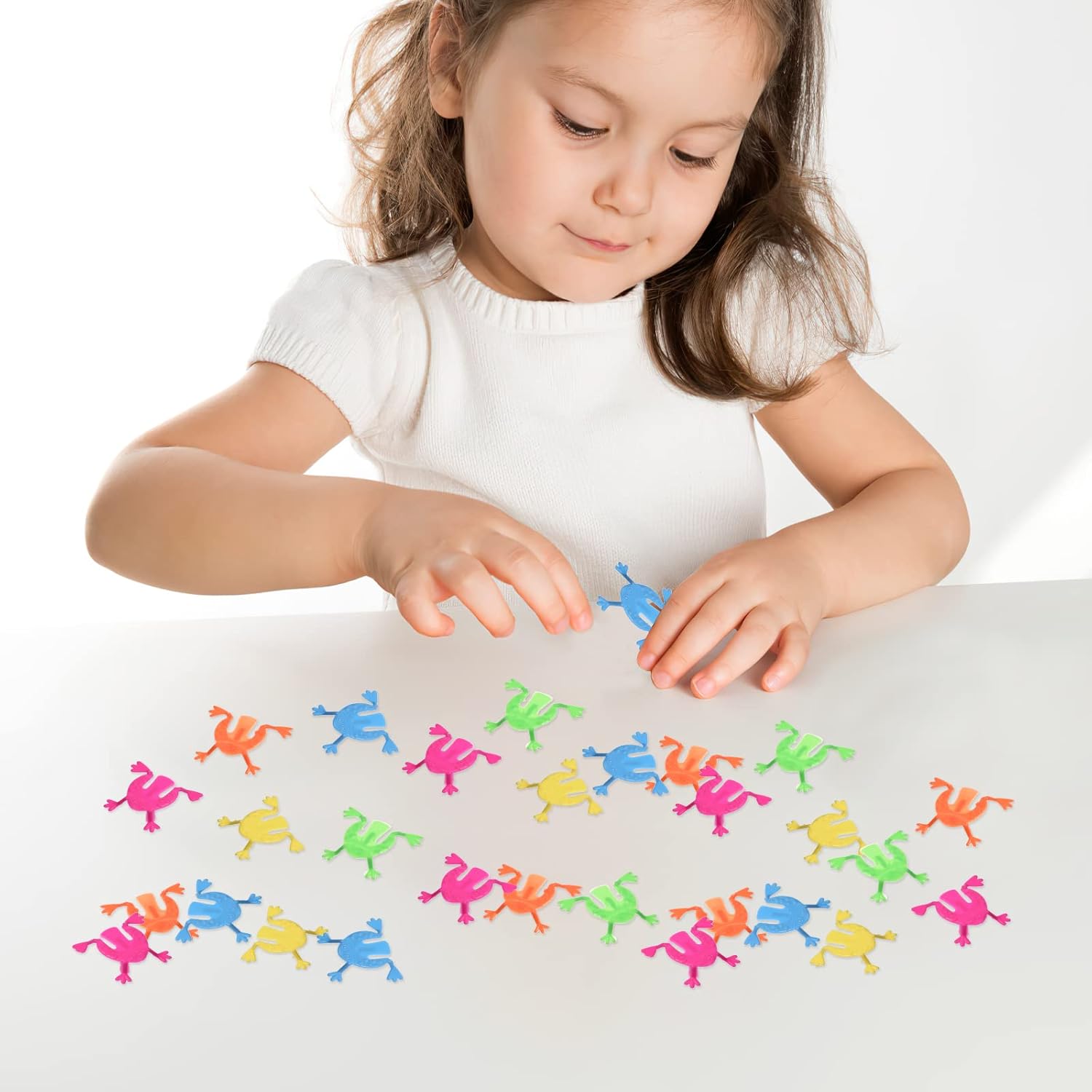
Image: A child interacting with several jumping frogs spread across a table, showing typical play scenario.

Image: An adult and child playing together with the jumping frogs on a mat, suggesting cooperative play.
Maintenance
These jumping frogs are designed for durability and require minimal maintenance.
- Cleaning: If the toys become dirty, wipe them with a damp cloth and mild soap. Rinse thoroughly with clean water and allow them to air dry completely before storage. Do not use harsh chemicals or abrasive cleaners.
- Storage: Store the jumping frogs in a cool, dry place away from direct sunlight and extreme temperatures to prevent material degradation. Keep them in their original packaging or a sealed container to prevent loss of small parts.
Troubleshooting
If your jumping frogs are not performing as expected, consider the following:
| Problem | Possible Cause | Solution |
|---|---|---|
| Frog does not jump or jumps weakly. |
|
|
| Frog jumps inconsistently. |
|
|
Specifications
| Attribute | Detail |
|---|---|
| Product Name | TOYANDONA Jumping Toy Frogs |
| Model Number | B08MWKQTFF |
| Material | Plastic |
| Quantity | 100 pieces (approximate) |
| Dimensions (per frog) | Approximately 0.98 x 0.94 x 0.28 inches (2.5 x 2.4 x 0.7 cm) |
| Item Weight (total) | Approximately 0.529 ounces (15 grams) |
| Recommended Age | 12 months and up (with adult supervision due to small parts) |
| Country of Origin | China |
Warranty and Support
TOYANDONA products are manufactured with quality in mind. For any questions, concerns, or issues regarding your Jumping Toy Frogs, please contact the seller or refer to your purchase platform for support options.
Please retain your proof of purchase for any warranty claims or support inquiries.
Ask a question about this manual
Ask about setup, troubleshooting, compatibility, parts, safety, or missing instructions. Manuals+ will review the question and use this page’s manual context to help answer it.