
Tuffcare Rhino Lift
Tuffcare Rhino Lift Electric Patient Lift Instruction Manual
Model: Rhino Lift
Introduction
This manual provides essential instructions for the safe and effective use, assembly, operation, and maintenance of your Tuffcare Rhino Lift Electric Patient Lift. Please read this manual thoroughly before operating the device to ensure patient safety and optimal performance. Keep this manual for future reference.
Safety Information
Important Safety Precautions:
- Consult with your doctor before use.
- The end user is responsible for the safe and proper use of the equipment.
- Ensure all components are securely fastened before each use.
- Do not exceed the maximum weight capacity of 450 lbs.
- Always ensure the patient is properly secured in the sling before lifting.
- Never leave a patient unattended in the lift.
- Familiarize yourself with the emergency power cut-off switch and manual lowering knob.
- Keep hands and clothing clear of moving parts during operation.
Product Overview
The Tuffcare Rhino Lift is an electric patient lift designed for safe and efficient patient transfers in home and facility settings. It features a powered lift arm, adjustable base, and a wired ergonomic hand pendant for control.

Image Description: A front view of the Tuffcare Rhino Lift with key components labeled, including ergonomic hand grips, detachable battery, emergency stop button, adjustable legs, foot pedals, and rear locking casters. This image highlights the main parts of the patient lift.
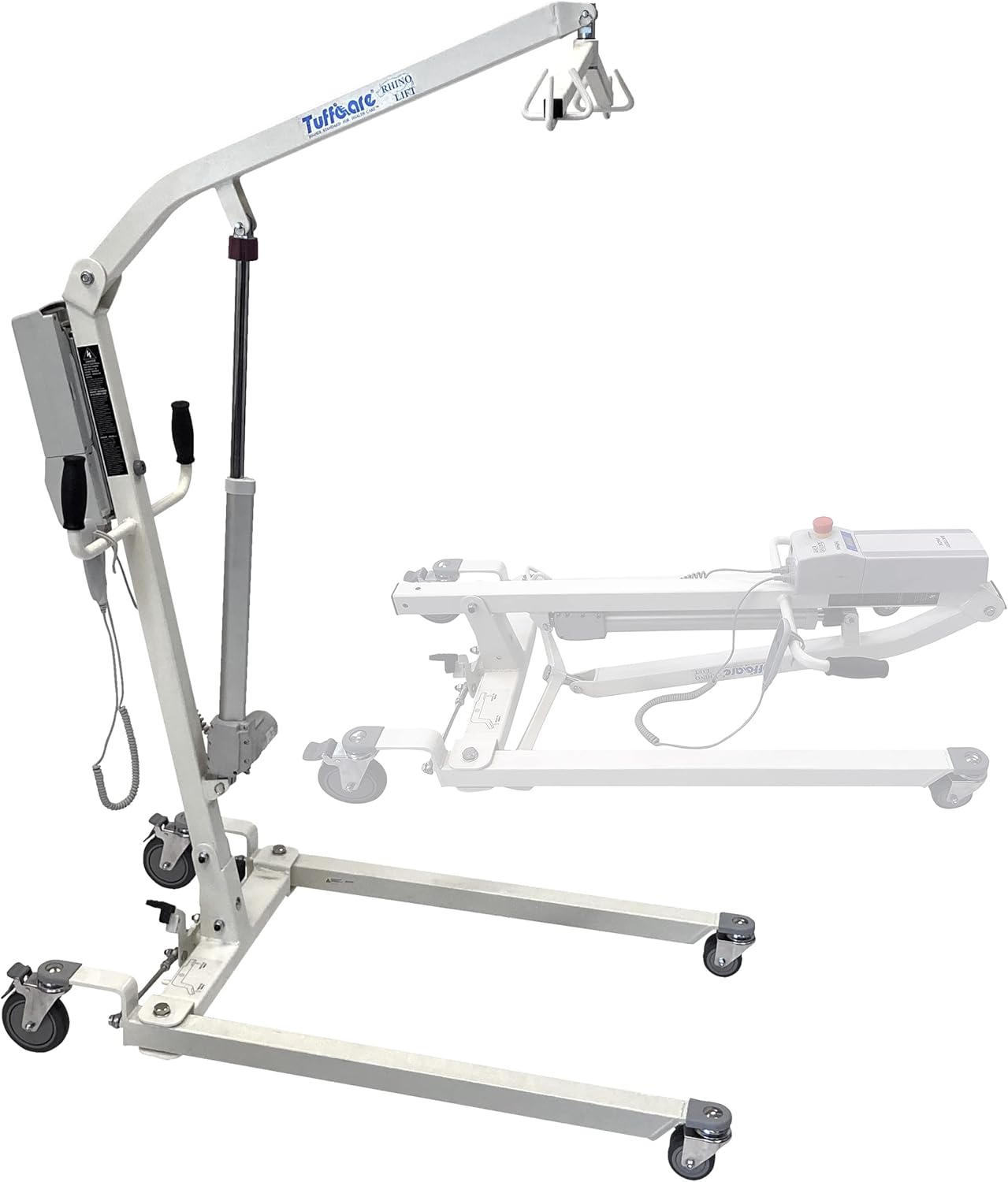
Image Description: A full view of the Tuffcare Rhino Lift in its upright, ready-to-use position. This image provides a general overview of the product's appearance.
Setup and Assembly
Follow these steps to assemble your Tuffcare Rhino Lift. Ensure all parts are present and undamaged before beginning assembly.
- Unpack all components from the packaging.
- Attach the mast to the base. Ensure it is securely fastened.
- Connect the lift arm to the mast.
- Install the detachable 24-volt 9 amp battery pack.
- Connect the wired ergonomic hand pendant.
- Perform a functional check of all controls before first use.
Video Description: This video demonstrates the assembly process for the Tuffcare Rhino Floor Lift, showing how to connect the main components and prepare the lift for use. It includes steps for positioning the hi-low actuator and securing the mast.
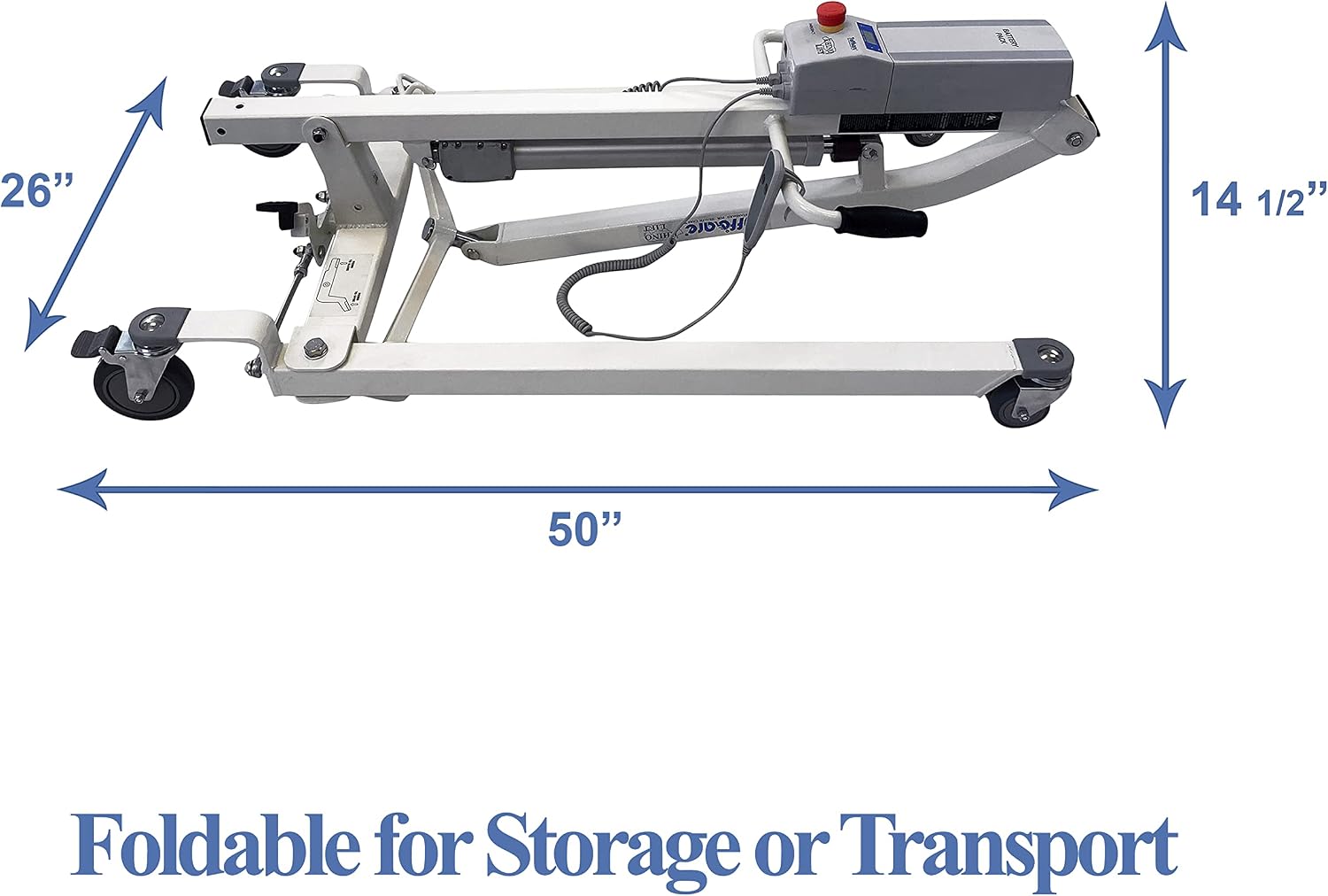
Image Description: The Tuffcare Rhino Lift shown in a folded configuration, illustrating its compact dimensions for storage or transport. Dimensions are indicated as 50 inches long, 26 inches wide, and 14.5 inches high when folded.
Operating Instructions
The Tuffcare Rhino Lift is operated using the wired ergonomic hand pendant and foot pedals for base adjustment.
Basic Functions
- Lifting/Lowering: Use the buttons on the hand pendant to raise or lower the lift arm.
- Base Adjustment: Utilize the foot pedal to widen or narrow the base of the lift, allowing for easier maneuverability around wheelchairs or other furniture.
- Emergency Stop: In case of an emergency, press the red emergency stop button located on the control panel to immediately cut power to the lift.
- Manual Lowering: An emergency lowering knob is available for manual operation if electronic controls fail.
Video Description: This video demonstrates the basic operational functions of the Tuffcare Rhino Floor Lift, including raising and lowering the lift arm and adjusting the base width. It provides a visual guide to the primary controls.
Patient Transfer Procedures
Always ensure the patient is comfortable and secure in the sling before initiating any transfer.

Image Description: A caregiver is shown assisting a patient in transferring from a bed to a commode using the Tuffcare Rhino Lift. The patient is securely seated in a sling, demonstrating a typical transfer scenario.

Image Description: A caregiver is shown assisting a patient in transferring from a bed using the Tuffcare Rhino Lift. The patient is in a sling, being gently lifted from the bed surface.
Using a Divided Leg Sling
Video Description: This video demonstrates the correct procedure for operating the Tuffcare Patient Lift with a divided leg sling, showing how to position the sling and safely lift a patient.
Using a Full Body Sling for Surface to Surface Transfers
Video Description: This video illustrates how to operate the Tuffcare Patient Lift with a full body sling for transfers between different surfaces, such as a bed and a wheelchair. It emphasizes proper sling placement and safe transfer techniques.
Using a Hip Lift Sling
Video Description: This video demonstrates the operation of the Tuffcare Patient Lift using a hip lift sling, detailing how to correctly position and use this specific type of sling for patient transfers.
Using a Divided Leg Headrest Sling
Video Description: This video provides instructions on using the Tuffcare Patient Lift with a divided leg headrest sling, focusing on proper application and safe lifting techniques for patients requiring head support.
Sling Size Reference Guide
Selecting the correct sling size is crucial for patient safety and comfort. Refer to the guide below to choose the appropriate sling based on patient weight and measurements.
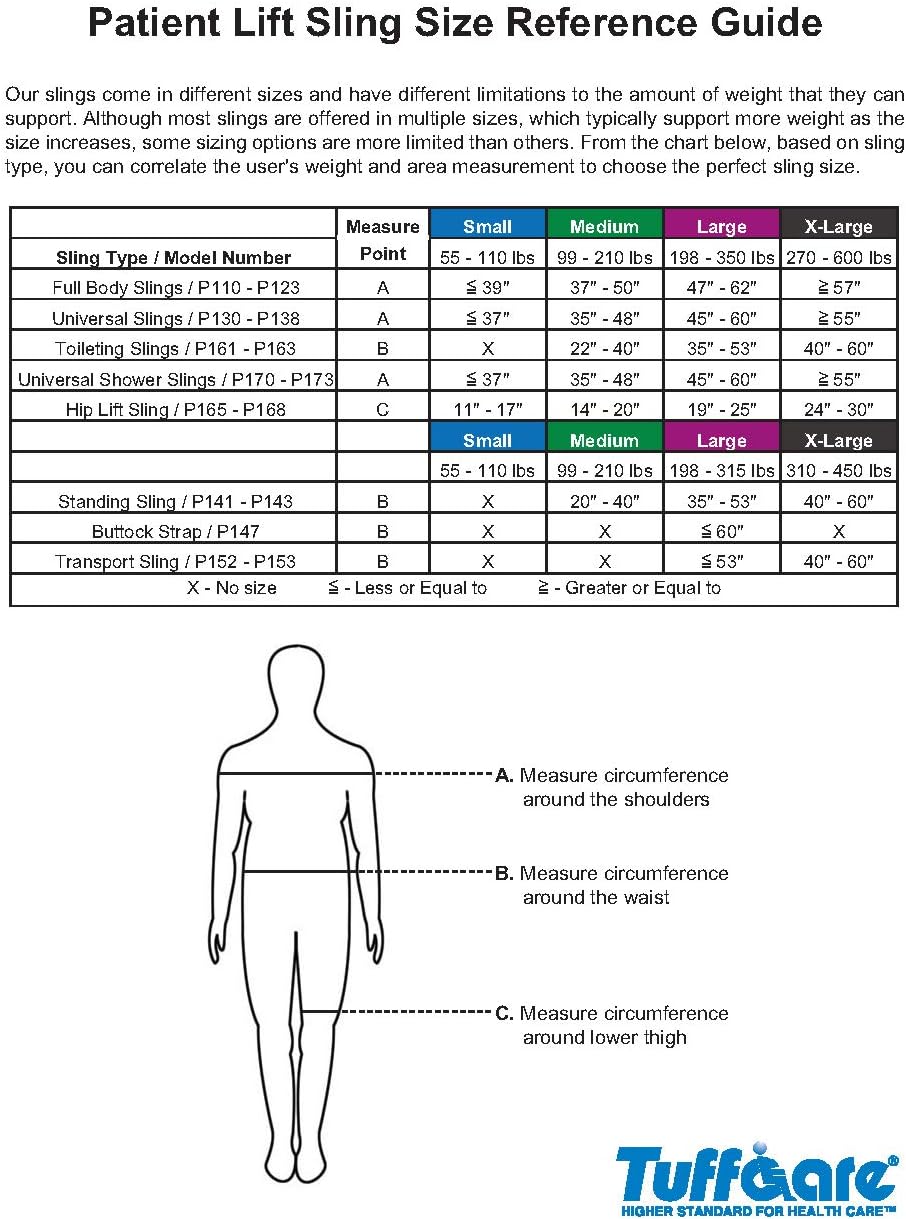
Image Description: A detailed reference guide for patient lift slings, including a table with sling types, model numbers, weight capacities (Small: 55-110 lbs, Medium: 99-210 lbs, Large: 198-350 lbs, X-Large: 270-600 lbs), and corresponding body measurements (shoulders, waist, lower thigh). A diagram illustrates where to take these measurements on a human figure.
Maintenance and Care
Regular maintenance ensures the longevity and safe operation of your Tuffcare Rhino Lift.
- Battery Care: The lift uses a detachable 24-volt 9 amp battery pack. Ensure the battery is charged regularly. Avoid complete discharge to prolong battery life.
- Cleaning: Clean the lift frame with a damp cloth and mild disinfectant. Do not use abrasive cleaners.
- Inspection: Periodically inspect all moving parts, fasteners, and electrical connections for wear or damage. Replace any worn or damaged parts immediately.
- Lubrication: Moving joints may require occasional lubrication. Consult a qualified technician for specific lubrication requirements.

Image Description: A close-up view of the detachable battery pack for the Tuffcare Rhino Lift, highlighting its design for easy removal and charging.

Image Description: A close-up image of the emergency lowering knob on the Tuffcare Rhino Lift, indicating its location and importance for manual operation in case of power failure.
Troubleshooting
If you encounter issues with your Tuffcare Rhino Lift, refer to the following common problems and solutions:
- Lift Not Responding:
- Check if the emergency stop button is engaged. Rotate or pull to disengage.
- Ensure the battery pack is properly installed and charged.
- Verify all electrical connections are secure.
- Lift Arm Movement is Slow or Weak:
- The battery may be low. Recharge the battery pack.
- Ensure the patient's weight does not exceed the lift's capacity.
- Base Not Adjusting:
- Check for obstructions around the base.
- Ensure the foot pedal mechanism is not jammed.
For issues not listed here or if problems persist, contact Tuffcare customer support.
Specifications
| Feature | Detail |
|---|---|
| Product Dimensions | 46.5 x 26 x 53.5 inches (unfolded) |
| Weight | 113 pounds |
| Weight Capacity | 450 lbs |
| Batteries | 2 x 12V (included), detachable 24-volt 9 amp pack |
| Manufacturer | Tuffcare |
| ASIN | B08BKHRVCQ |

Image Description: The Tuffcare Rhino Lift displayed with its full operational dimensions, including height (up to 77 inches), base width (26.5 to 38 inches), and overall length (50 inches). This image provides a clear visual of the lift's size and range of motion.
Warranty and Support
Your Tuffcare Rhino Lift includes a one-year electronic component coverage and extended frame support. For warranty claims, technical assistance, or customer support, please contact Able Healthcare Concept, the seller of this product.
Seller: Able Healthcare Concept
For additional information, you may visit the Tuffcare Store on Amazon.
Related documentsRhino Lift


Ask a question about this manual
Ask about setup, troubleshooting, compatibility, parts, safety, or missing instructions. Manuals+ will review the question and use this page’s manual context to help answer it.