
FLINQ 8720168680396
FlinQ Mobile Air Conditioner User Manual
Model: 8720168680396
1. Important Safety Instructions
Please read all instructions carefully before using this appliance and retain them for future reference. Failure to follow these instructions may result in electric shock, fire, or serious personal injury.
- Always connect the unit to a grounded power outlet.
- Do not operate the unit with a damaged cord or plug.
- Keep the unit away from flammable materials and open flames.
- Ensure proper ventilation around the unit during operation.
- Do not insert objects into the air inlet or outlet.
- Unplug the unit before cleaning or performing any maintenance.
- This appliance is not intended for use by persons (including children) with reduced physical, sensory or mental capabilities, or lack of experience and knowledge, unless they have been given supervision or instruction concerning use of the appliance by a person responsible for their safety.
2. Product Overview
The FlinQ Mobile Air Conditioner is a versatile unit designed to provide cooling, dehumidification, and fan functions for your living space. It is equipped with an energy-efficient design and comes with a window kit for easy installation.

Figure 2.1: Front view of the FlinQ Mobile Air Conditioner, showing the main air outlet and control panel area.

Figure 2.2: The mobile air conditioner unit, displaying its energy efficiency label (Class A) and the included remote control for convenient operation.
3. Components and Parts
Familiarize yourself with the main components of your mobile air conditioner:
- Main Unit (with control panel)
- Exhaust Hose
- Window Sealing Kit (adjustable window slider/plate)
- Remote Control
- Drain Hose (for continuous drainage in dehumidification mode)
- Air Filters (located on the back/side)
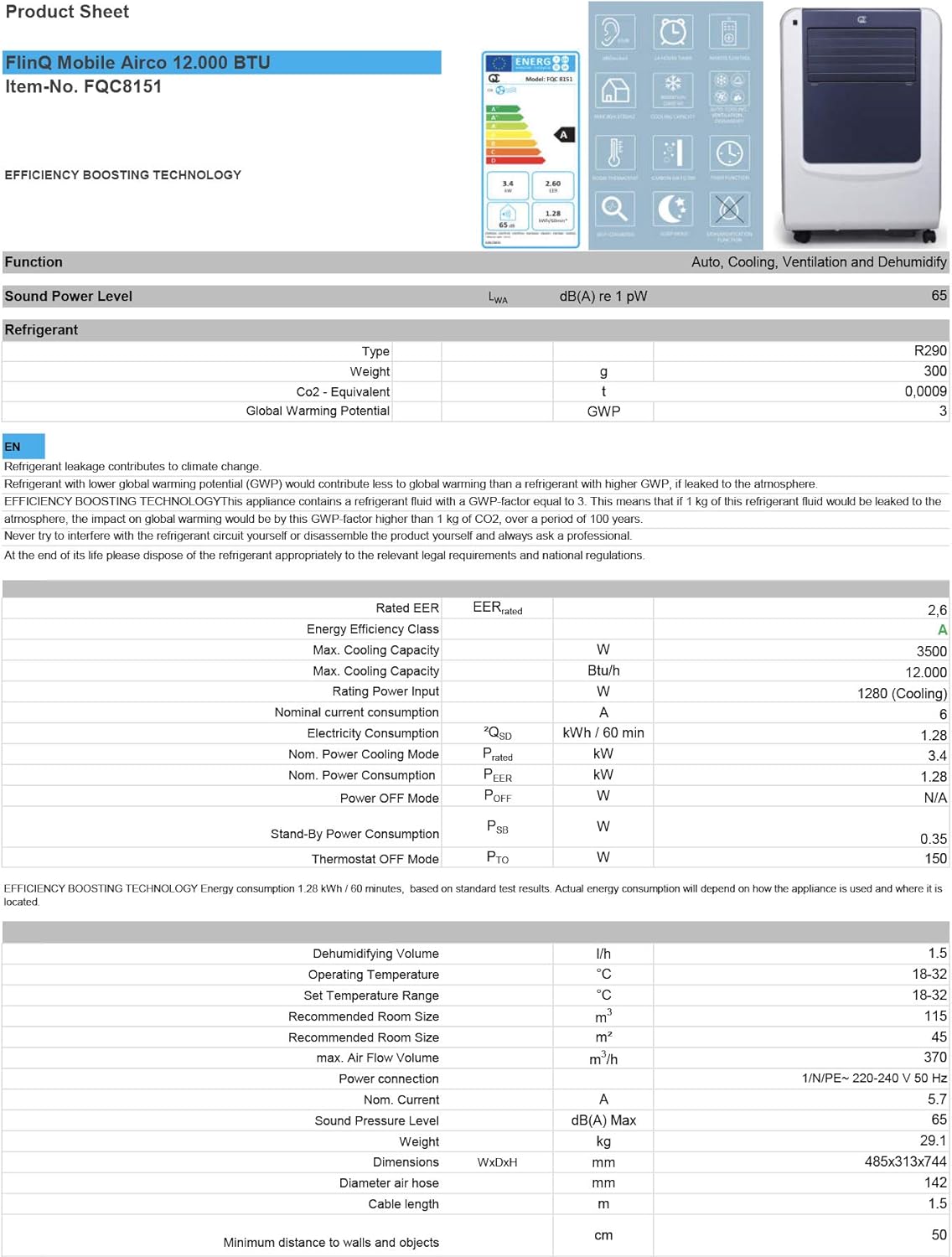
Figure 3.1: The remote control and a visual representation of the unit's key features, including noise level (65dB), 24-hour timer, cooling capacity (12000 BTU/h), room thermostat, carbon air filter, self-diagnosis, sleep mode, remote control function, timer function, auto cooling/fan/dehumidification, and dehumidification function.
4. Setup and Installation
4.1 Unpacking
Carefully remove the air conditioner and all accessories from the packaging. Inspect for any damage during transit. Keep the original packaging for future storage or transport.
4.2 Placement
Place the unit on a flat, stable surface. Ensure there is at least 30 cm (12 inches) of clear space around the unit for proper airflow. Do not place it near heat sources or in direct sunlight.
4.3 Window Kit Installation
To ensure efficient cooling, the hot air extracted by the unit must be vented outside. Use the provided window sealing kit for this purpose.
- Attach the exhaust hose connector to the air outlet on the back of the unit.
- Extend the exhaust hose and attach the window adapter to the other end.
- Adjust the window slider/plate to fit your window opening.
- Insert the window adapter into the opening of the window slider/plate.
- Close the window as much as possible to seal the opening around the kit, minimizing air leakage.

Figure 4.1: Side view of the mobile air conditioner, illustrating the connection point for the exhaust hose, which expels hot air from the room.
5. Operating Instructions
5.1 Control Panel
The control panel is located on the top of the unit and features various buttons and an LED display for setting modes, temperature, and timer functions.
5.2 Remote Control
The remote control allows you to operate all functions of the air conditioner from a distance. Ensure the remote control batteries are inserted correctly.
5.3 Operating Modes
Press the 'Mode' button to cycle through the available operating modes:
- Cooling Mode: For cooling the room. Set your desired temperature using the temperature adjustment buttons.
- Dehumidification Mode: Removes excess moisture from the air. The fan speed is typically fixed in this mode. Consider connecting a drain hose for continuous drainage.
- Fan Mode: Circulates air without cooling. You can adjust the fan speed (Low, Medium, High).

Figure 5.1: Close-up view of the adjustable louvers on the air conditioner's front panel, which direct the airflow.
6. Maintenance
Regular maintenance ensures optimal performance and extends the lifespan of your air conditioner.
6.1 Cleaning Air Filters
The air filters should be cleaned every two weeks or more frequently depending on usage and air quality. Dirty filters reduce efficiency and can damage the unit.
- Unplug the air conditioner from the power outlet.
- Locate and remove the air filters (usually on the back or side of the unit).
- Wash the filters under running water (warm, not hot) or use a vacuum cleaner to remove dust.
- Allow the filters to air dry completely before reinserting them. Do not expose them to direct sunlight.

Figure 6.1: Illustration of how to remove the air filter from the mobile air conditioner for cleaning, highlighting the accessible filter panel.
6.2 Draining Water
The unit collects condensed water during cooling and dehumidification. The internal tank will fill up, and the unit may stop operating when full. Drain the water regularly.
- Place a shallow pan or tray under the drain port (usually at the bottom rear of the unit).
- Remove the drain plug to allow water to flow out.
- For continuous drainage in dehumidification mode, attach the provided drain hose to the drain port.
6.3 Storage
When storing the unit for an extended period:
- Drain all water from the unit.
- Clean the air filters.
- Unplug the power cord and coil it neatly.
- Store the unit in a dry, cool place, preferably in its original packaging.
7. Troubleshooting
Before contacting customer support, please refer to the following table for common issues and their solutions:
| Problem | Possible Cause | Solution |
|---|---|---|
| Unit does not turn on | No power; Power cord not plugged in; Full water tank | Check power outlet; Plug in power cord; Drain water tank |
| Unit cools insufficiently | Dirty air filters; Exhaust hose blocked/leaking; Room too large; Doors/windows open | Clean filters; Check hose for blockages/proper sealing; Ensure room size is within capacity; Close doors/windows |
| Unit is noisy | Unit not on a flat surface; Air filters dirty | Place on flat surface; Clean air filters |
| Water leaking from unit | Drain plug not properly sealed; Unit tilted | Ensure drain plug is secure; Place unit on a level surface |
8. Specifications
Technical details for the FlinQ Mobile Air Conditioner:
| Feature | Value |
|---|---|
| Model Number | 8720168680396 |
| Product Dimensions | 74 x 48 x 31 cm |
| Item Weight | 29 g (Note: This weight seems unusually low for an AC unit, please refer to product packaging for accurate weight) |
| Noise Level | 65 dB |
| Cooling Capacity | 12000 BTU/h |
| Recommended Room Size | Up to 45 m² |
| Special Features | Remote Control |
| Energy Class | A |

Figure 8.1: Official product sheet detailing technical specifications, energy consumption, cooling capacity, and dimensions of the FlinQ Mobile Air Conditioner.
9. Warranty and Support
This FlinQ Mobile Air Conditioner comes with a limited warranty. Please refer to the warranty card included with your purchase for specific terms and conditions.
For technical support, service, or warranty claims, please contact your retailer or the manufacturer directly. Keep your proof of purchase for warranty validation.
Contact Information:
- Brand: FLINQ
- Website: www.flinq.nl (Example, please refer to actual product documentation for correct website)
- Email: support@flinq.nl (Example, please refer to actual product documentation for correct email)
Ask a question about this manual
Ask about setup, troubleshooting, compatibility, parts, safety, or missing instructions. Manuals+ will review the question and use this page’s manual context to help answer it.