
AlphaWorks 7HP 196cc
AlphaWorks Water Transfer Pump User Manual
Model: 7HP 196cc Portable Water Transfer Pump
Brand: AlphaWorks
1. Introduction
This manual provides essential information for the safe and efficient operation, maintenance, and troubleshooting of your AlphaWorks 7HP 196cc Portable Water Transfer Pump. Please read this manual thoroughly before operating the pump to ensure proper use and to prevent injury or damage.

Figure 1: AlphaWorks 7HP 196cc Portable Water Transfer Pump. This image shows the complete pump unit, featuring a black steel frame, an orange fuel tank, and a blue engine housing, with various hose connectors and a filter in the foreground.
2. Safety Information
Your safety and the safety of others are very important. Always operate the machine according to the directions in this user manual. Failure to follow these instructions may result in serious injury or property damage.
- Read the Manual: Always read and understand the entire user manual before operating the pump.
- Personal Protective Equipment (PPE): Always wear appropriate ANSI standard hand and eye protection during operation.
- Engine Oil: The engine is shipped without oil. ENGINE OIL IS NOT INCLUDED AND MUST BE ADDED UPON UN-BOXING. Operating the pump without sufficient engine oil will cause severe damage and void the warranty.
- Fuel Type: Use Unleaded 87+ octane Gasoline (10% or less ETHANOL recommended). Do not overfill the fuel tank.
- Ventilation: Operate the pump in a well-ventilated area to prevent carbon monoxide poisoning. Never operate indoors.
- Hot Surfaces: The engine and exhaust components become very hot during operation and remain hot for some time after shutdown. Avoid contact to prevent burns.
- Electrical Safety: Do not operate the pump in wet conditions or near standing water unless specifically designed for such use and proper precautions are taken.
- Stability: Ensure the pump is on a stable, level surface during operation to prevent tipping.
3. Product Features and Components
The AlphaWorks Water Transfer Pump is designed for efficient and reliable water transfer, featuring a robust engine and durable construction.
- Engine: Powered by a 7HP 196cc 4-Stroke Gas Engine, EPA Certified, providing ample power for demanding conditions.
- Fuel Capacity: 1 Gallon gasoline tank, allowing for approximately 1.7 hours of run time.
- Oil Capacity: 0.16 Gallon machined oil tank.
- Flow Rate: Maximum flow rate of 132 Gallons Per Minute (GPM).
- Suction & Lift: Capable of a 23-foot suction head and a 92-foot lift.
- Inlet/Outlet Diameter: 2-inch diameter for both water inlet and outlet.
- Solids Handling: Can pass solids up to 1/2 inch in diameter.
- Frame: Full Frame Protector on a Heavy Duty Durable Frame, powder-coated and scratch-resistant, designed to withstand harsh environments.
- Pump Integrity: Features a cast iron impeller and volute for best performance and extended life.
- Fittings: Includes clear water fittings constructed of chemical-resistant materials.

Figure 2: OHV Gas Engine. This image highlights the 4-stroke OHV gas engine, emphasizing its power rating, durability, run time, and fuel capacity.

Figure 3: High-Speed Suctioning. This image illustrates the pump's suction capabilities, detailing the 132 GPM flow rate, 23-foot suction head, 92-foot suction lift, and 2-inch inlet diameter.

Figure 4: Discharge Port. This image focuses on the pump's discharge port, showing water being expelled and noting its 2-inch diameter and ability to pass solids up to 1/2 inch.

Figure 5: Steel Frame Cage. This image displays the robust, powder-coated steel frame that protects the pump, highlighting its durability and scratch-resistant finish.
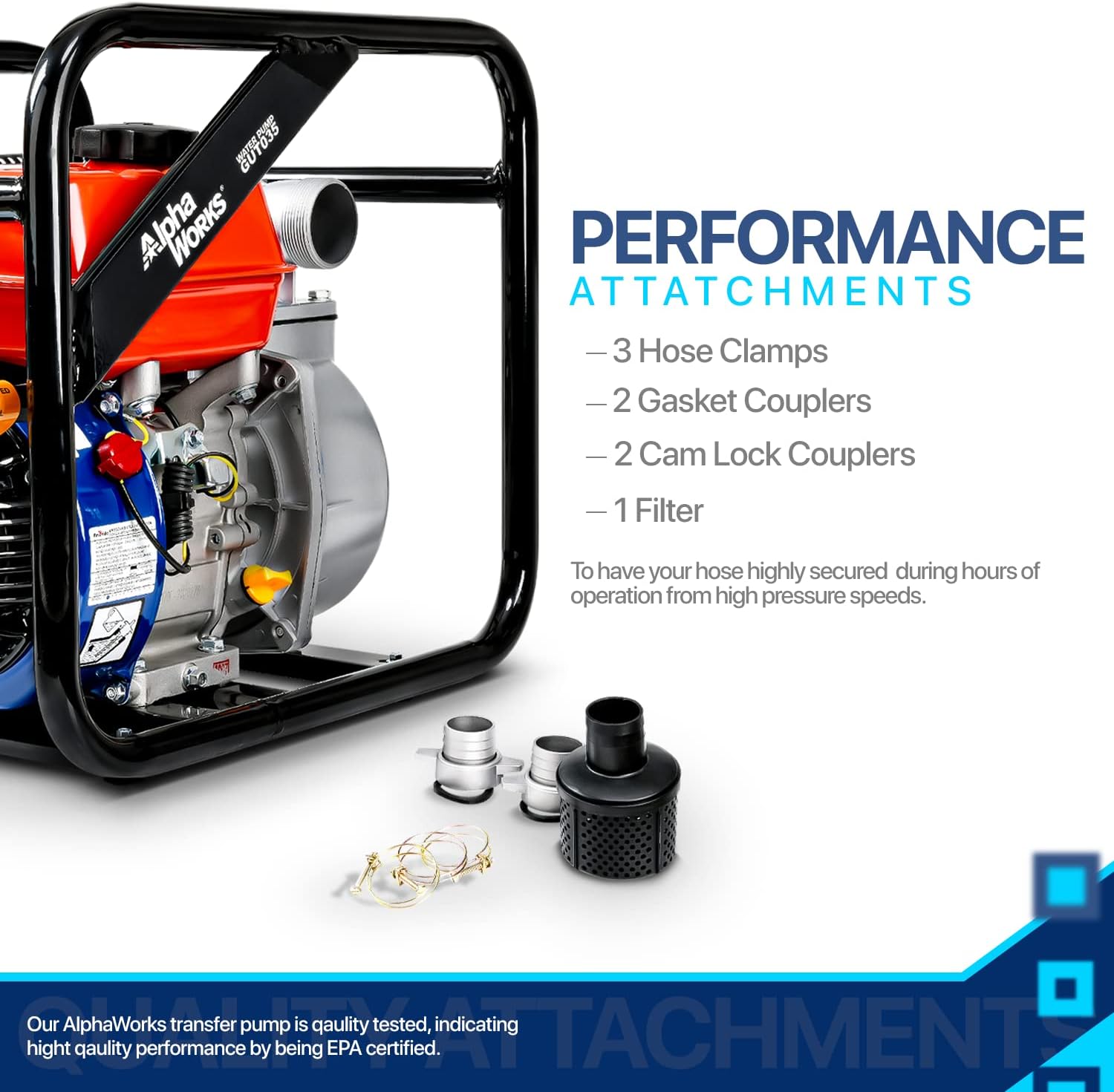
Figure 6: Performance Attachments. This image shows the accessories included with the pump: 3 hose clamps, 2 gasket couplers, 2 cam lock couplers, and 1 filter, designed to secure hoses for high-pressure operation.
4. Setup
4.1 Unpacking and Inspection
Carefully remove the pump and all accessories from the packaging. Inspect all components for any signs of damage during shipping. If any damage is found, do not operate the pump and contact customer support.
4.2 Adding Engine Oil
The engine is shipped without oil. Before first use, you MUST add engine oil to the crankcase. Refer to the engine's specific oil capacity (0.16 Gallons) and recommended oil type (typically SAE 10W-30 for general use, consult engine manual for specifics). Locate the oil fill cap/dipstick, remove it, and slowly pour the correct amount of oil. Check the oil level using the dipstick to ensure it is within the recommended range. Do not overfill.
4.3 Fueling the Pump
Ensure the engine is off and cool before adding fuel. Use Unleaded 87+ octane Gasoline (10% or less ETHANOL recommended). The maximum fuel capacity is 1 gallon. Fill the fuel tank carefully, avoiding spills. Do not fill to the very top; leave some space for expansion.
4.4 Connecting Hoses
Connect a 2-inch diameter intake hose to the pump's inlet port and a 2-inch diameter discharge hose to the outlet port. Secure all connections with the provided hose clamps and couplers to prevent leaks and ensure optimal performance. Ensure the intake hose is sturdy enough to prevent collapse under suction (hoses are sold separately).
5. Operating Instructions
5.1 Priming the Pump
Before starting, the pump must be primed. Remove the priming cap (usually located on top of the pump housing) and fill the pump casing completely with water until it overflows. Replace the priming cap securely. For best results, especially with longer intake hoses, ensure the intake hose itself is also filled with water by submerging it in the water source before starting the pump. This helps establish suction quickly.
5.2 Starting the Engine
- Ensure the pump is on a stable, level surface.
- Open the fuel valve (if applicable).
- Set the choke lever to the "CHOKE" position (for cold starts).
- Set the engine switch to the "ON" position.
- Pull the recoil starter handle firmly and smoothly until the engine starts.
- Once the engine starts, gradually move the choke lever to the "RUN" position.
5.3 Operation
Once running, the pump will begin to transfer water. Monitor the flow and ensure there are no leaks. The pump is designed to move large volumes of water efficiently, with a maximum flow rate of 132 GPM. It can handle water with solids up to 1/2 inch in diameter, making it suitable for various applications such as emptying swimming pools, draining ponds, managing floodwaters, and rural irrigation.

Figure 7: Array of Applications. This image illustrates various uses for the AlphaWorks water transfer pump, including emptying swimming pools, draining lakes and ponds, managing floods, and rural irrigation.
5.4 Shutting Down
- Reduce engine speed to idle.
- Turn the engine switch to the "OFF" position.
- Close the fuel valve (if applicable).
- Allow the engine to cool before storing or performing maintenance.
6. Maintenance
Regular maintenance is crucial for the longevity and optimal performance of your water transfer pump. Always ensure the engine is off and cool before performing any maintenance.
- Engine Oil: Check engine oil level before each use and change according to the engine manual's recommendations (typically after the first 20 hours, then every 50-100 hours).
- Air Filter: Inspect and clean the air filter regularly, especially in dusty conditions. Replace if damaged.
- Spark Plug: Inspect the spark plug periodically and clean or replace as needed.
- Fuel System: Drain the fuel tank and carburetor if storing the pump for an extended period to prevent fuel degradation.
- Pump Housing: Flush the pump housing with clean water after each use, especially if pumping dirty or corrosive liquids, to prevent buildup and corrosion.
- Hoses and Connections: Inspect hoses, clamps, and couplers for wear, cracks, or damage before each use. Replace any worn components.
- General Cleaning: Keep the pump clean and free of debris.
7. Troubleshooting
This section provides solutions to common operational issues. For problems not listed here, contact qualified service personnel.
| Problem | Possible Cause | Solution |
|---|---|---|
| Engine will not start |
|
|
| Pump not priming or poor flow |
|
|
| Engine runs, but pump does not move water |
|
|
8. Specifications
| Specification | Value |
|---|---|
| Engine Type | 7HP 196cc 4-Stroke Gas Engine |
| Fuel Tank Capacity | 1 Gallon (approx. 3.78 Liters) |
| Oil Tank Capacity | 0.16 Gallons (approx. 0.6 Liters) |
| Water Inlet/Outlet Diameter | 2 inches |
| Maximum Flow Rate | 132 Gallons Per Minute (GPM) |
| Maximum Suction Lift | 23 Feet |
| Maximum Lift (Head) | 92 Feet |
| Passable Solids Diameter | 1/2 inch |
| Product Dimensions | 50.8 x 40.64 x 40.64 cm |
| Item Weight | 24.95 kg (approx. 55 lbs) |
| Material | Cast Iron (impeller & volute), Steel (frame) |
| Certifications | EPA Certified |
9. Warranty and Support
For detailed warranty information, please refer to the warranty card included with your product or visit the official AlphaWorks website. Keep your purchase receipt as proof of purchase for any warranty claims.
If you require technical assistance, replacement parts, or have questions regarding your AlphaWorks Water Transfer Pump, please contact AlphaWorks customer support. Contact information can typically be found on the product packaging or the brand's official website.
Ask a question about this manual
Ask about setup, troubleshooting, compatibility, parts, safety, or missing instructions. Manuals+ will review the question and use this page’s manual context to help answer it.