
1. Introduction
The Learning Resources Tacklingtables Student Game is an educational card game designed to help students master multiplication and division facts. This set provides a fun, interactive way to learn times tables and their corresponding division facts, suitable for both home and classroom environments. The method is teacher-developed and widely used in schools to support early maths skills development.

Figure 1: The Tacklingtables Student Game set, including the times tables chart and card decks.
2. What's Included
Your Tacklingtables Student Game set includes the following components:
- 1 x Times Tables Chart
- 78 x Graded Playing Cards (color-coded)
- 1 x Instruction Guide

Figure 2: The exterior packaging of the Tacklingtables Student Game.
3. Setup
To begin playing the Tacklingtables Student Game, follow these simple steps:
- Unpack the Contents: Carefully remove all components from the packaging.
- Review the Chart: Familiarize yourself with the color-coded times tables chart. This chart serves as a reference and helps categorize the playing cards.
- Organize the Cards: The 78 graded cards are color-coded. You may choose to keep them separated by color for targeted practice or mix them for a broader challenge.
- Prepare a Playing Area: Ensure a clear, flat surface for playing the game.
4. How to Play
The Tacklingtables Student Game is designed for 2 or more players, including a facilitator (parent or teacher). The core mechanic involves covering a number on a card and asking the player to identify the missing value.
4.1 Game Objective
The objective is to correctly identify the missing number on the card within a short timeframe, reinforcing instant recall of multiplication and division facts.
4.2 Basic Gameplay
- Select Cards: Choose a stack of cards to work with. You can use cards of a specific color (e.g., blue for easier tables like 1, 2, 5, 10; green for 3, 4, 8; red for 6, 7, 9, 11, 12) or mix them.
- Present a Card: The facilitator takes a card. Each card displays two factors (smaller numbers at the top and bottom) and their product (larger number in the center). For example, a card might show '6' at the top, '18' in the middle, and '3' at the bottom.
- Cover a Number:
- For Multiplication Practice: Cover the large number in the middle (the product). Ask the player, "What is [top factor] multiplied by [bottom factor]?" (e.g., "What is 6 multiplied by 3?").
- For Division Practice: Cover one of the smaller numbers (factors). Ask the player, "What is [product] divided by [visible factor]?" (e.g., "What is 18 divided by 3?").
- Player Response: The player attempts to state the correct answer within approximately 3 seconds.
- Feedback and Scoring:
- If the answer is correct, the player keeps the card.
- If the answer is incorrect or the player hesitates, reveal the correct answer. The card is then returned to the bottom of the stack for future practice.
- Continue Playing: Proceed through the stack of cards, rotating turns if multiple players are involved.

Figure 3: Demonstrating how to cover the product for multiplication practice.
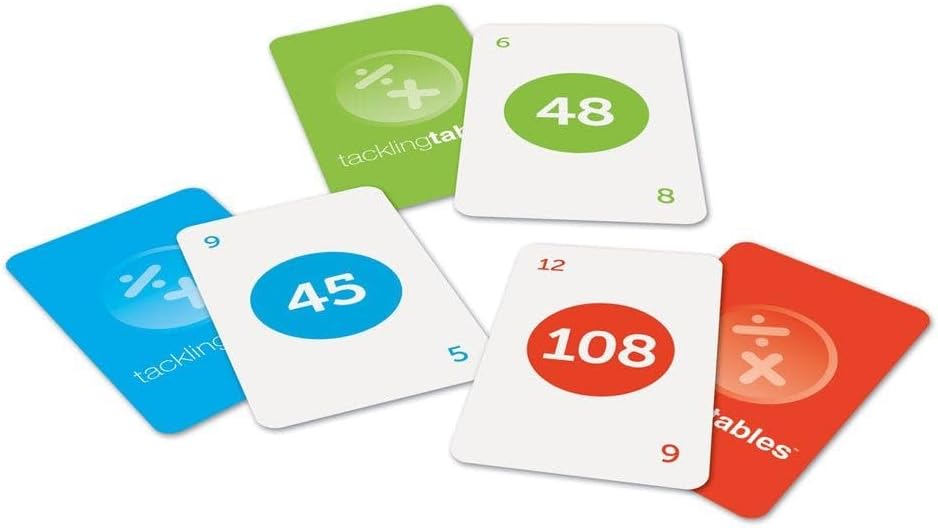
Figure 4: Example of various Tacklingtables cards with different facts.
4.3 Tips for Effective Learning
- Focus on Specific Tables: Use the color-coding to target specific times tables that require more practice.
- Practice Commutative Property: Emphasize that 6x3 and 3x6 yield the same result, helping children understand the commutative property of multiplication.
- Connect Multiplication and Division: The cards inherently link these two operations, showing how they are inverse functions.
- Short, Frequent Sessions: Regular, short practice sessions are often more effective than long, infrequent ones.
- Encourage Self-Correction: If a child struggles, gently guide them to the correct answer using the chart or by revealing the number, then re-introduce the card later.
5. Maintenance
To ensure the longevity of your Tacklingtables Student Game, please follow these maintenance guidelines:
- Storage: Store the cards and chart in their original box or a suitable container to prevent loss or damage. Keep them in a cool, dry place away from direct sunlight.
- Cleaning: If the cards become dirty, gently wipe them with a dry or slightly damp cloth. Avoid using harsh chemicals or abrasive materials.
- Handling: Handle the cards with care to prevent bending, tearing, or creasing.
6. Troubleshooting Learning Challenges
If a student is struggling with certain facts or concepts, consider the following approaches:
- Revisit Easier Tables: Ensure a strong foundation in simpler tables (e.g., 1, 2, 5, 10) before moving to more complex ones.
- Break Down Learning: Focus on a small set of facts at a time rather than overwhelming the student with too many new concepts.
- Use the Chart: Encourage the student to use the times tables chart as a reference until they gain confidence.
- Vary Practice Methods: Combine card practice with other learning methods, such as writing out facts or using manipulatives.
- Positive Reinforcement: Celebrate small successes and maintain a positive, encouraging learning environment.

Figure 5: Tacklingtables cards in a learning setting.
7. Specifications
| Feature | Detail |
|---|---|
| Model Number | LSP1212-UK |
| Brand | Learning Resources |
| Educational Objective | Math Skills, Language Skills |
| Age Range Description | Kid (Manufacturer Minimum Age: 72 months / 6 years) |
| Number of Pieces | 78 (cards) |
| Material Type | Plastic |
| Item Weight | 0.18 Grams |
| Item Dimensions (L x W x H) | 7.76 x 5.91 x 0.79 inches (19.7 x 15 x 2 centimeters) |
8. Support and Warranty
For product support, questions, or to explore other educational resources, please visit the official Learning Resources website or contact their customer service.
Official Brand Store: Learning Resources Store on Amazon
Specific warranty information for this product may be available on the manufacturer's website or included with your purchase documentation. Please retain your proof of purchase for any warranty claims.
