
World Power Systems MCR18219B2
World Power Systems Starter Compatible with Hitachi S114-815 Series - Instruction Manual
Model: MCR18219B2
1. Introduction
This instruction manual provides essential information for the proper installation, operation, and maintenance of your World Power Systems replacement starter, model MCR18219B2. This unit is designed as a direct replacement for various Hitachi and Yanmar starter models. Please read this manual thoroughly before proceeding with installation or use to ensure safety and optimal performance.
2. Product Overview
The World Power Systems starter is a 12-volt, 1.4kW (1.88HP) unit with CW rotation and an 11-tooth PMGR starter type. It is engineered to meet or exceed OEM specifications for reliable engine starting.
2.1 Compatibility
This starter is compatible with the following OEM part numbers and applications:
- Replaces Hitachi: HST114815A, S114-815, S114-815A, S114-817, S114-817A, S114-883, STR0051
- Replaces Isuzu: 5-86400220-0, 5864002500
- Replaces Yanmar: 129242-77010, 129608-77010, 129698-77010
- Replaces Wilson: 71-25-18210, 91-25-1134
- Replaces CASE: VV12924277010
- Replaces DELCO: 19085002
- Replaces PRESTOLITE: 20513073
2.2 Applicable Engines
This starter is used on various Yanmar Marine Engines, including:
- Yanmar Marine 3JH3 (1999-2003, 3-cylinder Diesel)
- Yanmar Marine 3JH3E (All, 3-cylinder Diesel)
- Yanmar Marine 3JH3E-YEU (All, 3-cylinder Diesel)
- Yanmar Marine 4JH3E (1994-1999, 4-cylinder Diesel)

Figure 1: Front view of the World Power Systems replacement starter, showing the main body and solenoid assembly.
3. Safety Information
WARNING: Automotive electrical work can be hazardous. Always follow proper safety procedures to prevent injury or damage.
- Always disconnect the vehicle's battery (negative terminal first) before performing any electrical work.
- Wear appropriate personal protective equipment, including safety glasses and gloves.
- Ensure the vehicle is securely supported on jack stands if working underneath.
- Avoid contact with hot engine components.
- Do not short-circuit electrical terminals.
- If you are unsure about any step, consult a qualified mechanic.
This product contains chemicals known to the State of California to cause cancer and birth defects or other reproductive harm (Proposition 65 warning).
4. Setup and Installation
The following steps outline a general procedure for replacing an automotive starter. Specific vehicle models may vary. Refer to your vehicle's service manual for detailed instructions.
- Prepare the Vehicle: Park the vehicle on a level surface and engage the parking brake. Allow the engine to cool completely.
- Disconnect Battery: Disconnect the negative (-) battery cable first, then the positive (+) cable. This prevents accidental short circuits.
- Locate the Starter: Identify the location of the existing starter motor. It is typically mounted on the engine block, near the flywheel or flexplate.
- Access the Starter: Depending on the vehicle, you may need to remove other components (e.g., exhaust pipes, intake manifold, heat shields) to gain access.
- Disconnect Wiring: Carefully disconnect all electrical connections from the old starter. This usually includes a large battery cable and a smaller solenoid wire. Note their positions for reinstallation.
- Remove Mounting Bolts: Remove the bolts securing the starter to the engine block or transmission housing. Support the starter as you remove the last bolt to prevent it from falling.
- Remove Old Starter: Carefully maneuver and remove the old starter from the vehicle.
- Inspect New Starter: Compare the new World Power Systems starter with the old unit to ensure they match in size, mounting points, and electrical connections.
- Install New Starter: Position the new starter in place and hand-tighten the mounting bolts. Ensure proper alignment before fully tightening the bolts to the manufacturer's torque specifications.
- Reconnect Wiring: Reconnect the electrical wires to the new starter. Ensure all connections are clean, tight, and correctly oriented. The large battery cable connects to the main terminal, and the smaller wire connects to the solenoid terminal.
- Reconnect Battery: Reconnect the positive (+) battery cable first, then the negative (-) battery cable.
- Final Check: Double-check all connections and ensure no tools or debris are left in the engine bay.
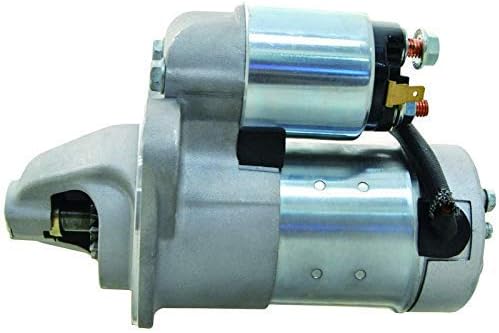
Figure 2: Side view of the starter, highlighting the mounting ears and drive gear housing.
5. Operating Instructions
Once the starter is correctly installed and all connections are secure, the engine can be started according to the vehicle manufacturer's instructions. The starter motor engages the engine's flywheel to initiate combustion.
- Turn the ignition key to the "START" position.
- Release the key once the engine starts. Do not hold the key in the "START" position for extended periods after the engine has fired, as this can damage the starter motor.
- If the engine does not start after a few seconds, release the key, wait for a moment, and attempt to start again. Avoid continuous cranking.
6. Maintenance
The World Power Systems starter is designed for durability and typically requires minimal maintenance. However, regular checks of related components can prolong its lifespan:
- Battery Health: Ensure your vehicle's battery is in good condition and fully charged. A weak battery can overwork the starter.
- Cable Connections: Periodically inspect battery cables and starter connections for corrosion or looseness. Clean and tighten as necessary.
- Engine Condition: A well-maintained engine that starts easily reduces the strain on the starter motor.
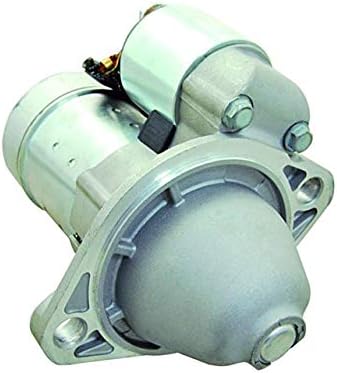
Figure 3: Rear view of the starter, showing the motor housing and mounting flange.
7. Troubleshooting
If you experience issues with your starter, consider the following common problems and potential solutions:
| Symptom | Possible Cause | Solution |
|---|---|---|
| Engine does not crank or cranks slowly | Weak or dead battery | Test and charge/replace battery. Check battery terminals for corrosion. |
| Loose or corroded battery/starter cables | Clean and tighten all cable connections. | |
| Faulty ignition switch or starter relay | Test ignition switch and starter relay. Replace if faulty. | |
| Starter clicks but engine does not crank | Low battery voltage (not enough to engage starter motor) | Test and charge/replace battery. |
| Faulty starter solenoid | The solenoid is integrated into this starter; if faulty, the starter may need replacement. | |
| Starter spins but engine does not engage | Faulty starter drive (bendix) | The starter drive is integrated; if faulty, the starter may need replacement. |
If troubleshooting steps do not resolve the issue, professional diagnosis and repair may be required.
8. Specifications
| Feature | Detail |
|---|---|
| Brand | World Power Systems |
| Model Number | MCR18219B2 |
| Voltage | 12 Volts |
| Power | 1.4 kW / 1.88 HP |
| Rotation | Clockwise (CW) |
| Starter Type | PMGR (Permanent Magnet Gear Reduction) |
| Number of Teeth | 11 |
| Gear OD | 1.339 inches (34 mm) |
| Mounting Ear 1 Hole | 13mm Unthreaded |
| Mounting Ear 2 Hole | 13mm Unthreaded |
| Material | Metal |
| Item Weight | 5.06 pounds |
| Package Dimensions | 7.87 x 4.65 x 4.37 inches |
| UPC | 791237395518 |
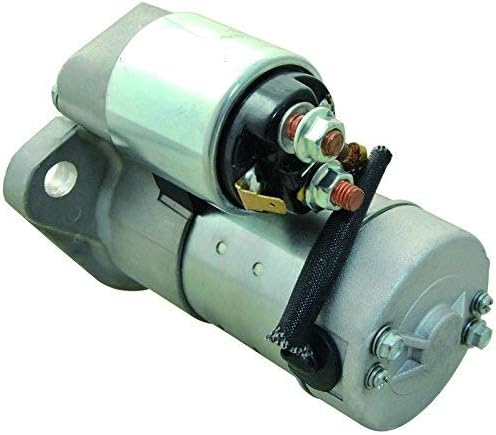
Figure 4: Angled view of the starter, showing the drive end and electrical connections.
9. Warranty and Support
This World Power Systems starter is a 100% brand new replacement, engineered and tested to exceed OEM specifications, ensuring quality and reliability.
For warranty claims or technical support, please contact the seller, BuyMCR, or World Power Systems directly. Retain your proof of purchase for warranty validation.
Ask a question about this manual
Ask about setup, troubleshooting, compatibility, parts, safety, or missing instructions. Manuals+ will review the question and use this page’s manual context to help answer it.