
CMYK WAV01
CMYK Wavelength Party Game Instruction Manual
Model: WAV01
1. Introduction
Wavelength is a social party game designed for two teams to compete in reading each other's minds. It involves a spectrum-based guessing mechanism where players attempt to align their thoughts on various concepts. This manual provides comprehensive instructions for setting up and playing the game.
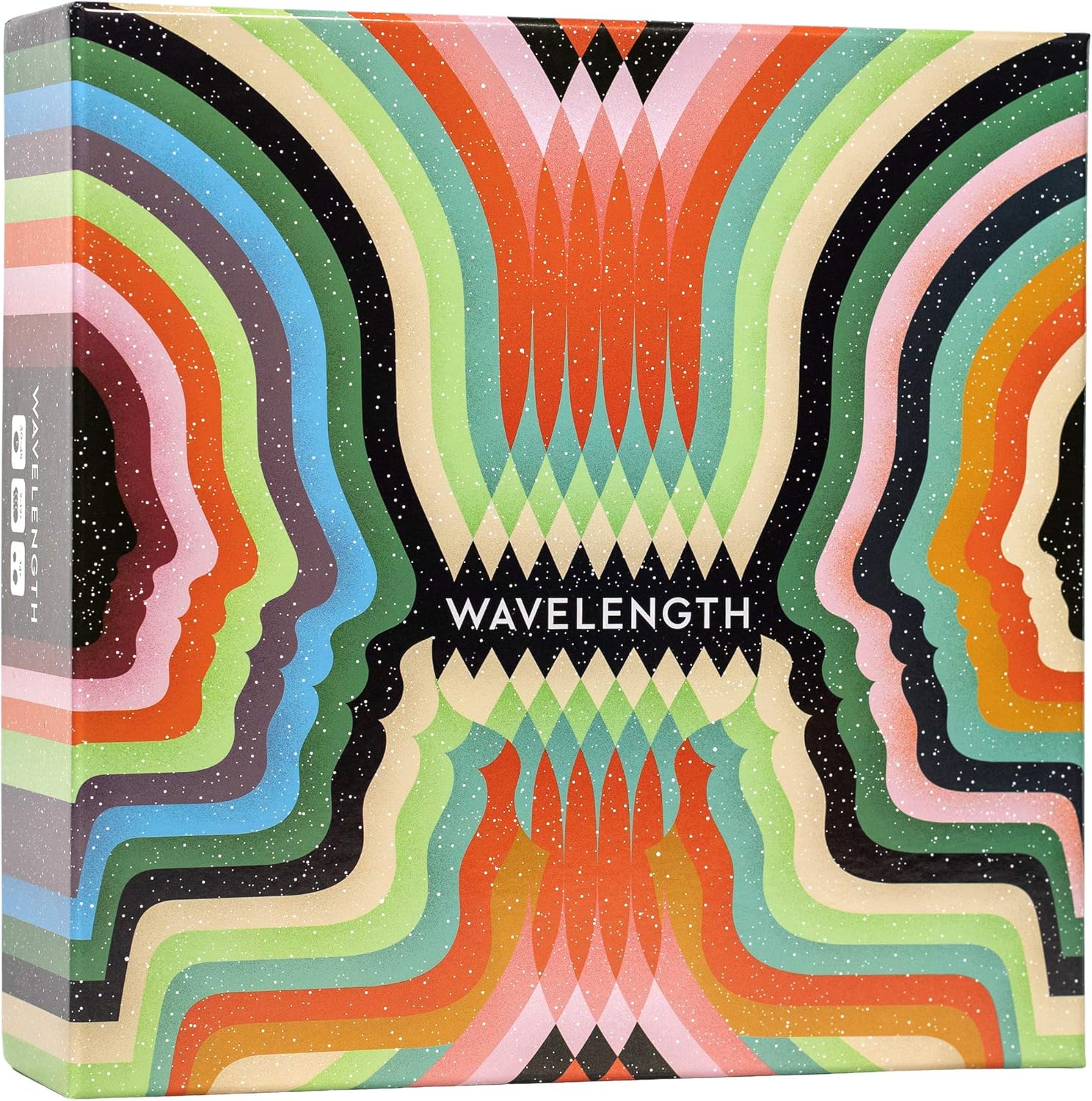
Image 1.1: The Wavelength game box, featuring a vibrant, abstract design with two mirrored profiles.
2. Components
The Wavelength game box contains the following items:
- 1 x Plastic Device (Wavelength Dial)
- 84 x Wavelength Cards
- 42 x Advanced Cards
- 1 x Rulebook (this manual)
- 3 x Scoring Tokens

Image 2.1: All game components, including the main Wavelength dial, various cards, and scoring tokens, neatly arranged within the game box.
3. Setup
- Divide into Teams: Separate players into two teams. The game is best played with 4 or more players, with at least two players per team.
- Set up the Device: Place the Wavelength plastic device in the center of the playing area. Ensure the red dial is visible to all players.
- Prepare Cards: Shuffle the Wavelength cards (and Advanced cards if using) and place them face down in the designated slot within the device.
- Scoring Tokens: Place the three scoring tokens near the device.

Image 3.1: A detailed view of the Wavelength dial mechanism and the card slot, showing how the game is prepared for play.
4. Operating Instructions (How to Play)
Wavelength is played over several rounds. Each round involves one player acting as the "Psychic" (Clue Giver) and their team attempting to guess the target location on a spectrum.
4.1 Game Flow
- Choose a Psychic: One player from the active team becomes the Psychic for the round.
- Reveal the Spectrum: The Psychic rotates the device to reveal a new spectrum card. This card will display two opposing concepts (e.g., "Hot" and "Cold"). The Psychic also secretly sees the target area on the spectrum.
- Give a Clue: The Psychic gives a single word or short phrase clue that falls somewhere on the spectrum, aiming to guide their team to the target area. For example, if the spectrum is "Hot" to "Cold" and the target is slightly towards "Hot", the Psychic might say "Coffee".
- Team Discussion & Guess: The Psychic's team discusses where they believe the clue falls on the spectrum and rotates the red dial to indicate their guess.
- Reveal & Score: Once the team is satisfied with their guess, the Psychic opens the device to reveal the actual target. Points are awarded based on how close the team's guess is to the center of the target area.
- Next Round: The turn passes to the other team, and a new Psychic is chosen.

Image 4.1: A group of players interacting with the Wavelength game, demonstrating the collaborative guessing phase.
4.2 Scoring
- 4 Points: If the guess is perfectly centered within the target area.
- 3 Points: If the guess is within the wider target area but not perfectly centered.
- 2 Points: If the guess is outside the target area but still on the correct side of the spectrum.
- 0 Points: If the guess is on the wrong side of the spectrum.
The scoring tokens are used to keep track of each team's points.

Image 4.2: A player's hand manipulating the red dial on the Wavelength device, with a spectrum card showing "Need" and "Want" as opposing concepts.
4.3 Winning the Game
The first team to reach a predetermined score (e.g., 10 points) or the team with the highest score after a set number of rounds wins the game.
5. Advanced Play
For experienced players or those seeking an additional challenge, the game includes "Advanced Cards." These cards may feature more abstract or nuanced spectrums, requiring deeper thought and communication between team members. Integrate these cards into the main deck during setup if desired.
6. Maintenance
- Cleaning: Wipe the plastic device and scoring tokens with a soft, dry cloth. Avoid using abrasive cleaners or solvents.
- Storage: Store all game components in their original box in a cool, dry place away from direct sunlight to prevent warping or fading.
- Card Care: Handle cards with clean hands to prevent soiling. If cards become bent or damaged, they may affect gameplay.
7. Troubleshooting
| Issue | Solution |
|---|---|
| Difficulty understanding a spectrum | Encourage discussion within the team. If a spectrum is consistently problematic, consider removing the card from play or clarifying its intent before the round begins. |
| Disagreement on clue placement | The Psychic's interpretation is final for their clue. The guessing team must reach a consensus on where to place the dial. |
| Scoring confusion | Refer to the "Scoring" section (4.2) of this manual. Ensure all players understand how points are awarded based on proximity to the target. |
8. Specifications
- Product Dimensions: 10.25 x 10.25 x 2.75 inches
- Item Weight: 2.46 pounds
- Model Number: WAV01
- Manufacturer Recommended Age: 14 years and up
- Language: English
- UPC: 0860001981704
9. Warranty and Support
For information regarding product warranty or customer support, please refer to the official CMYK Games website or contact their customer service directly. Contact details are typically found on the product packaging or the manufacturer's official online resources.
Related documentsWAV01


Ask a question about this manual
Ask about setup, troubleshooting, compatibility, parts, safety, or missing instructions. Manuals+ will review the question and use this page’s manual context to help answer it.