
Introduction
The Pyle PDWM2958B is a compact UHF dual-channel wireless microphone system designed for versatile audio applications. It features selectable UHF frequencies, professional distortion-free audio performance, and a USB-powered receiver base. This system is suitable for home, office, and business use, including live presentations, meetings, and public address systems. This manual provides detailed instructions for setting up, operating, and maintaining your system for optimal performance.
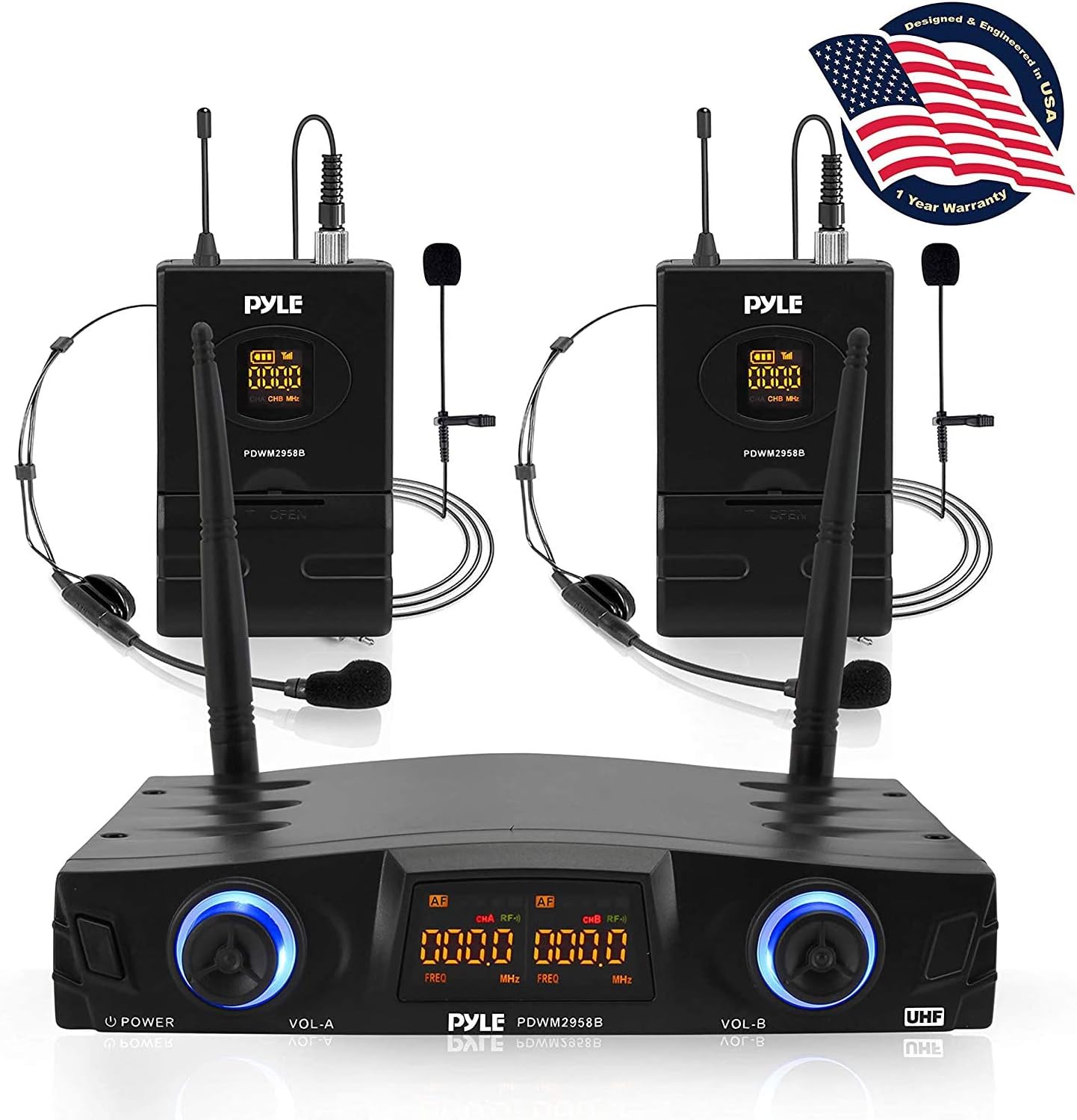
Figure 1: Pyle PDWM2958B UHF Dual Channel Wireless Microphone System components.

Figure 2: The Pyle PDWM2958B system is ideal for various applications including presentations, speeches, and meetings.
Package Contents
Please check the box for the following items:
- Microphone Receiver Base
- (2) Beltpack Transmitters
- (2) Headset Microphones
- (2) Lavalier Microphones
- (4) "AA" Batteries
- USB Power Cable
- (2) 1/4" Audio Connection Cables

Figure 3: All components included in the Pyle PDWM2958B system.
Setup Instructions
- Powering the Receiver: Connect the USB power cable to the Microphone Receiver Base and plug it into a compatible USB power source (e.g., USB wall adapter, computer USB port). The receiver features a compact tabletop design.
- Installing Batteries in Transmitters: Open the battery compartment on each Beltpack Transmitter. Insert two "AA" batteries into each transmitter, ensuring correct polarity.

Figure 4: Installing AA batteries into a beltpack transmitter.
- Connecting Microphones: Connect either a Headset Microphone or a Lavalier Microphone to the 1/4" Audio Connector Jack on each Beltpack Transmitter. Ensure the connection is secure.

Figure 5: Connecting a microphone to the beltpack transmitter.
- Connecting the Receiver to Audio System: Use the provided 1/4" audio cables to connect the receiver's output jacks to your audio mixer, PA system, or amplifier. The system also features (2) XLR (3-pin) balanced audio output connectors for professional setups.
- Power On: Turn on the Microphone Receiver Base and the Beltpack Transmitters. The digital LCD display on the receiver will show frequency and signal indicators.
Operating Instructions
- Volume Control: Adjust the individual volume controls (VOL-A, VOL-B) on the receiver base to set the desired audio output level for each microphone.
- Frequency Selection: The system features selectable UHF frequencies (2x 16 channels). To change the frequency on a transmitter, refer to the transmitter's controls and the receiver's display. Ensure the transmitter and receiver are on the same frequency for proper operation.
- Monitoring Signal: The receiver's digital LCD display shows AF (Audio Frequency) and RF (Radio Frequency) signal indicators, allowing you to monitor the connection status and audio levels.

Figure 6: Receiver display showing frequency and signal strength.
- Optimal Placement: For best wireless performance, ensure a clear line of sight between the transmitters and the receiver. Avoid placing the receiver near large metal objects or other wireless devices that may cause interference. The extended dual-band wireless antenna helps in clear audio capture.
- Mute Function: The beltpack transmitters may include a mute switch for temporarily silencing the microphone without turning off the unit.
Maintenance
- Battery Replacement: Replace "AA" batteries in the beltpack transmitters when the low battery indicator appears on the transmitter or receiver, or when audio quality degrades. Always use fresh batteries.
- Cleaning: Use a soft, dry cloth to clean the receiver and transmitters. Do not use liquid cleaners or solvents.
- Storage: When not in use for extended periods, remove batteries from the transmitters and store the system in a cool, dry place away from direct sunlight and extreme temperatures.
Troubleshooting
| Problem | Possible Cause | Solution |
|---|---|---|
| No sound from microphone |
|
|
| Poor audio quality / Interference |
|
|
| Receiver display not working |
|
|
Technical Specifications
| Wireless System Type | UHF (Ultra High Frequency) |
| Selectable Channel Frequencies | (2x) 16 Wireless Channels |
| Operating Range | Up to 165 feet (50 meters) |
| Image & Spurious Rejection | > 70 dB |
| Audio Output Level | +/- 300 mV |
| Output Impedance | 600 Ohm |
| Total Harmonic Distortion (THD) | 0.03% |
| Sensitivity | -96 dB |
| Construction Material | Engineered ABS Housing |
| Transmitter Power Source | (2) x "AA" Batteries (per transmitter) |
| Receiver Power Source | USB, 5V DC |
| Beltpack Dimensions (L x W x H) | 3.94" x 2.46" x 0.87" |
| Receiver Base Dimensions (L x W x H) | 8.08" x 6.97" x 1.72" |
| Connectors | 1/4" Unbalanced Audio Output, (2) XLR (3-pin) Balanced Audio Output |
Warranty and Support
This Pyle PDWM2958B system comes with a 1-Year Manufacturer's Warranty, covering defects in materials and workmanship under normal use. Please retain your proof of purchase for warranty claims.
For technical support, service, or warranty inquiries, please visit the official Pyle website or contact their customer service department. Contact information can typically be found on the product packaging or the manufacturer's website.


