
1. Introduction
This manual provides essential information for the safe and efficient operation, maintenance, and troubleshooting of your EBERTH 3000 Watt Portable Gasoline Generator, Model GG1-ER3000-RS. Please read this manual thoroughly before operating the generator to ensure proper use and to prevent injury or damage.
2. Safety Instructions
Always prioritize safety when operating the generator. Failure to follow these instructions can result in serious injury or death.
- Carbon Monoxide Hazard: Never operate the generator indoors or in enclosed spaces. Exhaust contains carbon monoxide, a colorless, odorless, poisonous gas.
- Fire Hazard: Gasoline is highly flammable. Refuel in a well-ventilated area with the engine off and cool. Do not smoke or allow open flames near the generator.
- Electrical Shock Hazard: Do not operate the generator in wet conditions. Ensure all electrical connections are secure and dry. Use ground fault circuit interrupters (GFCIs) when connecting to household circuits.
- Hot Surfaces: The engine and muffler become very hot during operation and remain hot for a period after shutdown. Avoid contact to prevent burns.
- Children and Pets: Keep children and pets away from the generator, especially during operation.
- Personal Protective Equipment: Wear appropriate safety gear, such as gloves and eye protection, when handling fuel or performing maintenance.
3. Product Overview
The EBERTH GG1-ER3000-RS is a powerful and portable gasoline generator designed for various applications, from camping to emergency backup power. It features a robust 4-stroke engine and multiple power outlets.


4. Setup
Before first use, ensure the generator is properly set up.
- Unpacking and Inspection: Carefully remove the generator from its packaging. Inspect for any shipping damage. Ensure all included components (generator, tools, manual) are present.
- Wheel and Handle Assembly (if applicable): If your model includes a separate wheel kit or handle, follow the assembly instructions provided in the quick start guide or specific assembly sheet. The generator comes with a stable metal frame and wheels for portability.
- Add Engine Oil: The engine is shipped without oil. Locate the oil fill cap/dipstick. Add the recommended type and amount of engine oil (refer to specifications for oil type, typically SAE 10W-30) until it reaches the upper mark on the dipstick. Do not overfill.
- Add Fuel: Ensure the generator is on a level surface and the engine is off and cool. Open the fuel cap. Pour fresh, unleaded gasoline (Super or Super Plus) into the fuel tank, using a funnel to prevent spills. Do not fill above the fuel filter screen. The tank capacity is 15 liters.
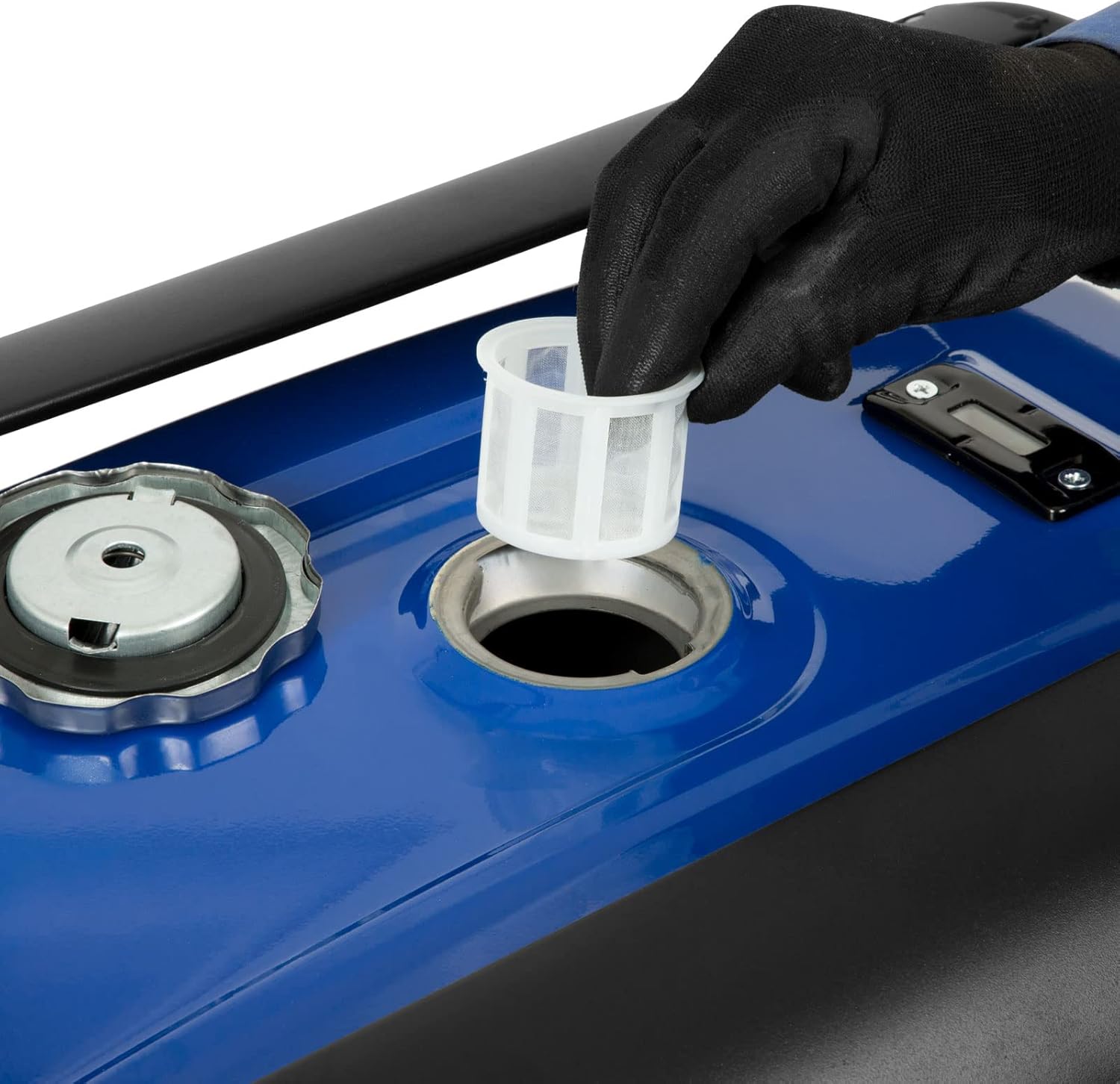
Figure 4.1: Inserting Fuel Filter. A hand is shown inserting a fuel filter into the generator's fuel tank opening before adding gasoline. 
Figure 4.2: Refueling the Generator. A person is carefully pouring gasoline into the generator's fuel tank using a funnel. - Positioning: Place the generator on a firm, level surface outdoors, away from windows, doors, and vents, and at least 1 meter (3 feet) from any combustible materials.
5. Operating Instructions
5.1 Starting the Engine
- Ensure the generator is on a level surface.
- Turn the fuel valve to the 'ON' position.
- Move the engine switch to the 'ON' position.
- If the engine is cold, move the choke lever to the 'CHOKE' position.
- Grasp the starter grip firmly and pull slowly until resistance is felt, then pull quickly and smoothly to start the engine. Do not let the rope snap back.
- Once the engine starts, gradually move the choke lever to the 'RUN' position as the engine warms up.

5.2 Connecting Electrical Devices
- Allow the engine to run for a few minutes to stabilize.
- Plug your electrical devices into the 230V AC outlets or the 12V DC outlet.
- Ensure the total wattage of connected devices does not exceed the generator's continuous output (2850 Watts).
- The generator is equipped with an overload switch to protect against excessive load. If an overload occurs, the circuit breaker will trip. Reduce the load and reset the breaker.
5.3 Stopping the Engine
- Disconnect all electrical loads from the generator.
- Allow the engine to run for a few minutes without load to cool down.
- Move the engine switch to the 'OFF' position.
- Turn the fuel valve to the 'OFF' position.
6. Maintenance
Regular maintenance ensures optimal performance and extends the lifespan of your generator.
- Check Oil Level: Before each use, check the engine oil level and top up if necessary.
- Change Engine Oil: Change the engine oil after the first 20 hours of operation, then every 50-100 hours or annually, whichever comes first.
- Clean Air Filter: Inspect the air filter regularly and clean or replace it as needed, especially in dusty conditions.
- Check Spark Plug: Inspect the spark plug annually or every 100 hours. Clean or replace if fouled or worn.
- Fuel System: If storing the generator for an extended period, drain the fuel tank and carburetor or use a fuel stabilizer to prevent fuel degradation.
- General Cleaning: Keep the generator clean and free of debris. Use a damp cloth to wipe down exterior surfaces.
7. Troubleshooting
This section addresses common issues you might encounter with your generator.
| Problem | Possible Cause | Solution |
|---|---|---|
| Engine will not start | No fuel; Low oil level; Engine switch OFF; Choke incorrect; Faulty spark plug | Add fuel; Add oil; Turn engine switch ON; Adjust choke; Inspect/replace spark plug |
| No power output | Circuit breaker tripped; Overload; Loose connections | Reset circuit breaker; Reduce load; Check connections |
| Engine runs rough | Stale fuel; Clogged air filter; Fouled spark plug | Drain/replace fuel; Clean/replace air filter; Clean/replace spark plug |
| Low oil shutdown activates | Insufficient oil level | Add engine oil to the correct level |
8. Specifications
| Brand | EBERTH |
| Model Number | GG1-ER3000-RS |
| Power (Max) | 3000 Watts |
| Power (Continuous) | 2850 Watts |
| Engine Type | 6.5 HP, 4-Stroke, Air-cooled, 1-cylinder Gasoline Engine |
| Displacement | 196 cm³ |
| Voltage | 230 Volts (AC) |
| DC Output | 12 Volts |
| Fuel Type | Unleaded Gasoline (Super or Super Plus) |
| Fuel Tank Capacity | 15 Liters |
| Operating Time (Full Tank) | 9-11 hours (load dependent) |
| Starting System | Pull Start |
| Noise Level (Lwa) | 96 dB |
| Noise Level (at 7m) | Approx. 69 dB |
| Dimensions (LxWxH) | 60 x 44 x 46 cm |
| Weight (without fuel) | 39 kg |
| Special Features | Automatic Voltage Regulator (AVR), Low Oil Shutdown, Voltmeter, Overload Switch, Portable with Frame |
9. Warranty and Support
For warranty information, please refer to the documentation included with your purchase or contact your retailer. EBERTH products are designed for reliability and performance. For technical support or service inquiries, please contact EBERTH customer service or visit their official website.