
1. Introduction
This manual provides essential information for the safe and efficient operation, installation, and maintenance of the SAM SDA100x50 Pneumatic Double Acting Compact Air Cylinder. Please read this manual thoroughly before using the product to ensure proper function and to prevent damage or injury.
2. Product Overview and Features
The SAM SDA100x50 is a double-acting compact air cylinder designed for various automation applications. Its compact structure makes it suitable for installations where space is limited. The cylinder features a hardened and wear-resistant inner diameter for enhanced durability.
Key Features:
- Double-acting mechanism for controlled extension and retraction.
- Compact design for space-saving integration.
- Hardened and wear-resistant inner cylinder for extended lifespan.
- Suitable for a wide range of automation equipment.

Figure 2.1: Front view of the SAM SDA100x50 Pneumatic Double Acting Compact Air Cylinder. This image shows the main body and the piston rod connection point.

Figure 2.2: Close-up view of the SAM SDA100x50 cylinder, highlighting the piston rod and mounting points.

Figure 2.3: Side view of the SAM SDA100x50 cylinder, showing the compact profile and air ports.
3. Specifications
The following table details the technical specifications for the SDA100x50 model:
| Parameter | Value |
|---|---|
| Part Number | SDA100x50 |
| Bore Size | 100 mm |
| Stroke | 50 mm |
| Rated Pressure | 1.0 MPa |
| Peak Pressure | 1.5 MPa |
| Piston Speed | 30~800 mm/s |
| Temperature Range | -20°C to 80°C (-4°F to 176°F) |
| Interface Diameter | 3/8 inch |
| Item Weight | 10.6 ounces |
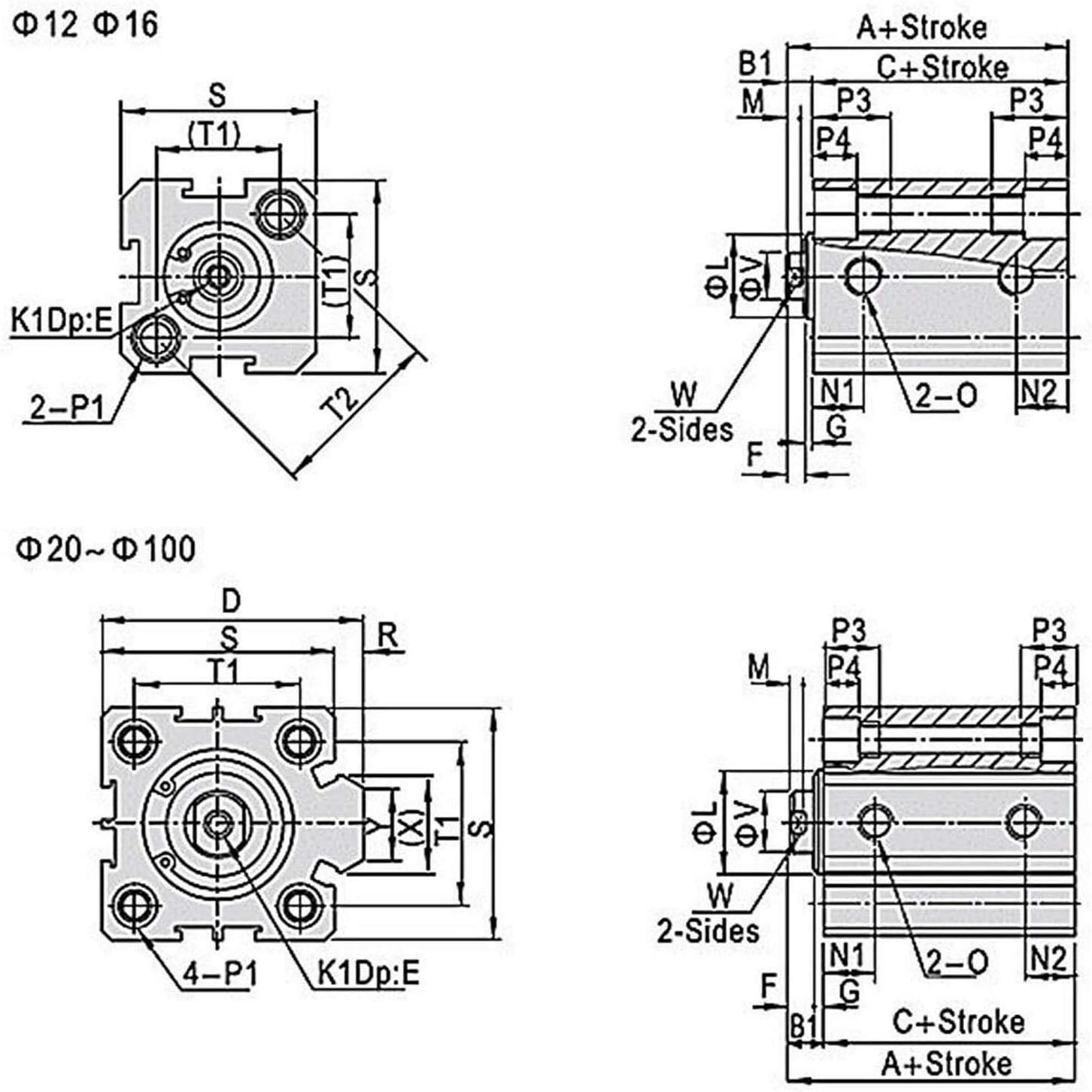
Figure 3.1: Technical drawing illustrating the dimensions and port locations for SDA series compact cylinders. Refer to the accompanying table for specific measurements.

Figure 3.2: Detailed table providing bore size, stroke, and other dimensional specifications for various SDA Double Acting Compact Cylinder models.
4. Setup and Installation
Proper installation is crucial for the safe and efficient operation of the pneumatic cylinder. Follow these guidelines:
- Safety First: Ensure all pneumatic systems are depressurized before beginning installation. Wear appropriate personal protective equipment (PPE).
- Mounting: Securely mount the cylinder using the designated mounting holes. Ensure the mounting surface is flat and rigid to prevent misalignment and stress on the cylinder.
- Air Supply Connection: Connect the air supply lines to the cylinder's interface ports (3/8 inch). Use appropriate fittings and ensure all connections are tight and leak-free. The SDA100x50 is a double-acting cylinder, requiring two air lines for extension and retraction.
- Lubrication: If the air supply is not lubricated, consider adding an in-line lubricator to extend the cylinder's lifespan.
- Environmental Conditions: Install the cylinder in an environment within its specified temperature range (-20°C to 80°C) and free from excessive dust, moisture, or corrosive substances.
- Alignment: Ensure the piston rod is properly aligned with the load to prevent side loading, which can cause premature wear and failure.
5. Operating Instructions
The SDA100x50 is a double-acting cylinder, meaning air pressure is used to both extend and retract the piston rod.
- Air Pressure: Apply clean, dry, and regulated compressed air to the appropriate ports. Do not exceed the rated pressure of 1.0 MPa (1.5 MPa peak).
- Control Valves: Use a suitable directional control valve (e.g., 5/2-way valve) to direct air flow to the extension and retraction ports.
- Speed Control: Piston speed can be adjusted using flow control valves installed in the exhaust lines of the cylinder. The piston speed range is 30-800 mm/s.
- Load Application: Ensure the load is applied axially to the piston rod to prevent bending or buckling.
- Emergency Stop: Incorporate an emergency stop mechanism in the pneumatic system to quickly depressurize and stop cylinder movement if necessary.
6. Maintenance
Regular maintenance helps ensure the longevity and reliable performance of your pneumatic cylinder.
- Inspect Air Lines: Periodically check air lines for damage, kinks, or leaks. Replace any compromised lines immediately.
- Check Fittings: Ensure all pneumatic fittings are secure and free from leaks.
- Air Quality: Verify that the compressed air supply is clean and dry. Contaminants can damage internal seals and components.
- Lubrication: If an in-line lubricator is used, ensure it is properly filled and adjusted.
- Piston Rod Inspection: Inspect the piston rod for scratches, corrosion, or damage. A damaged rod can lead to seal failure.
- Mounting Security: Periodically check the cylinder's mounting bolts for tightness.
- Seal Replacement: Over time, seals may wear out. If you notice air leaks or reduced performance, internal seals may need replacement by a qualified technician.
7. Troubleshooting
This section provides solutions to common issues encountered with pneumatic cylinders.
| Problem | Possible Cause | Solution |
|---|---|---|
| Cylinder does not move or moves slowly |
|
|
| Air leakage |
|
|
| Erratic movement |
|
|
8. Warranty and Support
For specific warranty information and technical support, please refer to the documentation provided at the point of purchase or contact your supplier. Keep your purchase receipt as proof of purchase.