

1. Introduction
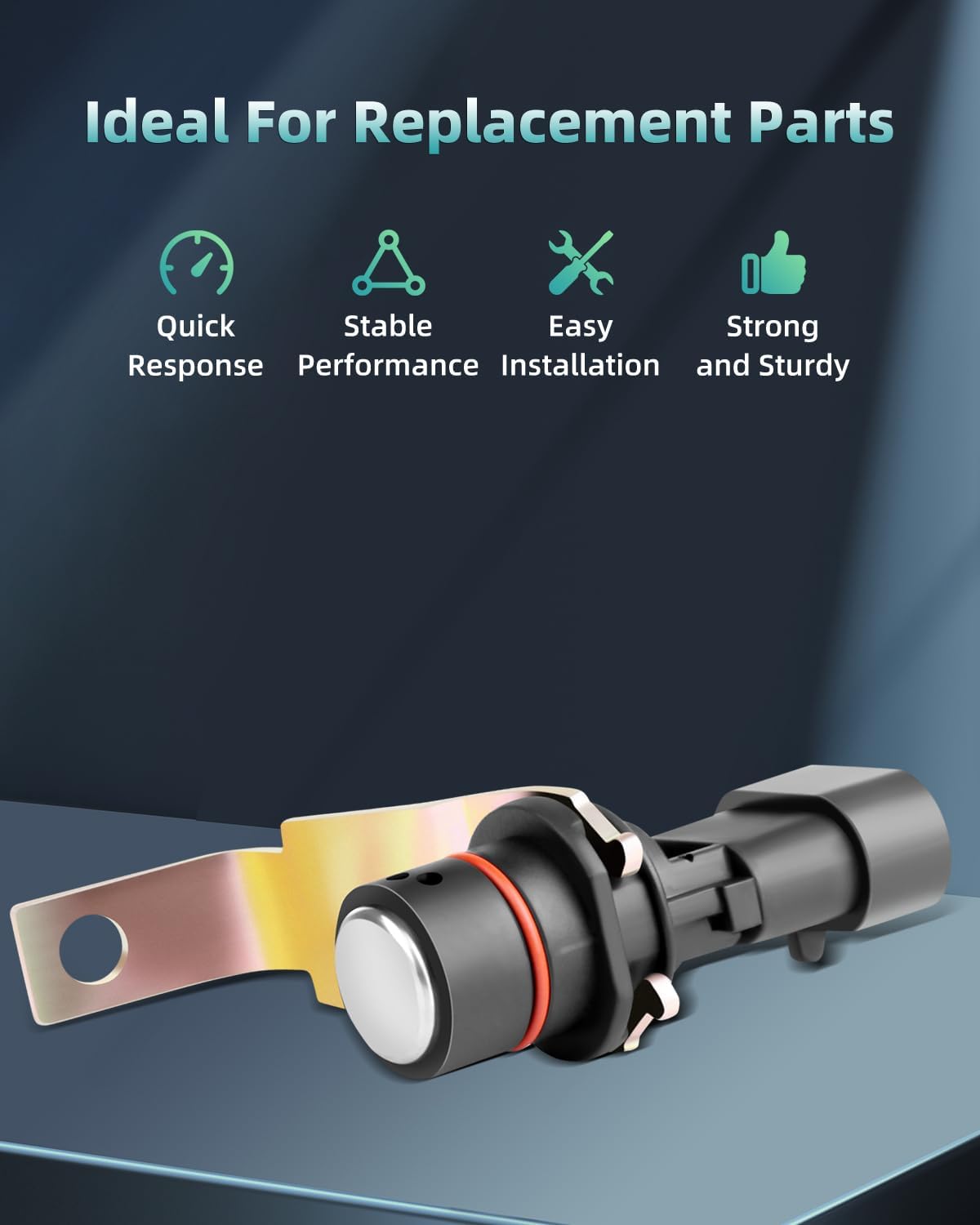
The SCITOO PC123 SS10125 Crankshaft Position Sensor is an essential component designed to provide accurate readings of your engine's crankshaft position and speed. This critical data is transmitted to the Engine Control Unit (ECU), enabling it to precisely manage fuel injection and ignition timing. This optimization is vital for maintaining engine performance, efficiency, and reducing emissions.
This sensor is engineered for reliability, offering quick response, stable performance, and straightforward installation. It is constructed from robust and durable materials to ensure long-lasting operation.

2. Compatible Vehicles
This crankshaft position sensor is compatible with a range of Chevrolet, GMC, and Cadillac vehicles from 1995 to 2007. Please verify your vehicle's specific make, model, trim, and engine against the following list to ensure proper fitment:
- 1996-2004 Chevrolet Astro
- 1995-2005 Chevrolet Blazer
- 1996-1998 Chevrolet C35
- 1996, 1998, 2000-2004 Chevrolet C3500
- 1997-1999 Chevrolet C for Argo Van
- 1996, 2000-2004, 2006-2007 Chevrolet Express 1500
- 1996-1997, 1999-2000 GMC C2500
- 1996-1999 GMC C2500 Suburban
- 1996-1997 GMC C3500
- 1998, 2000-2005 GMC Savana 2500
- 1999-2002 GMC Savana 3500
Always cross-reference the OEM part number (PC123 SU1207) and product appearance with your vehicle's existing part before purchase and installation.
3. Symptoms of a Failing Sensor
Recognizing the signs of a failing crankshaft position sensor is crucial for timely replacement and maintaining optimal vehicle performance. If your vehicle exhibits any of the following symptoms, your crankshaft position sensor may be failing:
- Irregular engine stalling
- Difficulty starting the vehicle
- Engine vibrations
- Frequent engine stumbling
- Accelerator hesitation
- Slow acceleration
- Check Engine Light (Trouble Light) illuminated on the dashboard
- Unstable idling

4. Installation
The SCITOO PC123 SS10125 Crankshaft Position Sensor is designed for straightforward installation. However, it is highly recommended to consult your vehicle's specific service manual for the exact location and detailed removal/installation procedures, as these can vary by vehicle model.
4.1 Pre-Installation Check
- Verify Fitment: Before starting, ensure the new sensor matches your original part in appearance, connector type, and part number.
- Safety First: Always disconnect the vehicle's battery (negative terminal first) before performing any electrical or mechanical work on your vehicle to prevent accidental shorts or injury.
- Gather Tools: Have the necessary tools ready, which may include wrenches, sockets, screwdrivers, and a torque wrench.
4.2 Installation Steps (General Guide)
- Locate the Old Sensor: Refer to your vehicle's service manual to find the exact location of the crankshaft position sensor.
- Disconnect Electrical Connector: Carefully disconnect the electrical connector from the old sensor. Avoid pulling on the wires.
- Remove Old Sensor: Unscrew or unbolt the old sensor from its mounting location. Be mindful of any O-rings or seals.
- Prepare New Sensor: Ensure the new SCITOO sensor has its sealing rubber ring properly seated to prevent oil leaks.
- Install New Sensor: Insert the new sensor into the mounting hole and secure it with the appropriate fasteners. Torque to manufacturer specifications if available.
- Connect Electrical Connector: Reconnect the electrical connector firmly to the new sensor.
- Reconnect Battery: Reconnect the vehicle's battery (positive terminal first, then negative).
- Test Operation: Start the engine and check for proper operation and ensure no warning lights are illuminated.


5. Operating Principles
The crankshaft position sensor operates by detecting the rotational speed and angular position of the engine's crankshaft. This is typically achieved using a magnetic pickup or Hall effect sensor that reads a reluctor wheel (or tone wheel) mounted on the crankshaft.
As the crankshaft rotates, the teeth on the reluctor wheel pass by the sensor, generating a series of electrical pulses. The ECU interprets these pulses to determine the exact position of the crankshaft at any given moment and its rotational speed (RPM). This information is critical for:
- Fuel Injection Timing: Ensuring fuel is injected into the cylinders at the optimal moment for efficient combustion.
- Ignition Timing: Firing the spark plugs at the precise time to ignite the air-fuel mixture.
- Engine Speed Monitoring: Providing accurate RPM data for various engine management functions.
The SCITOO PC123 SS10125 sensor incorporates a built-in high-quality chip, which enhances its safety performance, reliability, and durability. This advanced chip ensures accurate and consistent data transfer to the ECU, contributing to the engine's overall efficiency and performance.

6. Maintenance
Crankshaft position sensors are generally designed to be maintenance-free components. However, to ensure their longevity and proper function, consider the following during routine vehicle inspections:
- Visual Inspection: Periodically inspect the sensor's wiring harness and electrical connector for any signs of physical damage, fraying, cracks, or corrosion.
- Connection Security: Ensure the electrical connector is securely attached to the sensor. Loose connections can lead to intermittent signals.
- Cleanliness: Keep the area around the sensor free from excessive dirt, debris, oil, or other contaminants that could potentially interfere with its operation or cause damage to the wiring.
If any damage or severe corrosion is observed, it is advisable to address it promptly or consider replacing the sensor if its integrity is compromised.
7. Troubleshooting
If you experience any of the symptoms listed in the 'Symptoms of a Failing Sensor' section, it may indicate a malfunction with your crankshaft position sensor. Before replacing the sensor, consider these troubleshooting steps:
- Check for Diagnostic Trouble Codes (DTCs): Use an OBD-II scanner to check for any stored fault codes in your vehicle's ECU. Codes such as P0335 (Crankshaft Position Sensor 'A' Circuit Malfunction) or similar codes can directly point to a sensor issue.
- Inspect Wiring and Connector: Visually inspect the sensor's electrical connector and the entire wiring harness leading to it. Look for any signs of damage, such as cuts, abrasions, pinched wires, or corrosion on the terminals. Ensure the connection is tight and secure.
- Verify Fitment: Double-check that the installed sensor is indeed the correct part number and type for your specific vehicle make, model, and year. An incorrect sensor, even if it fits physically, may not function correctly.
- Clear Codes and Retest: After performing any inspections or minor repairs (e.g., securing a loose connection), clear any stored DTCs using an OBD-II scanner and then test drive the vehicle to see if the symptoms reappear or if new codes are generated.
If these troubleshooting steps do not resolve the issue, or if diagnostic codes consistently point to the crankshaft position sensor, replacement of the sensor may be necessary.
8. Specifications
Below are the technical specifications for the SCITOO PC123 SS10125 Crankshaft Position Sensor:
| Specification | Detail |
|---|---|
| Brand | SCITOO |
| Item Model Number | 102816-5206-1135469501 |
| Manufacturer Part Number | 102816-5206-1135469501 |
| OEM Part Number | PC123 SU1207 |
| Item Dimensions (L x W x H) | 3.15 x 2.36 x 1.57 inches |
| Item Weight | 1.76 ounces (0.05 Kilograms) |
| Style | Modern |
| Mounting Type | Flange Mount |
| Manufacturer | SCITOO |
9. Warranty & Support
For specific warranty information regarding your SCITOO PC123 SS10125 Crankshaft Position Sensor, please refer to the documentation included with your purchase or visit the official SCITOO website. SCITOO is committed to providing quality automotive parts and customer satisfaction.
If you encounter any issues, have questions about installation, or require technical assistance, please contact SCITOO customer service directly. Their support team can provide guidance and help resolve any product-related concerns.