
Product Overview
The Gre SCG100 Salt Chlorinator is designed to provide an efficient and maintenance-free disinfection system for your pool. It utilizes salt electrolysis to automatically produce and dose chlorine, eliminating the need for handling chemical chlorine and ensuring clean, disinfected water without odors or eye irritation.
This model is recommended for both above-ground and in-ground pools, with a chlorine production capacity of 21 grams per hour, suitable for pools up to 90 m³.
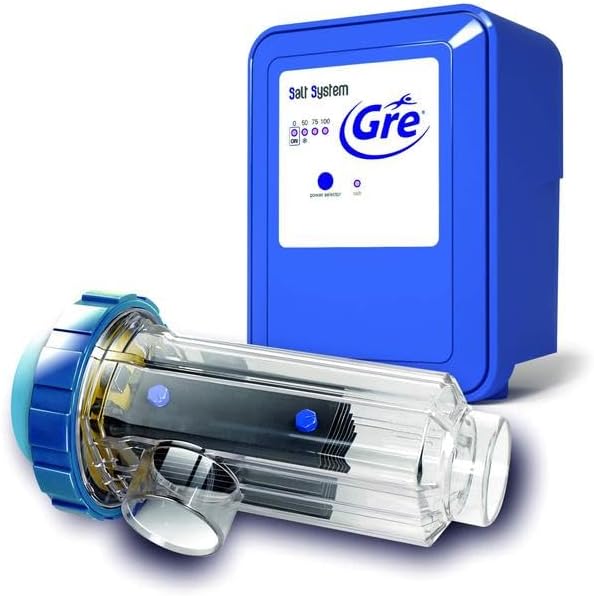
Image: The Gre SCG100 Salt Chlorinator system, showing the main control unit and the transparent electrolysis cell.
Setup and Installation
Proper installation is crucial for the optimal performance and longevity of your Gre SCG100 Salt Chlorinator. While specific plumbing instructions are not detailed here, ensure the unit is installed in a dry, well-ventilated area, protected from direct sunlight and harsh weather conditions. The electrolysis cell should be installed in the pool's return line after the filter and heater (if applicable).
Initial Pool Preparation:
- Fill the pool with water: Ensure your pool is filled to its normal operating level before proceeding with salt addition.
- Add the indicated amount of salt to the pool: Refer to the chlorinator's specifications or a pool salt calculator to determine the correct amount of salt needed for your pool volume. Distribute the salt evenly across the pool surface and allow it to dissolve completely before starting the chlorinator. Typically, a salt level of 3,000-4,000 ppm (parts per million) is required.

Image: A detailed view of the transparent electrolysis cell of the Gre SCG100, showing the internal plates responsible for chlorine generation.
Operating Instructions
Once the pool is filled and the salt is dissolved, you can begin operating your salt chlorinator.
- Turn on the salt chlorinator: Activate the power to the unit. The control panel will typically display indicators for power and operation status.
- Set the desired chlorine production: Use the controls on the unit to adjust the chlorine output level. This setting will depend on your pool size, bather load, and environmental factors. Start with a moderate setting and adjust as needed based on water testing.
Regularly test your pool water for chlorine levels, pH, and salt concentration to ensure optimal performance and water quality. Maintain free chlorine levels between 1-3 ppm.
Maintenance
Regular maintenance of your Gre SCG100 Salt Chlorinator will ensure its efficiency and extend its lifespan.
- Regularly check and maintain the salt chlorinator: Inspect the electrolysis cell periodically for scale buildup. The SCG100 features a self-cleaning polarity reversal system to minimize scale, but manual cleaning may still be required in areas with very hard water.
- Cell Cleaning: If scale buildup is visible on the cell plates, turn off the chlorinator and remove the cell. Clean the cell by soaking it in a diluted acid solution (e.g., muriatic acid diluted with water, following safety precautions) until the scale dissolves. Rinse thoroughly with fresh water before reinstallation.
- Water Chemistry: Continuously monitor pool water chemistry, including pH, alkalinity, and calcium hardness, as these factors can affect chlorinator performance and cell life. Maintain pH between 7.4-7.6.
- Salt Level: Periodically check the salt concentration in your pool water. Low salt levels will reduce chlorine production and can damage the cell. High salt levels are generally not harmful but can lead to corrosion of metal components over time.
Troubleshooting
This section addresses common issues you might encounter with your salt chlorinator.
| Problem | Possible Cause | Solution |
|---|---|---|
| No chlorine production | Low salt level, dirty cell, power issue, low water flow. | Check salt level and add salt if necessary. Clean the cell. Ensure power is supplied and pump is running. Check for blockages in plumbing. |
| "Low Salt" indicator | Insufficient salt in the pool water. | Test salt level and add salt as required. Allow time for salt to dissolve and circulate. |
| Excessive scale buildup on cell | High calcium hardness, infrequent cleaning, polarity reversal not functioning. | Clean the cell manually. Adjust water chemistry to reduce calcium hardness. Consult a professional if polarity reversal is suspected to be faulty. |
| Unit not powering on | No power supply, tripped breaker, internal fault. | Check power connection and circuit breaker. If problem persists, contact customer support. |
Specifications
- Model: Gre SCG100
- Brand: Gre
- Chlorine Production Capacity: 21 grams/hour
- Recommended Pool Volume: Up to 90 m³
- Product Dimensions (L x W x H): 1.95 x 1.3 x 2.6 cm
- Item Weight: 1.7 Kilograms
- Reference: SCG100
- Product Benefits: Automatically produces and doses chlorine, prevents chemical handling, keeps water clean and disinfected using natural salt.
Warranty and Support
Specific warranty details are not provided in this manual. Please refer to your purchase documentation or contact Gre customer service for information regarding warranty coverage and terms.
For technical support, spare parts, or further assistance, please visit the official Gre website or contact their authorized service centers. Keep your purchase receipt and model number (SCG100) handy when contacting support.
You can visit the Gre brand store for more information: Gre Official Store


