
1. Product Overview
Thank you for choosing the Sanford SF3200EPC BS Electric Pressure Cooker. This versatile multi-cooker is designed to simplify your cooking process with its advanced features and robust construction. It offers efficient and safe cooking for a variety of dishes, making it an essential appliance for any modern kitchen.
Key features include precise pressure control, automatic cooking programs, and a safety lock lid, all housed within a durable stainless steel body. With a generous 6-liter capacity and 800 watts of power, it is built for both performance and convenience.
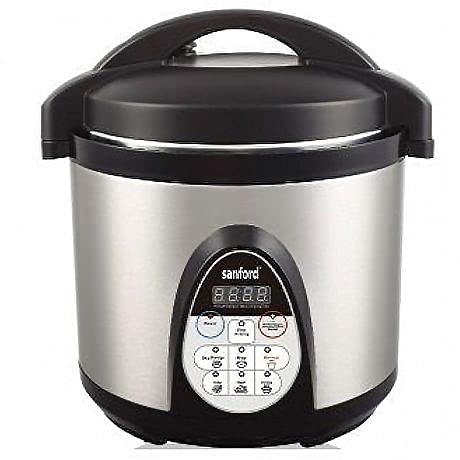
Image 1: Sanford SF3200EPC BS Electric Pressure Cooker. This image displays the main unit of the electric pressure cooker, showcasing its stainless steel exterior and control panel.
2. Important Safety Information
Please read all instructions carefully before using the appliance to ensure safe operation and to prevent injury or damage. Keep this manual for future reference.
- Electrical Safety: Always connect the appliance to a grounded outlet. Do not immerse the main unit, cord, or plug in water or other liquids.
- Hot Surfaces: The pressure cooker generates heat and steam during operation. Do not touch hot surfaces. Use oven mitts or handles.
- Children and Supervision: Close supervision is necessary when the appliance is used by or near children.
- Lid Safety: Ensure the lid is properly closed and locked before operating. Never attempt to force open the lid while the cooker is pressurized.
- Filling Limits: Do not fill the inner pot above the MAX fill line to prevent clogging of the pressure release valve.
- Pressure Release Valve: Keep the pressure release valve clean and free from obstructions. Never tamper with the safety mechanisms.
- Maintenance: Refer to the 'Maintenance and Care' section for proper cleaning instructions. Only hand wash the inner pot and lid components.
3. Setup
3.1 Unpacking
- Carefully remove all packaging materials, including any protective films or stickers, from the pressure cooker and its accessories.
- Inspect the appliance for any signs of damage. If any damage is found, do not use the cooker and contact customer support.
- Retain the packaging for future storage or transport if needed.
3.2 Initial Cleaning
- Wash the inner pot, lid, and all removable accessories (such as the sealing ring and pressure release valve components) with warm, soapy water. Rinse thoroughly and dry completely.
- Wipe the exterior of the main unit with a clean, damp cloth. Never immerse the main unit in water.
- Ensure all parts are dry before reassembling the cooker.
3.3 Component Identification
Familiarize yourself with the main components of your electric pressure cooker:
- Main Unit: The outer housing containing the heating element and control panel.
- Inner Pot: The removable stainless steel cooking pot.
- Lid: The cover with a sealing ring, pressure release valve, and safety lock mechanism.
- Sealing Ring: A silicone ring located inside the lid, essential for creating a pressure seal.
- Pressure Release Valve: Controls the release of steam and pressure.
4. Operating Instructions
4.1 Basic Operation
- Prepare Ingredients: Measure and prepare your ingredients according to your recipe.
- Place Inner Pot: Insert the clean inner pot into the main unit. Ensure it sits correctly and is not tilted.
- Add Ingredients: Place your food and the required amount of liquid into the inner pot. Do not exceed the MAX fill line.
- Close Lid: Place the lid on the cooker, aligning the arrow on the lid with the arrow on the main unit. Rotate the lid clockwise until it locks into place.
- Set Pressure Release Valve: Ensure the pressure release valve is set to the 'Sealing' position for pressure cooking.
- Connect Power: Plug the power cord into a grounded electrical outlet.
- Select Program: Choose the desired cooking program from the control panel (e.g., Rice, Soup, Meat/Stew). The cooker features automatic cooking functions.
- Start Cooking: Press the 'Start' button. The cooker will begin to preheat, build pressure, and then start the cooking cycle.
- Monitor Progress: The display will show the cooking time remaining.
4.2 Cooking Modes
The Sanford SF3200EPC BS is a multi-cooker with various preset programs for convenience. While specific program names may vary, common modes include:
- Rice: For cooking various types of rice.
- Soup/Broth: Ideal for preparing soups and broths.
- Meat/Stew: For tenderizing meats and preparing hearty stews.
- Beans/Chili: For cooking beans and chili dishes.
- Poultry: For cooking chicken and other poultry.
- Manual: Allows you to set your own cooking time and pressure level.
4.3 Pressure Release
Once cooking is complete, pressure must be released before opening the lid. There are two primary methods:
- Natural Pressure Release (NPR): Allow the cooker to cool down naturally. The pressure will gradually decrease, and the float valve will drop. This method is recommended for foamy foods or large cuts of meat.
- Quick Pressure Release (QPR): Carefully turn the pressure release valve to the 'Venting' position. Steam will rapidly escape. Keep hands and face away from the steam. Use QPR for delicate foods that can overcook quickly.
Only open the lid once the float valve has dropped completely, indicating that all pressure has been released.
5. Maintenance and Care
5.1 Cleaning
Regular cleaning ensures optimal performance and extends the life of your pressure cooker.
- Inner Pot: The stainless steel inner pot should be hand washed with warm, soapy water after each use. Avoid abrasive cleaners or scouring pads that could scratch the surface.
- Lid: Hand wash the lid, including the sealing ring and pressure release valve components. Remove the sealing ring for thorough cleaning and ensure it is properly reinstalled before next use.
- Main Unit: Wipe the exterior of the main unit with a damp cloth. Never immerse the main unit in water or other liquids.
- Condensation Collector: Empty and clean the condensation collector after each use.
5.2 Storage
Store the pressure cooker in a dry, cool place. It is recommended to store the lid inverted on the inner pot to prevent the sealing ring from compressing permanently, which can affect its sealing ability.
6. Troubleshooting
If you encounter any issues with your Sanford SF3200EPC BS Electric Pressure Cooker, please refer to the following table for common problems and solutions.
| Problem | Possible Cause | Solution |
|---|---|---|
| Pressure not building | Lid not properly sealed; Pressure release valve in 'Venting' position; Sealing ring damaged or improperly installed; Insufficient liquid. | Ensure lid is locked; Turn valve to 'Sealing'; Check and reinstall/replace sealing ring; Add more liquid as per recipe. |
| Lid cannot be opened after cooking | Pressure still inside the cooker. | Ensure all pressure is released (float valve dropped) before attempting to open. Use natural or quick release methods. |
| Food is undercooked | Insufficient cooking time; Not enough liquid; Pressure not reached. | Increase cooking time; Ensure minimum liquid requirements are met; Check lid and valve for proper sealing. |
| Steam leaking from lid | Sealing ring improperly installed or damaged; Food debris on sealing ring or lid rim. | Check and clean/reinstall sealing ring; Ensure no food particles are obstructing the seal. Replace sealing ring if damaged. |
7. Technical Specifications
Below are the detailed specifications for the Sanford SF3200EPC BS Electric Pressure Cooker:
| Specification | Detail |
|---|---|
| Brand | Sanford |
| Model Number | SF3200EPC BS |
| Color | Stainless Steel |
| Capacity | 6000 Milliliters (6 Liters) |
| Power / Wattage | 800 Watts |
| Material | Stainless Steel |
| Special Features | Pressure control, Automatic cooking, Safety lock lid |
| Item Weight | 2.5 Kilograms |
| Power Source | Electric |
| Care Instructions | Hand wash |
| Product Dimensions | 1 x 1 x 1 cm (Shipping dimensions) |
8. Warranty and Customer Support
For warranty information, please refer to the documentation included with your product packaging or visit the official Sanford website. The warranty typically covers manufacturing defects for a specified period from the date of purchase.
If you require technical assistance, have questions about your product, or need to report a defect, please contact Sanford customer support through their official channels. Contact details are usually available on the product packaging or the manufacturer's website.